
The Growing 'Dent' in Earth's Magnetic Shield: Should We Be Concerned?
Exploring the South Atlantic Anomaly and Its Potential Implications

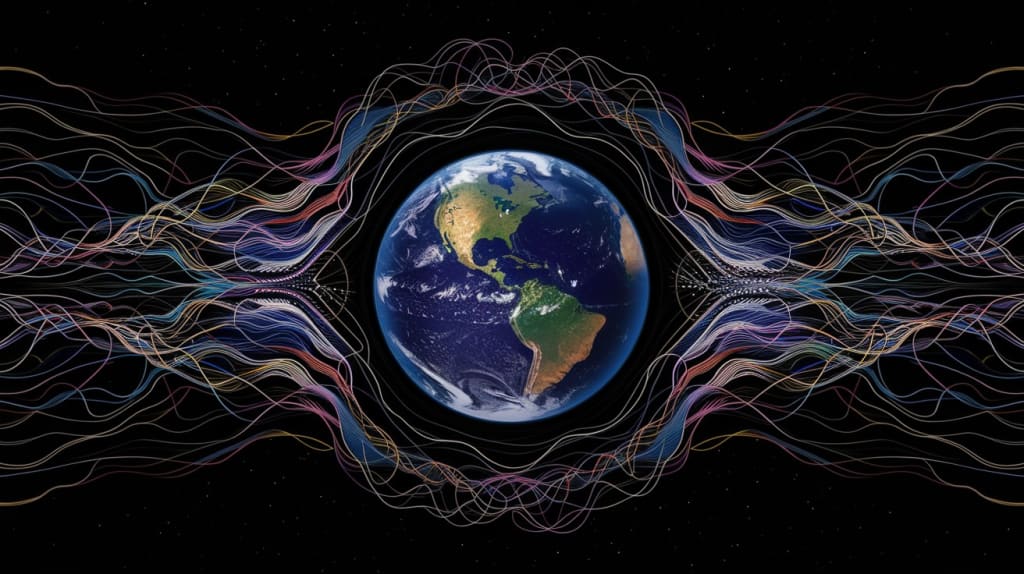
I've always been captivated by the invisible forces that shape our planet, and Earth's magnetic field is no exception. Over the years, my curiosity has led me to delve into the enigmatic South Atlantic Anomaly (SAA), a peculiar region where our planet's magnetic shield appears to be unusually weak. Recent discussions among scientists have brought this anomaly into the spotlight, raising questions about its growth and potential consequences.
Unraveling the South Atlantic Anomaly
The South Atlantic Anomaly is essentially a vast 'dent' in Earth's magnetic field, stretching over approximately 4.3 million square miles across parts of South America and the southern Atlantic Ocean. This weakened region allows charged particles from the Sun to dip closer to the Earth's surface than usual. While this might sound alarming, it's important to understand the science behind it.
Earth's magnetic field acts as a protective shield, deflecting solar radiation and cosmic particles that could otherwise wreak havoc on our planet. The SAA represents an area where this shield is less robust, primarily due to complex movements within Earth's molten outer core, which generate our magnetic field. These fluid motions can cause irregularities, leading to weaker spots like the SAA.
Why the SAA Matters
For most of us going about our daily lives, the SAA doesn't pose a direct threat. However, for satellites and spacecraft orbiting Earth, this anomaly is a significant concern. When these devices pass through the SAA, they are exposed to increased levels of radiation, which can disrupt onboard electronics and data collection. NASA has reported that particle radiation in the SAA can knock out onboard computers and interfere with the data collection of satellites that pass through it.
Moreover, astronauts passing through this region have reported seeing 'shooting stars' in their visual field, a phenomenon caused by high-energy particles interacting with their retinas. This highlights the importance of understanding and monitoring the SAA, especially as we venture further into space exploration.
Is the Anomaly Growing?
Recent studies suggest that the SAA has been expanding westward and has grown by about 7% since its discovery in 2020.
This growth has raised concerns about potential impacts on future space missions and the longevity of satellites. However, it's essential to approach these findings with a balanced perspective.
The Earth's magnetic field is dynamic, constantly changing due to the fluid nature of the outer core. While the SAA's expansion is noteworthy, it's part of the natural fluctuations our planet experiences. Scientists are actively studying these changes to better predict how they might evolve and what implications they could have.
Potential Implications
One of the primary concerns with the SAA's growth is the increased exposure of satellites to radiation. This can lead to more frequent malfunctions or even shorten the operational lifespan of these devices. For instance, in 2016, Japan's Hitomi satellite experienced a series of malfunctions attributed to the SAA, ultimately leading to its loss.
Additionally, as the anomaly expands, areas on Earth's surface beneath it could experience slight increases in radiation levels. While these increases are minimal and not harmful to humans, they could affect sensitive electronic systems and require adjustments in how we design and operate technology in these regions.
Looking Ahead
The South Atlantic Anomaly serves as a reminder of the dynamic nature of our planet. While it presents challenges, especially for space-based technology, it also offers an opportunity for scientific discovery and innovation. By studying the SAA, researchers can gain insights into Earth's magnetic field, its interactions with solar radiation, and how to better protect our technological infrastructure.
In conclusion, while the growing 'dent' in Earth's magnetic shield is a topic worth monitoring, it's not a cause for immediate alarm. Through continued research and adaptation, we can navigate the challenges it presents and deepen our understanding of the planet we call home.
About the Creator
Aurora Lark
I write at the crossroads of science fields that constantly challenge our perceptions and expand our horizons. I decode the intricate narratives of our modern world, transforming technical details into clear, thought-provoking stories.
Keep reading
More stories from Aurora Lark and writers in Education and other communities.
Iceland on Edge: The Imminent Volcanic Eruption Threatening Grindavík, the Blue Lagoon, and Svartsengi
Important to read: This depiction of an erupting shield volcano is not intended to incite fear or sensationalize the situation. Instead, it is based on real scientific observations and geological processes currently unfolding on the Reykjanes Peninsula. Iceland sits on the Mid-Atlantic Ridge, a highly active tectonic boundary where magma intrusions frequently occur. Recent seismic activity and ground deformation indicate that magma is accumulating beneath the surface, increasing the likelihood of an eruption.
By Aurora Larkabout a year ago in Education
The Digital Nomad Blueprint
In a not-so-distant future, where technology thrived and the world became increasingly connected, many people chose to break free from traditional lifestyles. Among them was a young woman named Mia. Mia was a digital nomad, traveling the globe with her laptop, working remotely while exploring new cultures. Her heart was set on living life to the fullest, but she was also searching for something greater—a sense of purpose.
By Hamad Afridi 2 days ago in Education



Comments
There are no comments for this story
Be the first to respond and start the conversation.