
The Great Planetary Alignment of 2025: A Celestial Spectacle Unveiled
Witnessing the 'Planet Parade': How Six Planets Gracefully Align in the Night Sky

Introduction
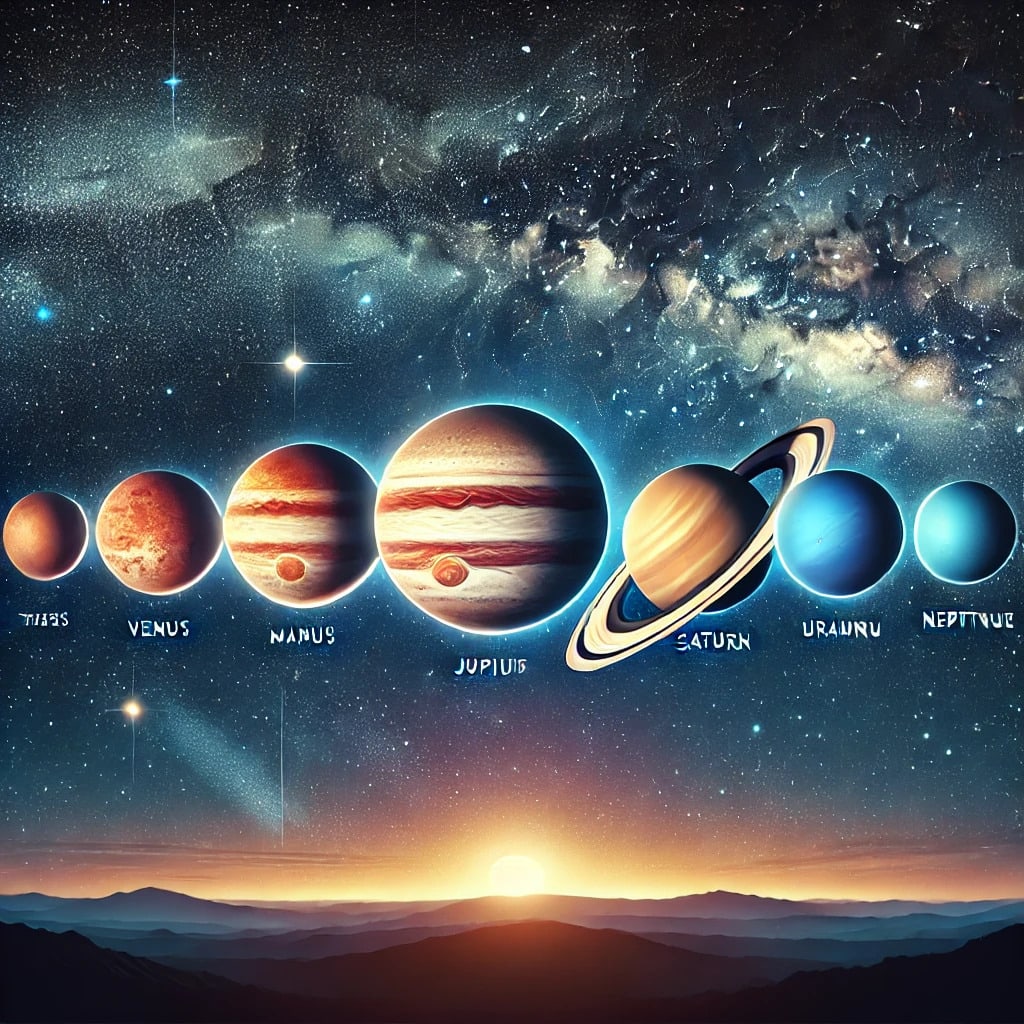
In the early months of 2025, skywatchers are treated to a mesmerizing celestial event known as the "Planetary Parade." This phenomenon features six of our solar system's planets—Venus, Mars, Jupiter, Saturn, Uranus, and Neptune—aligning in the night sky, offering a spectacular visual experience. Such alignments, while not exceedingly rare, present a unique opportunity for both amateur and professional astronomers to observe multiple planets simultaneously. This article delves into the details of this alignment, its significance, and tips for optimal viewing.
Understanding Planetary Alignments
Planetary alignments occur when planets appear to line up in the sky from our vantage point on Earth. This happens because the planets orbit the sun on roughly the same plane, known as the ecliptic plane. As they travel along their orbits, there are times when they appear clustered together in a particular region of the sky. It's important to note that while the planets seem aligned from our perspective, they remain vast distances apart in space. Such alignments are a result of our line of sight and the orbital positions of the planets at a given time.
The 2025 Planetary Parade
Between January and February 2025, observers have the chance to witness a remarkable alignment of six planets. The optimal viewing period spans from January 21 to mid-February, with peak visibility around January 25. During this time, Venus, Mars, Jupiter, Saturn, Uranus, and Neptune will be visible in the evening sky shortly after sunset. While Venus, Mars, Jupiter, and Saturn can be seen with the naked eye, viewing Uranus and Neptune will require the use of binoculars or a telescope due to their dimmer appearance.
NEW YORK POST
Significance of the Alignment
While planetary alignments are not uncommon, the simultaneous visibility of six planets is a noteworthy event. Such alignments provide valuable opportunities for educational outreach, public engagement in astronomy, and a deeper appreciation for the mechanics of our solar system. For astronomers, both amateur and professional, these events offer a chance to observe planetary positions, study their movements, and engage in astrophotography.
Optimal Viewing Tips
To make the most of this celestial event, consider the following tips:
Timing: The best time to observe the alignment is approximately 45 minutes after sunset. This window allows the sky to darken sufficiently while the planets are still above the horizon.
HINDUSTAN TIMES
Location: Choose a viewing spot with minimal light pollution and an unobstructed view of the horizon. Elevated areas or open fields away from city lights provide ideal conditions.
Equipment: While four of the planets are visible to the naked eye, bringing binoculars or a telescope can enhance the experience, especially for spotting Uranus and Neptune.
Sky Maps and Apps: Utilize astronomy apps or star charts to help identify the planets and understand their positions relative to each other.
Weather Conditions: Clear skies are essential for optimal viewing. Check local weather forecasts in advance and plan accordingly.
Cultural and Historical Context
Throughout history, planetary alignments have fascinated civilizations, often being imbued with cultural or astrological significance. In ancient times, such events were interpreted as omens or messages from the gods. Today, while we understand the scientific basis of these alignments, they continue to inspire wonder and serve as reminders of the intricate dance of celestial bodies in our solar system.
Safety Considerations
When venturing out to observe the planetary alignment, ensure personal safety by choosing well-populated or familiar locations, especially during nighttime hours. Inform someone of your plans and carry necessary supplies, such as a flashlight, warm clothing, and a fully charged mobile phone.
Conclusion
The Great Planetary Alignment of 2025 offers a captivating glimpse into the dynamic workings of our solar system. Whether you're an avid astronomer or a casual stargazer, this event provides a unique opportunity to connect with the cosmos and witness the harmonious alignment of six planets. Mark your calendars, prepare your viewing gear, and take part in this celestial spectacle that beautifully illustrates the wonders of the universe.
About the Creator
Keep reading
More stories from Razia Aman and writers in Education and other communities.
Ninja Gaiden 2 Black: A Timeless Action Masterpiece Revisited
Introduction Few action games have left as indelible a mark on the gaming industry as Ninja Gaiden 2 Black. Released as a definitive edition of the acclaimed Ninja Gaiden 2, this title is renowned for its brutal difficulty, intricate combat mechanics, and visually stunning presentation. Whether you're a longtime fan of the series or a newcomer to the world of ninja action games, Ninja Gaiden 2 Black remains a benchmark of excellence in the hack-and-slash genre.
By Razia Amanabout a year ago in Gamers
Beginner Investing Blueprint: A Simple Path Toward Wealth and Financial Freedom
Investing is one of the most powerful ways to build wealth and reach financial freedom. Yet many people delay investing because it feels complex or risky. The truth is that investing does not need to be complicated. A clear beginner investing blueprint can help anyone start building a strong financial future.
By Millicent Prince3 days ago in Education
The Power of Fellowship: Strengthening Faith Through Shared Moments and Unity
The Power of Fellowship in Everyday Faith The power of fellowship plays an important role in many faith communities. It brings people together through shared beliefs, prayer, and support. Fellowship is not only about gathering in one place. It is about building meaningful relationships that help people grow in faith.
By World Olivet Assemblyabout 7 hours ago in Education


Comments (1)
Fantastic spectacle! Great work