
The Great Caffeine Leap Inside China USD 22,332.0 Million Coffee Revolution (2025–2033)
China Coffee Market: Drivers, Trends, and Strategic Insights
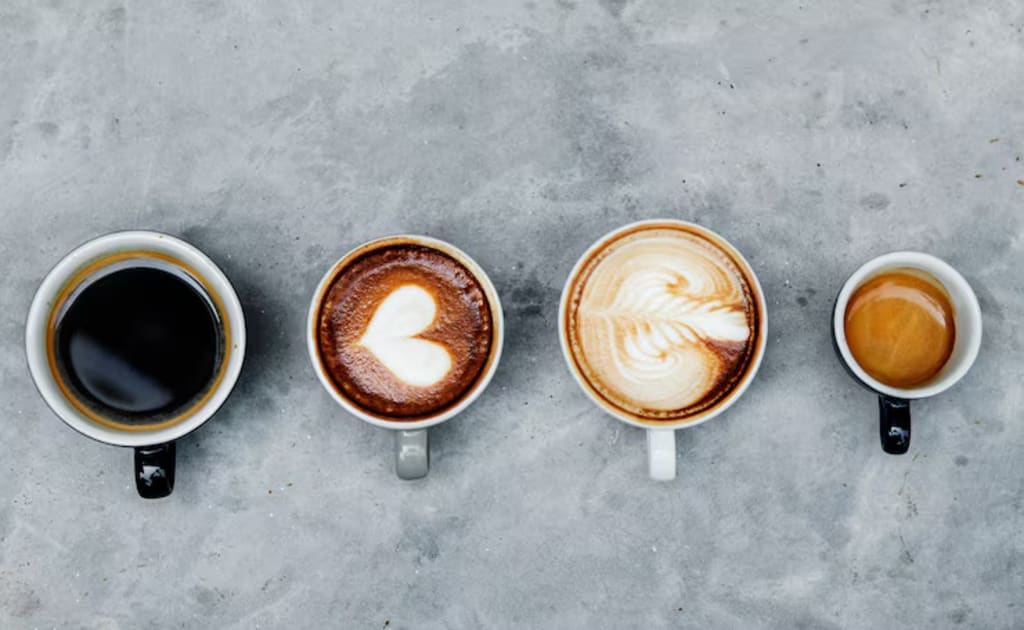
In early 2026, the morning ritual in Shanghai has undergone a radical transformation. A decade ago, the "morning pick-me-up" was almost exclusively a cup of green tea. Today, the streets are a neon-lit battleground of high-tech espresso machines, app-based delivery bikes, and a "coffee rave" culture that has turned caffeine into the ultimate social currency.
China coffee market, valued at USD 18,686.4 Million in 2024, is now powering toward a projected USD 22,332.0 Million by 2033. While the projected CAGR of 2% appears conservative for such a vibrant sector, it masks a fierce internal "Price War" and a massive shift in volume that is fundamentally changing how 1.4 billion people consume energy.
The Price War Paradigm: The 9.9 RMB Reality
In 2026, the dominant story of the Chinese coffee market is the "Budget Boom." Led by domestic titans like Luckin Coffee and its aggressive rival Cotti Coffee, the market has been defined by a relentless price war where a high-quality latte can be purchased for as little as 9.9 RMB (roughly $1.40).
Luckin’s Milestone: By early 2026, Luckin Coffee has surpassed 30,000 stores, officially making it the largest coffee chain in the world by outlet count. Its digital-first, "pick-up-only" model has successfully turned coffee from a luxury sit-down experience into a fast-moving commodity.
The Squeeze on Premium: This budget-focused landscape has forced international giants to pivot. In a landmark move in late 2025, Starbucks sold a majority stake in its China operations to local firm Boyu Capital, signaling a shift toward "hyper-localization" to survive the local competition.
Gen Z and the "Coffee Rave" Culture
The engine behind the $22 billion forecast is China’s Gen Z (Zoomers). For this demographic, coffee is no longer just a beverage; it is a lifestyle statement and a "social glue."
Experience over Luxury: In cities like Chengdu and Shenzhen, 2026 has seen the rise of "Coffee Raves" daytime social gatherings that trade alcohol for high-caffeine "Sunrise Beats." This trend reflects a broader youth shift toward "Clean Living" and "Accessible Luxury."
Guochao (National Pride): There is a growing preference for homegrown brands. Over 57% of Chinese consumers now report a preference for local chains over international ones, viewing brands like Manner Coffee or Soulmade as more culturally "in-sync" with Chinese flavor palettes (e.g., Osmanthus lattes or Cheese-foam cold brews).
Innovation: Beyond the Bean
The China coffee market of 2026 is the most innovative on the planet. To differentiate themselves in a crowded market, brands are experimenting with "Functional and Fusion" coffee.
The Tea-Coffee Hybrid: Recognizing that China is still a tea-drinking nation at heart, the most successful new product launches of 2025-2026 have been Tea-Lattes. These drinks blend traditional Oolong or Jasmine teas with espresso, creating a "gateway" for traditionalists to enter the coffee world.
Ready-to-Drink (RTD) Explosion: While coffee shops dominate the news, the RTD segment is growing at a CAGR of 6.8%. High-end bottled cold brews found in convenience stores like 7-Eleven and Lawson are becoming the preferred choice for office workers in Tier-2 and Tier-3 cities.
The "Yunnan Pride": Domestic Sourcing
For years, China relied on imports from Brazil and Ethiopia. In 2026, the tide has turned toward Yunnan Province. The Chinese government’s "Thousand, Hundred, and Ten-Thousand Project" has successfully modernized the domestic supply chain.
Quality over Quantity: Yunnan is no longer just a mass-producer; it is now a hub for "Specialty Coffee." By late 2025, the province reached a 30% specialty coffee ratio, with local beans winning international cupping awards.
The Local Narrative: Brands are winning over consumers by telling the "Yunnan Story" emphasizing local farmers and sustainable high-altitude cultivation, which resonates deeply with the "Cultural Confidence" of the 2026 consumer.
Challenges: The Margins of the 2033 Horizon
As the market moves toward USD 22.3 Billion, several "Bitter Notes" remain:
Margin Compression: The relentless price wars have made it difficult for smaller, independent cafes to survive. In 2026, we are seeing a "Market Consolidation" where only the most efficient supply chains can remain profitable at 9.9 RMB per cup.
Homogeneity: With thousands of new stores opening every month, "Product Fatigue" is a real risk. Brands are forced to launch "New Arrivals" weekly to keep the fickle attention of social-media-driven consumers.
Data Security: As the market becomes entirely app-based, data privacy for "Loyalty Programs" has become a major regulatory focus. Brands must now navigate strict new "Data Sovereignty" laws to manage their millions of active users.
Conclusion: A Global Blueprint for Growth
The China coffee market of 2026 is a glimpse into the future of global retail. It is a world where delivery is the default, price is the weapon, and innovation is the only way to stay relevant. By 2033, China will not just be a major consumer of coffee; it will be the global trendsetter, exporting its "Digital-First" coffee model to the West.
For the global coffee industry, the message is clear: the most important cup of coffee isn't being brewed in Seattle or Milan it’s being ordered via an app in a high-rise in Shanghai.
About the Creator
Keep reading
More stories from Neeraj kumar and writers in Education and other communities.
The USD 50.6 Billion Playbook How China is Revolutionizing the Global Toy Industry (2025–2033)
In the bustling manufacturing hubs of Guangdong, a quiet revolution is taking place. The traditional image of China as a mass-producer of simple plastic trinkets is being replaced by a high-tech reality of AI-integrated robots, "smart" educational kits, and sustainable bioplastics.
By Neeraj kumara day ago in Education
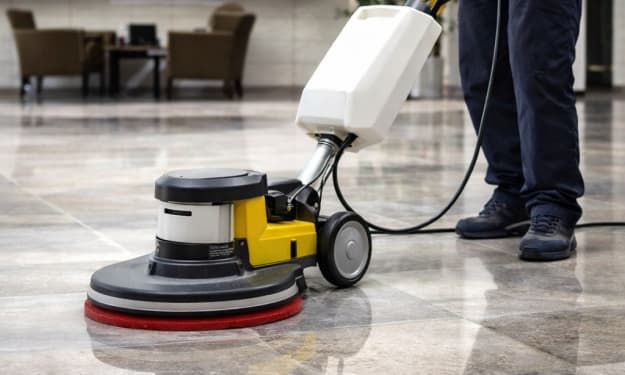
What Is a Single Disc Machine and How It Is Used in Professional Floor Cleaning
Professional floor cleaning is not about mopping harder. It is about using the right machine for the right surface. One of the most reliable tools in commercial cleaning is the Single Disc Machine. If you do not understand this machine, you are already behind.
By Devansh Maurya3 days ago in Education
How to Thrive in Today’s Competitive Hospitality
The hospitality industry is growing fast. It includes hotels, restaurants, travel services, and event planning. Every business in this field wants to earn guests' trust. But with more choices than ever, staying ahead is not easy. This makes the industry very competitive.
By Asad Malikabout 12 hours ago in Education
I Don't Need My Phone... Wait, Is That Actually True?
My parents gave me my first cell phone when I was twelve years old. It wasn't a fancy iPhone or anything, not even close. Just a simple black flip phone for when I needed to call or text them after school.
By Madison "Maddy" Newtonabout 15 hours ago in Humans



Comments
There are no comments for this story
Be the first to respond and start the conversation.