
The Girl Who Carried Fire
In a world that tried to silence her spark, she lit her own way through the darkness.

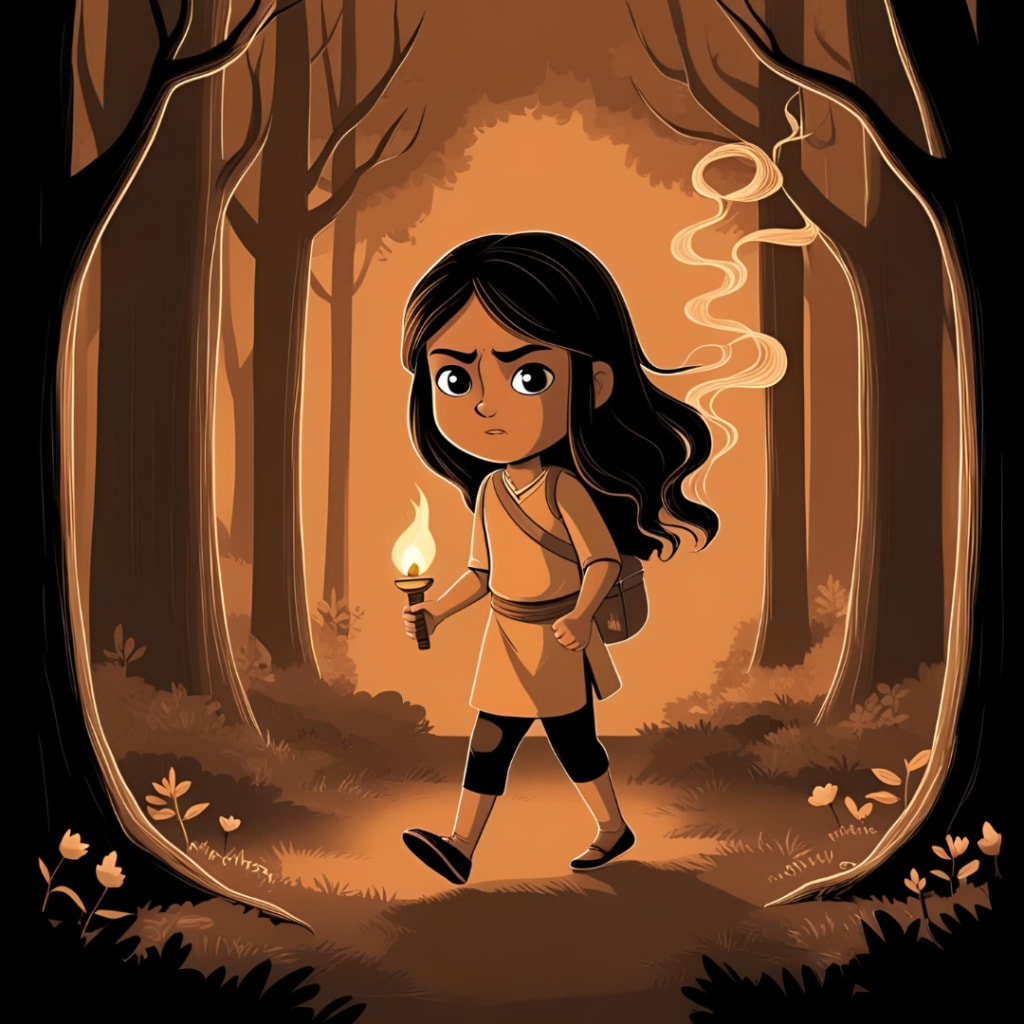
She wasn’t born with a flame in her hand. But somewhere between silence and survival, she learned to carry fire.
Her name was Saira. A girl from a small, overlooked village tucked between hills too shy to speak their names out loud. The kind of place where the wind carried more stories than the people did, where dreams often grew roots and died in the soil before ever seeing the sky.
From the very beginning, Saira had questions. Why does the sun fall asleep behind the trees? Why do grown-ups smile when their eyes say they want to cry? Why must girls always be quiet when their hearts beat like thunder?
No one answered. Not really.
“Good girls don’t ask too many questions,” they said.
So she stopped asking aloud and started writing them in the corners of her notebook. Every page became a garden of unanswered wonder — a hidden world where her voice wasn’t just welcome; it was wild and unstoppable.
At twelve, Saira saw her first spark.
It came from a broken radio in the school storeroom, where she had been asked to clean as punishment for talking in class. She found it tucked beneath dusty textbooks and rusted metal shelves. She turned it on — not expecting anything — and it crackled to life, spilling music from far away, voices that danced in languages she didn’t know but felt in her bones.
That day, Saira realized something important: the world was bigger than her village, and maybe, just maybe, her fire had somewhere else to burn.
But fire threatens people who live in dry houses.
By fourteen, her teachers stopped calling her curious and started calling her difficult. Her neighbors called her "fast" when she ran too quickly toward things they didn’t understand. Her relatives whispered warnings into her mother’s ears: “She’ll bring trouble if you don’t quiet her down.”
So they tried.
They tried rules. Restrictions. Religion. Reminders of duty. Of being “a good daughter.” Of marriage. Of what “people will say.”
But you cannot unteach a girl how to burn once she’s tasted her own warmth.
Saira learned to carry her fire silently. In secret notebooks. Late-night readings with a torch under her blanket. She taught herself English from old magazines, coding from a borrowed phone, and poetry from the ache inside her ribs.
She didn’t just carry fire. She became it.
By seventeen, she’d published her first story online. It wasn’t much — just a blog post about growing up unheard — but it exploded. Girls from different cities, countries even, messaged her: “I feel this too.” “I thought it was just me.” “Thank you for saying what I couldn’t.”
For the first time, Saira understood: her voice wasn’t a weapon. It was a torch.
And there were others walking through darkness who needed light.
Of course, it wasn’t easy. Her father found out about her writing and broke her phone. Her uncle told her she was shaming the family. For three weeks, they locked her notebook in a box and told her to forget childish dreams.
But the thing about fire? It doesn’t forget how to burn.
Saira wrote poems in steam on mirrors. Typed stories at internet cafés. She waited. Planned. Saved.
At nineteen, she won a scholarship to a journalism program in the city. She told her mother with tears and trembling hands, expecting refusal. But her mother — worn and quiet from years of silencing her own sparks — looked at her daughter and saw the fire she had once buried.
And she said yes.
Now, Saira writes for girls like her. For the loud, the scared, the brave ones hiding in small villages, in big cities, in homes where fire is feared. Her stories carry truth like wildfire. They don’t ask permission.
Because she knows now what no one told her when she was small: You don’t need to be made of metal to carry heat.
You just need to remember — even on the days when you feel like ash — that you were born to burn bright.
About the Creator
Muhammad Hamza Safi
Hi, I'm Muhammad Hamza Safi — a writer exploring education, youth culture, and the impact of tech and social media on our lives. I share real stories, digital trends, and thought-provoking takes on the world we’re shaping.
Keep reading
More stories from Muhammad Hamza Safi and writers in Education and other communities.
Strategy Before Software: Why Content Strategy Matters More Than Platform Technology
A strong content strategy matters more than platform technology because strategy shapes every choice a team makes. It guides tone, purpose, structure, and audience focus. Technology can help with speed and reach, but it cannot replace direction. A tool only works well when someone uses it with a clear plan. Without a strategy, even the best systems fail to connect with real people.
By James Kaminsky2 days ago in Education
AI in K-12 Education Market to Reach USD 9,178.5 Mn by 2034
The global AI in K-12 education market is witnessing rapid expansion as schools adopt artificial intelligence technologies to improve teaching methods and learning outcomes. The market is projected to grow from USD 391.2 million in 2024 to approximately USD 9,178.5 million by 2034, reflecting a strong 37.1% CAGR during the forecast period. Artificial intelligence is increasingly being integrated into digital classrooms, enabling personalized instruction, automated assessments, and data driven learning insights.
By Roberto Crum7 days ago in Education


Comments
There are no comments for this story
Be the first to respond and start the conversation.