

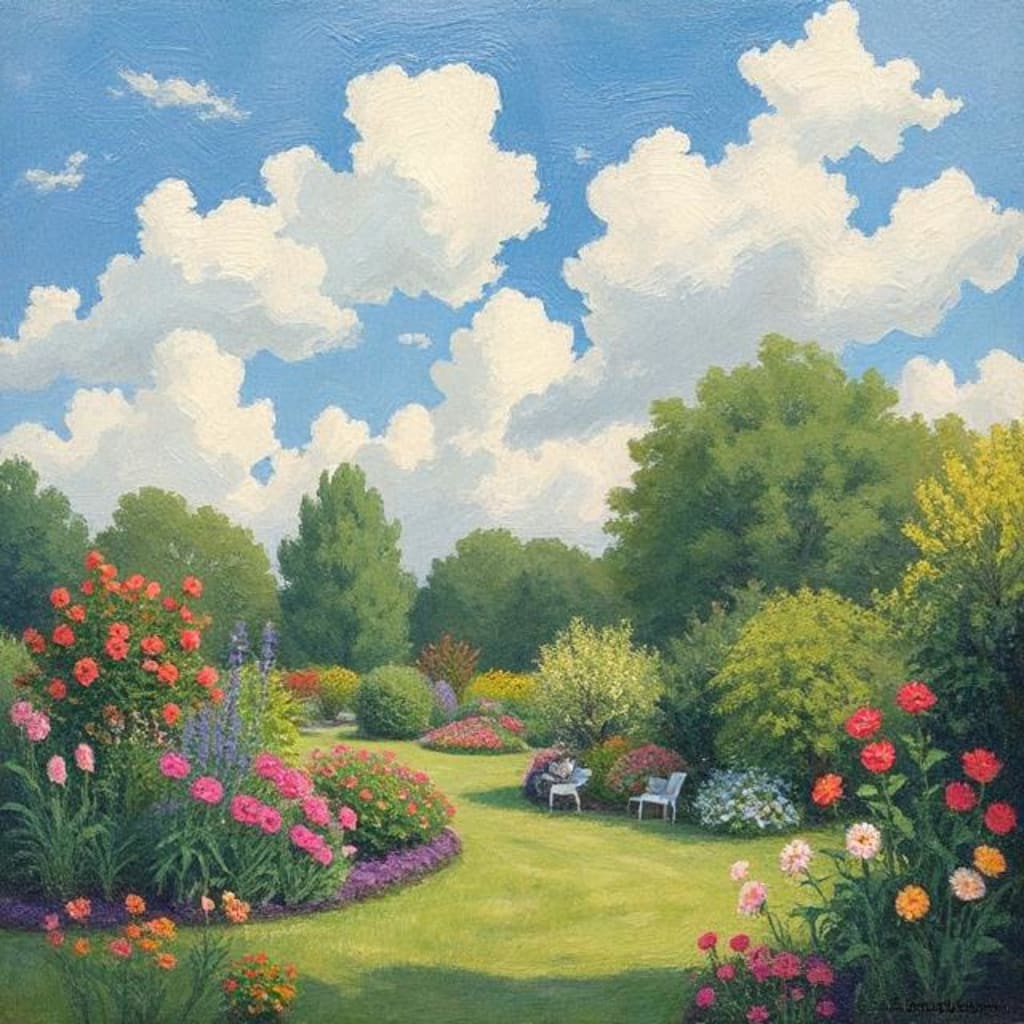
The Garden of Second Chances
Leo Miller stared at the eviction notice in his hand, the bold red letters blurring as his eyes welled with tears. Three months behind on rent. Seventy-two hours to vacate. At sixty-three, with arthritis gnawing at his joints and a pension that barely covered his medication, he had nowhere to go.
He shuffled to the window of his small apartment and gazed at the abandoned lot across the street. Once, it had been a vibrant community garden, but years of neglect had transformed it into a dumping ground for broken furniture and trash. Weeds fought through cracked concrete—the only things still thriving in the desolate space.
Just like that lot, Leo thought bitterly, I've been discarded too.
Twenty-seven years he'd worked at the local factory before it closed down, leaving him with a meager pension and skills no one seemed to need anymore. His wife Martha had passed five years ago, their only daughter lived across the country with her own family, and his friends had either moved away or were dealing with their own hardships.
Leo crumpled the eviction notice and tossed it onto the kitchen table. He'd skip his heart medication this month. Maybe that would free up enough money for a partial rent payment, buy him some time.
The knock on his door the next morning came unexpectedly. Leo opened it to find Elena Diaz, the young woman who had moved in down the hall three months ago. She was clutching a folder of papers and looking nervous.
"Mr. Miller? I'm sorry to bother you, but I need your signature for something."
Leo invited her in, curious despite his troubles.
Elena explained that she was studying urban development at the community college and had a proposal for her final project—transforming the abandoned lot across the street into a community garden.
"The city will donate the land if I can get enough neighbors to commit to maintaining it," she said, spreading her plans across his kitchen table. "It would provide fresh produce for the building, maybe even enough to sell at the farmers' market."
Leo studied the enthusiastic young woman, remembering how Martha had always wanted a garden. "That lot's been dead for years," he said. "Just like everything else around here."
"Nothing's ever truly dead," Elena replied, her dark eyes serious. "It's just waiting for someone to care enough to bring it back to life."
Leo signed her petition, more to be polite than anything else. He didn't mention the eviction notice lying crumpled under the table.
The next day, Leo watched from his window as Elena and a small group of volunteers began clearing the lot. Their determination seemed foolish to him—what difference would a few flowers make in a neighborhood sliding into decay?
But as the morning wore on, Leo found himself putting on his jacket. His joints protested as he crossed the street, but something pulled him forward—perhaps the memory of Martha tending her window boxes, whispering to her plants as if they could hear her.
"Could you use another pair of hands?" he asked Elena. "They're old hands, but they still work. Most days, anyway."
Elena's smile was like sudden sunshine. "We could use your experience, Mr. Miller."
"Leo," he corrected her. "Just Leo."
By midafternoon, Leo had forgotten about his arthritis. He was showing a teenager named Marcus how to properly turn soil, knowledge his father had passed to him decades ago on their small family farm.
"You've got to respect the earth," Leo explained. "It remembers how you treat it."
"Like people," Marcus said quietly.
Leo glanced at the boy, noticing for the first time the fading bruise near his temple. "Yes," he agreed. "Exactly like people."
When Leo returned to his apartment that evening, exhausted but somehow lighter, he found a voicemail from his landlord. The property management company had received an anonymous donation covering his back rent. The eviction was on hold.
Over the next weeks, the garden became Leo's reason to get up each morning. He taught the volunteers—mostly neighborhood kids and elderly residents—everything he remembered about growing things. Together they planted tomatoes, peppers, lettuce, and herbs in the newly cleared plots.
Elena had been right—nothing was truly dead. The soil beneath the trash and concrete was rich and eager, as if it had been waiting all along for someone to notice its potential.
Leo began to sleep better. His doctor noted his blood pressure had improved. "Whatever you're doing," she said, "keep it up."
What he was doing, Leo realized, was living again.
One evening, as he was locking up the garden shed, he found Marcus sitting alone on a bench, his backpack clutched protectively in his lap.
"My mom's boyfriend is over," the boy explained, avoiding Leo's eyes. "It's better if I'm not around when he's drinking."
Leo nodded, understanding more than the boy realized. "I could use help preparing tomorrow's seedlings," he said. "And I make a decent spaghetti."
It became a routine. Whenever home wasn't safe, Marcus would appear at the garden, and Leo would find tasks to occupy them both. Sometimes they talked, sometimes they worked in companionable silence. Leo never pushed, but he made sure the boy knew he was listening.
By midsummer, the garden was thriving beyond anyone's expectations. The neighbors had built a small market stand where they sold excess produce on weekends. The money went into a community fund that had already helped two families with emergency repairs and medical bills.
Leo's apartment building hadn't looked this alive in years. Residents who had previously avoided eye contact now stopped to chat. Children played in the courtyard instead of staying locked indoors. Even the landlord had started making long-overdue repairs.
"It's not just about the vegetables," Elena told him as they watered the tomato plants one evening. "It's about remembering we're connected."
Leo nodded, thinking about how his own life had transformed. He was now teaching gardening classes twice a week at the community center. His daughter had visited, amazed at the change in him, and brought his grandchildren to help in the garden.
And then there was Marcus. The boy's mother had finally left her abusive boyfriend and found the courage to apply for a job at the local diner. Leo had been there to help them move into their new apartment, three blocks closer to the garden.
In September, the city awarded their community garden a neighborhood revitalization grant. The local paper ran a front-page story featuring a photo of Leo and Marcus harvesting carrots together.
"How did you know it would work?" Leo asked Elena as they sat on the garden bench, watching children chase butterflies among the flowers.
"I didn't," she admitted. "But my grandmother always told me that healing happens when we stop focusing on what we've lost and start nurturing what remains."
Leo thought about this, about second chances and the surprising ways they arrived. He thought about how the simple act of tending a garden had saved him—not just financially, but spiritually.
"Your grandmother was wise," he said.
That evening, Leo wrote a long-overdue letter to his daughter. He told her about the garden, about Marcus, about the community that had grown alongside the vegetables. He told her that he'd learned something important in his sixty-third year: that it's never too late to plant new seeds.
And as the autumn breeze rustled through the garden outside his window, carrying the promise of next year's growth, Leo understood the truest lesson of all—that sometimes, when we help others find their way back to life, we find our own way too.
About the Creator
Keep reading
More stories from VISHWANATHA and writers in Education and other communities.
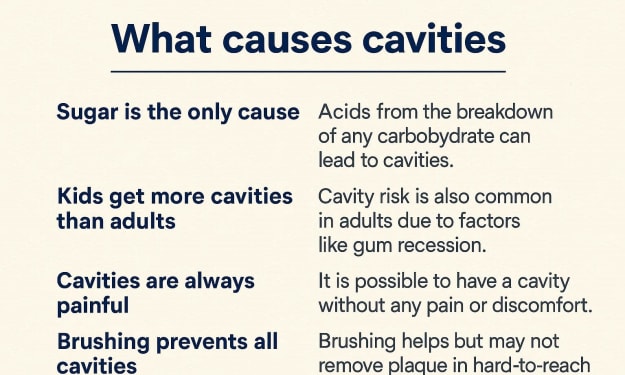
What causes cavities
When a team of archaeologists recently came across some 15,000-year-old human remains, they made an interesting discovery. The teeth of those ancient humans were riddled with holes. Their cavities were caused by the same thing that still plagues us today: specific tiny microbes that live in our mouths.
By Munesh Yadavabout a minute ago in Education
The CEO of Everything
They say "jack of all trades, master of none," but they forgot to mention the part where the jack of all trades is also the camera woman, the makeup artist, and the person currently yelling at a tangled Wii microphone cable in a her own bathroom while recording herself singing and trying to make it look realistic and professional. (As professional as you can make it with nothing but a cell phone camera and a mic that doesn't work)
By Sara Wilson6 days ago in Humans


Comments
There are no comments for this story
Be the first to respond and start the conversation.