
The Future of Trading: Technology, Innovation, and the Rise of a New Financial Era
Why Tomorrow’s Markets Will Never Look the Same

The Future of Trading: Technology, Innovation, and the Rise of a New Financial Era
BY [WAQAR ALI]
Why Tomorrow’s Markets Will Never Look the Same
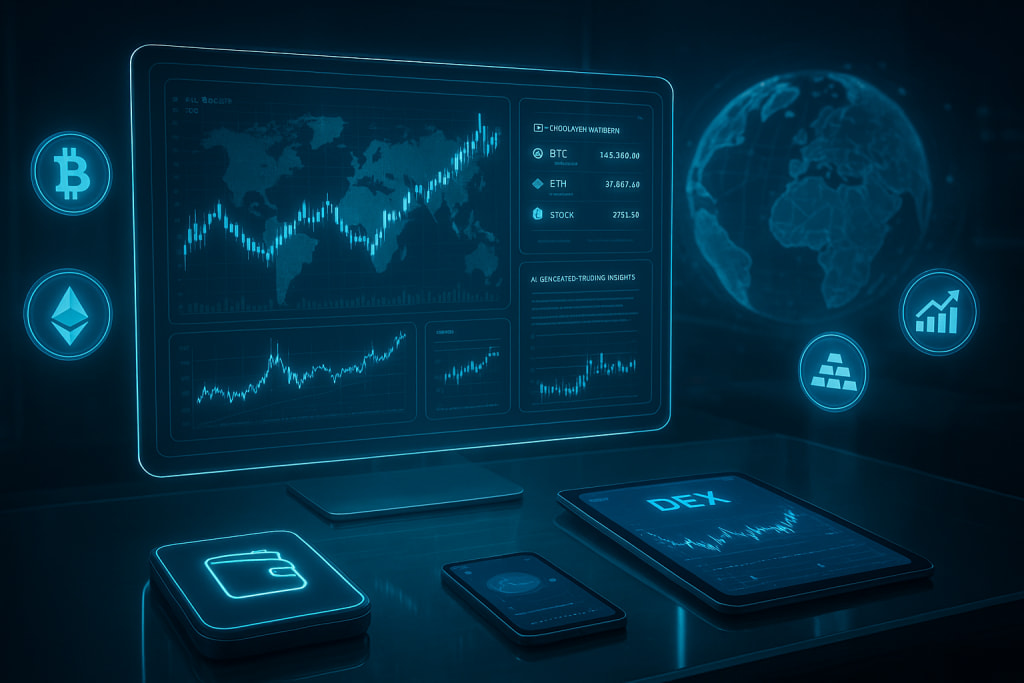
The world of trading is changing faster than ever before. What was once limited to crowded stock exchange floors with brokers shouting orders has now evolved into a digital-first ecosystem powered by algorithms, blockchain, and artificial intelligence. The future of trading promises not only speed and accessibility but also a reimagining of how individuals and institutions interact with financial markets. For investors, traders, and entrepreneurs, understanding these changes is not just optional—it’s essential.
From Traditional Floors to Digital Screens
The journey of trading has always mirrored technological progress. In the past, trading floors in New York, London, and Tokyo were the heartbeat of global finance. Today, much of that activity takes place on digital platforms accessible to anyone with an internet connection. The shift to online platforms democratized trading, opening doors for retail traders who no longer need massive capital to participate.
But the future takes this one step further. Instead of human brokers or manual trades, machine-driven decisions are taking center stage. Algorithms capable of analyzing market trends in milliseconds are reshaping the playing field.
Artificial Intelligence and Algorithmic Trading
One of the strongest drivers of tomorrow’s trading world is artificial intelligence. AI can analyze patterns, predict market shifts, and even execute trades with precision that no human could match. Already, hedge funds and institutions rely on AI-based trading models to maximize profits and minimize risks.
But this technology isn’t limited to the big players. Startups and retail platforms are bringing AI-driven tools to individual traders as well. Imagine a future where your trading app doesn’t just show charts but actively advises you based on market behavior, risk tolerance, and global economic shifts in real time. That future is closer than we think.
The Power of Blockchain and Decentralized Finance
If AI is the brain of future trading, blockchain is the backbone. Blockchain technology has already disrupted how value is transferred across borders. Cryptocurrencies like Bitcoin and Ethereum demonstrated that digital assets could be traded around the clock without relying on centralized intermediaries.
In the future, decentralized exchanges (DEXs) may rival traditional financial markets. Traders will be able to buy and sell assets directly, with full transparency and reduced fees. Smart contracts will automate transactions, ensuring trust and efficiency.
This is not just about crypto—it’s about redefining trading itself. Stocks, commodities, real estate, and even carbon credits may all be tokenized and traded on decentralized platforms. The future trader could potentially access all forms of assets within a single digital wallet.
Accessibility and Global Participation
Perhaps the most exciting part of the future of trading is accessibility. With the rise of mobile apps and low-cost platforms, anyone from a college student in Kenya to a farmer in Brazil can participate in global markets. Financial literacy tools are improving, and barriers like geography and wealth are becoming less relevant.
We are moving toward a world where trading isn’t just for the elite but for everyone. This will empower individuals to grow their wealth and participate in opportunities previously reserved for Wall Street insiders.
Challenges on the Horizon
Of course, the future of trading will not be without challenges. Regulatory frameworks will need to evolve to manage decentralized systems and digital assets. Cybersecurity threats will remain a constant concern as digital platforms grow. And the rise of AI may create an uneven playing field, where those without advanced technology feel left behind.
However, these challenges are not insurmountable. With proper regulation, innovation, and education, the benefits far outweigh the risks.
A New Financial Era
The future of trading will be fast, global, and deeply interconnected with technology. Markets will operate 24/7, spanning not only stocks and currencies but also tokenized real-world assets. Traders will rely on AI and blockchain as naturally as we rely on the internet today.
Ultimately, the future of trading is about empowerment. It is about giving individuals access to opportunities once limited to a select few and creating a financial system that is more transparent, efficient, and inclusive.
As we stand at the edge of this transformation, one thing is clear: tomorrow’s markets will look nothing like today’s. For those willing to adapt and learn, the opportunities are limitless.
About the Creator
WAQAR ALI
tech and digital skill
What People Get Wrong About Consulting
Many people talk about consulting, but few understand what it truly involves. Movies, social media, and word of mouth often shape a narrow view. This creates confusion for students, business owners, and even new consultants. The topic of common misconceptions about consulting matters because these beliefs affect career choices and business decisions. When ideas are wrong, expectations break down fast.
By Nicole Metz5 days ago in Education
How AI Is Impacting the Jobs of Website Designers and Developers
Artificial Intelligence (AI) is transforming industries across the globe, and the world of website design and development is no exception. From streamlining workflows and enhancing creativity to automating repetitive tasks and reshaping professional roles, AI’s influence is broad and deep. In this article, we explore how AI is impacting website designers and developers — the opportunities it presents, the challenges it introduces, and how professionals can adapt to thrive in an AI-augmented landscape.
By Rajiv Menon5 days ago in Education



Comments
There are no comments for this story
Be the first to respond and start the conversation.