
"The Future of Technology: Robotics and Automation"
"The Next Frontier: Robotics, Automation, and the Evolution of Technology"

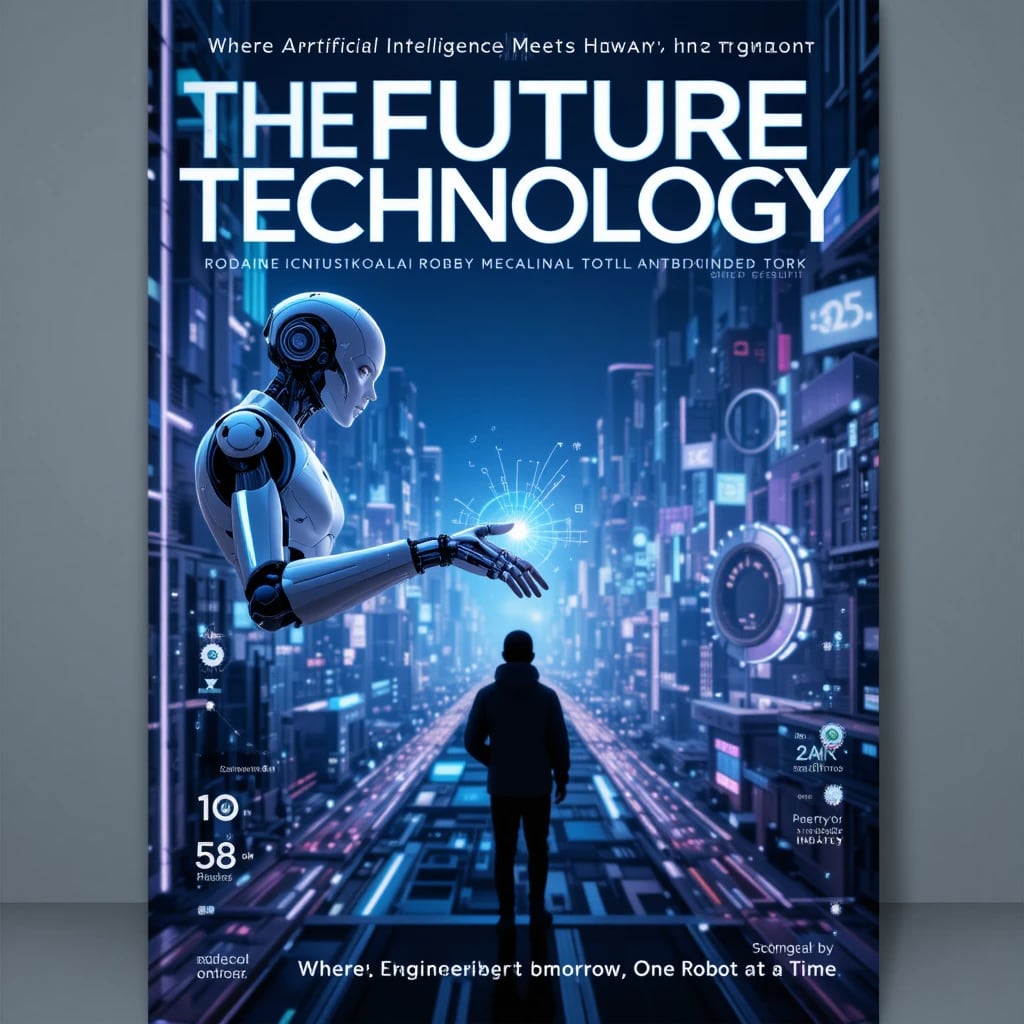
"Revolutionizing the world as we know it, robotics and automation are no longer the future—they are the present, rapidly transforming industries, economies, and the very nature of human labor."
From the assembly lines of yesterday to today’s AI-powered systems, the evolution of robotics and automation is nothing short of extraordinary. These technologies are rapidly becoming embedded into our daily routines—whether it’s a smart assistant in your home, a self-checkout machine at a store, or a robotic arm in a manufacturing plant. As innovation accelerates, it's becoming increasingly clear: the future is being shaped in real time. This article explores how robotics and automation are redefining our world, the opportunities they present, and the challenges we must navigate to ensure a balanced, inclusive, and responsible technological transformation.
🔹 1. The Rise of Robotics and Automation
The journey of robotics and automation dates back to the early 20th century, when mechanized tools began replacing manual labor in manufacturing. The real shift came during the 1950s and '60s, with the advent of industrial robots—machines capable of repetitive, high-precision tasks. Early examples like the Unimate robot on General Motors’ assembly lines paved the way for what would become a global technological revolution.

In recent decades, the rise of artificial intelligence has elevated these systems to new heights. Robots are no longer confined to rigid factory floors; they now navigate complex environments, analyze data, and learn from experience. From warehouse drones to AI chatbots, robotics and automation have expanded into logistics, customer service, healthcare, and even education. As machines become smarter and more adaptive, their role in society continues to grow.
🔹 2. Industry Disruption and Transformation
Few sectors have remained untouched by the influence of robotics and automation. In manufacturing, robotic arms now perform tasks faster and with greater accuracy than human workers, reducing errors and increasing output. In logistics, companies like Amazon deploy fleets of warehouse robots to sort, lift, and transport items with astonishing efficiency, while autonomous delivery vehicles and drones are testing new ground in last-mile logistics.
In healthcare, surgical robots assist doctors with precision operations, enhancing outcomes and reducing recovery times. Automation is also revolutionizing agriculture, where self-driving tractors, drone surveillance, and AI-based crop monitoring systems are helping farmers increase yields and manage resources more effectively.
This transformation isn’t just about speed and cost; it's about innovation. Automation enables personalized products, on-demand services, and agile responses to consumer needs. Businesses that embrace this shift are better equipped to scale, adapt, and lead in an increasingly digital economy.

🔹 3. Economic Impact and Workforce Evolution
While the benefits of automation are substantial, they come with economic complexities. The most pressing concern is job displacement. Tasks once performed by humans—especially repetitive or low-skill labor—are increasingly being handled by machines. This can lead to job loss in some sectors and regions, particularly where reskilling opportunities are limited.
However, automation is also creating new types of jobs. The demand for roles such as robotics engineers, AI specialists, machine learning analysts, and data scientists is soaring. Moreover, a growing emphasis on human-centered automation is driving demand for interdisciplinary skills—people who can bridge technology, ethics, and business strategy.
The key to balancing this shift lies in upskilling and reskilling. Governments, educational institutions, and companies must invest in training programs to prepare workers for the jobs of tomorrow. Embracing lifelong learning and adaptability will be crucial in navigating this evolving landscape.
🔹 4. Ethical Considerations and Challenges
As robotics and automation advance, ethical concerns become increasingly urgent. Algorithms that power decision-making robots can inherit biases from their human programmers, leading to discriminatory outcomes in hiring, policing, and healthcare. The potential for surveillance abuse through automated facial recognition or data collection poses serious threats to privacy.
Another critical issue is the concentration of power. Companies with access to massive datasets and advanced AI capabilities could dominate markets, leading to economic inequality and reduced competition.
To address these challenges, we must develop strong ethical frameworks and regulatory policies. Transparent algorithms, responsible AI design, and public oversight are essential to ensuring that technology serves humanity rather than controls it.
🔹 5. The Future Landscape
Looking ahead, robotics and automation will move beyond tools and become collaborative partners. In many workplaces, humans and machines will work side-by-side—robots handling the heavy lifting, humans bringing creativity, emotion, and critical thinking. This human-robot synergy will define the next wave of productivity and innovation.
We can expect to see more smart cities, where automated traffic control, waste management, and energy optimization improve urban living. Autonomous ecosystems—from self-driving car fleets to drone-based logistics hubs—are already in pilot phases.
The pace of change demands adaptability. Individuals must embrace continuous learning, and organizations must build cultures of innovation. Importantly, future development must be guided by responsibility—to ensure inclusivity, equity, and sustainability as we move into this new era.

🔹 Conclusion
Robotics and automation are not distant concepts confined to science fiction—they are here, now, and changing the world before our eyes. They offer the promise of increased efficiency, economic growth, and improved quality of life. But they also bring complex challenges, from workforce disruption to ethical concerns.
To thrive in this new era, societies must act with vision and responsibility. Embracing technological transformation means more than adopting new tools—it means reshaping education, redefining work, and recommitting to shared human values. The future isn’t waiting. It’s being built right now—one algorithm, one robot, and one decision at a time.
About the Creator
Shamshair Khan Hasan Zai
I share content on health, business, travel, motivation, and simple ways to earn money—focused on hope growth, and practical advice to help you live a better, more successful life.
Keep reading
More stories from Shamshair Khan Hasan Zai and writers in Education and other communities.
"Online Education: Benefits, Drawbacks, and the Future"
Online Education: Benefits, Drawbacks, and the Future Over the past decade—and especially during the COVID-19 pandemic—online education has transformed from a niche alternative into a mainstream mode of learning. Universities, schools, and independent learners around the globe have embraced digital platforms, shifting the educational landscape in unprecedented ways. As the world becomes increasingly interconnected and tech-driven, the growth of online learning is no longer a temporary solution but a defining feature of modern education.
By Shamshair Khan Hasan Zai10 months ago in Education
Why Products Get Ignored on Retail Shelves (And How Brands Can Fix It)
Today, when you walk through any retail store, they have a very cluttered retail display design. You will see shelves packed with products. Most of them are decent. Some are even excellent. But have you wondered why they are never picked up or made into the cash-out zone? Many are well-made, reasonably priced and even thoughtfully designed. And yet, a large number of them never get picked up. This is one of retail's quietest problems. It's because customers don't notice them. It's very natural that shoppers scan shelves in seconds. Products must communicate value instantly.
By Hazel Taylora day ago in Education
Veil of Subconscious Awakening
Images slide behind my eyelids like film cadres, bursting with meanings. In one moment, I’m speeding down the highway, making the speedometer swing wildly like a frantic pendulum. The next moment, I’m plunging from a falling plane, slowly crashing earthward. At home, I meet black cat’s green, googly eyes staring at me from the cavernous hollowness of the kitchen. When I turn for a moment, it disappears, and all I can see is a pair of blue suede shoes set up against the wall. I pick them up and put them on. When I glimpse at them again, they’ve become black as night, making me blink and flinch.
By Moon Desert6 days ago in Fiction




Comments
There are no comments for this story
Be the first to respond and start the conversation.