
The Future of Technology: Innovations Shaping Tomorrow
Technology
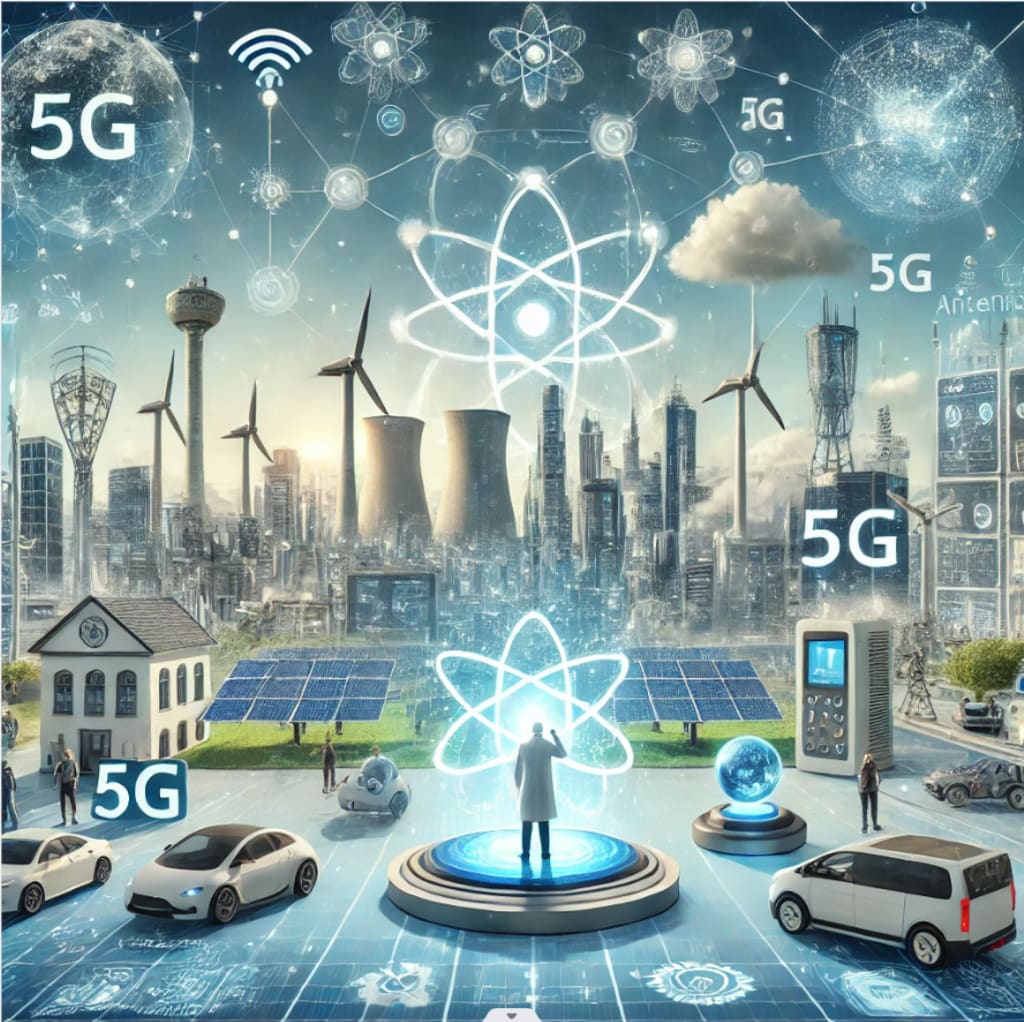
Technology has always been a driving force in shaping society, propelling us into the future at an unprecedented pace. From the first steam engine to the internet age, every era has witnessed groundbreaking innovations that transformed the way we live, work, and interact. Today, we stand at the precipice of a technological revolution that promises to reshape our world in ways previously unimaginable. In this article, we explore some of the most transformative technologies that will define the future and change the course of human history.
1. Artificial Intelligence and Machine Learning
Artificial Intelligence (AI) is no longer a concept confined to science fiction. It has become an integral part of our daily lives, from voice-activated assistants like Siri and Alexa to self-driving cars and personalized content recommendations. AI and machine learning algorithms have the power to process massive amounts of data, learning patterns and making predictions faster than humans ever could.
In the coming years, AI will play a pivotal role in industries such as healthcare, finance, education, and manufacturing. For example, AI-powered diagnostics tools can analyze medical images and predict diseases with greater accuracy than human doctors. Autonomous machines in factories will revolutionize production processes, reducing errors and increasing efficiency. While some fear AI could replace human jobs, it is also expected to create new roles in AI development, oversight, and ethics.
However, the rise of AI comes with ethical concerns. The potential misuse of AI for surveillance, biased decision-making, or even autonomous weapons poses challenges that society must address. As AI continues to evolve, it will be crucial to develop regulations and frameworks that ensure its responsible use.
2. Quantum Computing
Quantum computing, though still in its infancy, holds the potential to revolutionize computing as we know it. Unlike classical computers that use bits (which represent a state of 0 or 1), quantum computers use qubits, which can represent multiple states simultaneously due to a phenomenon called superposition. This allows quantum computers to process complex calculations exponentially faster than traditional computers.
Applications of quantum computing are vast, ranging from drug discovery to cryptography and financial modeling. For instance, quantum computers could simulate molecular structures to accelerate the development of new medicines or materials. In cybersecurity, quantum encryption methods could render current encryption obsolete, providing unparalleled data protection.
Despite its promise, quantum computing faces significant technical challenges. Researchers are working on stabilizing qubits, as they are highly sensitive to their environment and prone to errors. However, with companies like IBM, Google, and Microsoft investing heavily in quantum research, breakthroughs in the field are on the horizon.
3. 5G and the Internet of Things (IoT)
The rollout of 5G technology is set to revolutionize telecommunications and enable the proliferation of the Internet of Things (IoT). 5G promises faster download speeds, lower latency, and the ability to connect a vast number of devices simultaneously. This will open the door to a new era of smart cities, autonomous vehicles, and connected homes.
In smart cities, IoT devices embedded in infrastructure can monitor traffic flow, energy usage, and environmental conditions in real-time, enabling more efficient urban management. Autonomous vehicles will rely on 5G networks to communicate with each other and with smart traffic systems, reducing accidents and traffic congestion. In homes, IoT devices such as smart thermostats, lighting systems, and security cameras will offer greater convenience and energy savings.
However, the widespread adoption of 5G and IoT comes with challenges, particularly in the realm of security. With billions of devices connected to the internet, the potential for cyberattacks and data breaches increases. As these technologies evolve, ensuring robust cybersecurity measures will be critical to their success.
4. Renewable Energy and Sustainable Technologies
As the world grapples with the effects of climate change, the need for sustainable technologies has never been more urgent. Renewable energy sources such as solar, wind, and hydropower are becoming more affordable and efficient, leading to a global shift toward cleaner energy solutions.
Innovations in energy storage, such as advanced battery technologies, are enabling the widespread adoption of renewable energy by storing excess energy generated during peak production times. Electric vehicles (EVs) are also gaining traction as governments and industries push for greener transportation alternatives. With advancements in EV battery life and charging infrastructure, the future of transportation is set to be electric.
Moreover, sustainable technologies are being integrated into construction, agriculture, and manufacturing. Green building practices, such as the use of energy-efficient materials and designs, are helping reduce the carbon footprint of new structures. In agriculture, precision farming technologies use data analytics to optimize water usage, soil health, and crop yields, reducing waste and environmental impact.
5. Biotechnology and Genetic Engineering
Biotechnology is another field that holds immense potential for the future, particularly in the areas of healthcare and agriculture. Advances in genetic engineering, such as CRISPR technology, allow scientists to edit genes with precision, offering the potential to cure genetic diseases, improve crop resilience, and even extend human life.
In medicine, gene therapy is already being used to treat rare genetic disorders by replacing faulty genes with healthy ones. In agriculture, genetically modified crops can resist pests and diseases, reduce the need for harmful pesticides, and increase food security for a growing global population.
While the possibilities of biotechnology are vast, they also raise ethical concerns. The ability to edit human genes, for example, presents moral dilemmas about the potential for “designer babies” and unintended consequences of genetic modification. Society will need to carefully navigate these ethical challenges as biotechnology continues to advance.
Conclusion
The future of technology is both exciting and uncertain. Innovations in AI, quantum computing, 5G, renewable energy, and biotechnology promise to transform industries and improve the quality of life for people around the world. However, with these advancements come challenges—ethical, security-related, and societal—that must be addressed to ensure that technology serves humanity’s best interests.
As we look to the future, one thing is certain: technology will continue to evolve, and with it, the possibilities for shaping a better tomorrow will expand beyond our wildest imagination.
About the Creator
nimas ayu
A visionary storyteller with a deep passion for crafting magical adventures, Me transports readers into realms where the impossible becomes reality
Building Stronger Schools Through Student Mental Health Support
Schools across the United States face a growing responsibility to support students with anxiety and depression. Academic pressure, social media influence, family stress, and uncertainty about the future affect students at younger ages than ever before. Therefore, schools must recognize that mental health directly shapes learning outcomes, behavior, and long-term well-being. When students feel emotionally supported, they engage more fully in class and build stronger relationships. As a result, mental health care should stand alongside academic instruction as a core school priority.
By Martin Karp4 days ago in Education
Trusted Advice for Families Navigating California Real Estate
California real estate can feel overwhelming for families. High prices, competitive markets, and complex rules often create stress. Still, with the right guidance, families can make smart, confident decisions. This article offers trusted advice for families navigating California real estate, with clear steps and realistic insights that fit real life.
By Stacey Yima day ago in Education


Comments
There are no comments for this story
Be the first to respond and start the conversation.