
The future of space travel: What new technologies and missions are on the horizon?
Exploring the Exciting Developments in Space Travel: From Reusable Rockets to the Artemis Program and Beyond

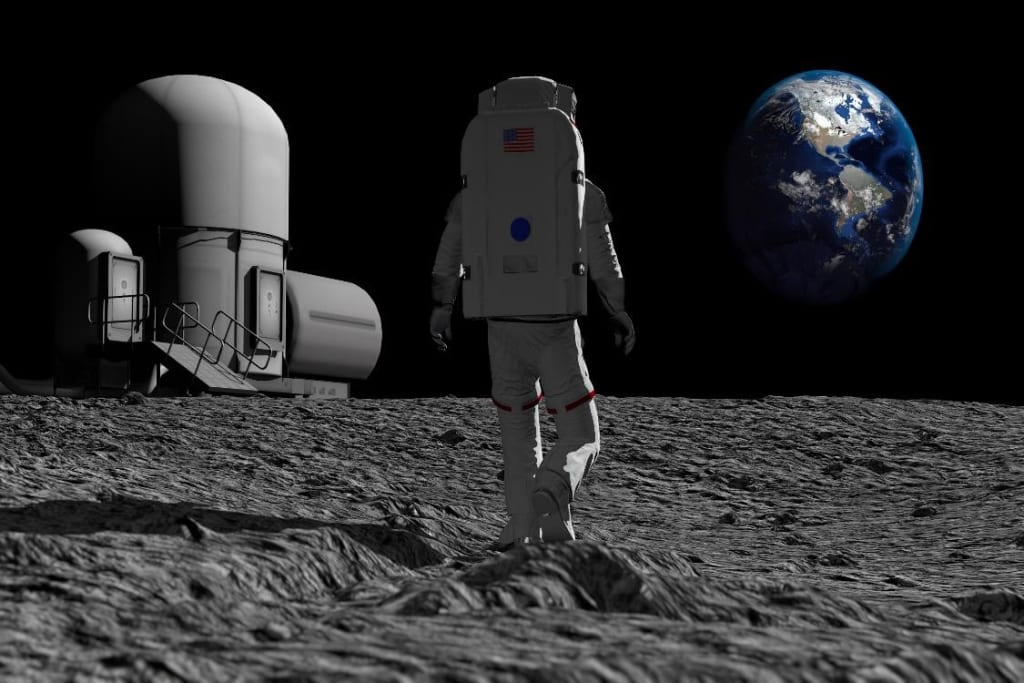
The future of space travel is an exciting and rapidly evolving field. With new technologies and missions on the horizon, we are on the cusp of a new era of space exploration. In this article, we will explore some of the most promising new technologies and missions that are shaping the future of space travel.
One of the most promising new technologies in space travel is the development of reusable rockets. Historically, rockets have been used only once, with the majority of the rocket being discarded after each launch. This has made space travel prohibitively expensive, with the cost of launching a single rocket often exceeding hundreds of millions of dollars. However, with the development of reusable rockets, the cost of space travel is expected to decrease significantly.
One of the companies leading the charge in reusable rockets is SpaceX, founded by entrepreneur Elon Musk. SpaceX has developed a reusable rocket called the Falcon 9, which has already completed several successful missions. The Falcon 9 is capable of landing itself back on Earth after launching a payload into space, making it possible to reuse the rocket for future missions. This technology has the potential to revolutionize space travel, making it more affordable and accessible to a wider range of people and organizations.
Another promising technology in space travel is the development of ion engines. Ion engines use electric fields to accelerate ions (charged particles) to high speeds, creating thrust. While ion engines produce less thrust than traditional chemical rockets, they are much more efficient, using significantly less fuel. This makes them ideal for long-duration missions, such as deep space exploration.
NASA is currently developing an ion engine called the Evolutionary Xenon Thruster-Commercial (NEXT-C). The NEXT-C engine is designed to be used on spacecraft that will travel to deep space destinations, such as asteroids or Mars. The engine is expected to be much more efficient than traditional chemical rockets, allowing spacecraft to travel farther and faster than ever before.
In addition to new technologies, there are also several exciting new missions on the horizon. One of the most anticipated missions is the Artemis program, which aims to send humans back to the Moon by 2024. The Artemis program is a collaborative effort between NASA and several international partners, including the European Space Agency and the Canadian Space Agency.
The Artemis program will involve several missions, beginning with an uncrewed test flight of the Orion spacecraft in 2021. This will be followed by a crewed mission to lunar orbit in 2022, and finally a crewed mission to the lunar surface in 2024. The goal of the Artemis program is to establish a sustainable human presence on the Moon, with the ultimate goal of using the Moon as a stepping stone for future missions to Mars and beyond.
Another exciting mission on the horizon is the James Webb Space Telescope (JWST), set to launch in 2021. The JWST is a collaboration between NASA, the European Space Agency, and the Canadian Space Agency. The telescope is designed to be the successor to the Hubble Space Telescope, with a much larger mirror and more advanced instruments.
The JWST will be capable of observing the universe in unprecedented detail, allowing scientists to study the formation of galaxies, the birth of stars, and the atmospheres of exoplanets. The telescope will also be able to study the early universe, providing insights into the origins of the universe itself.
In addition to these missions, there are also several private companies that are planning their own missions to space. One of the most notable is Virgin Galactic, founded by entrepreneur Richard Branson. Virgin Galactic is developing a spacecraft called SpaceShipTwo, which is designed to take passengers on suborbital flights to the edge of space.
While these flights will not reach orbit, they will provide passengers with a unique and unforgettable experience of weightlessness and a view of the Earth from space. Virgin Galactic has already sold hundreds of tickets for future flights, with the first commercial flights expected to take place in the near future.
In conclusion, the future of space travel is a rapidly evolving field, with new technologies and missions on the horizon. Reusable rockets, ion engines, and the Artemis program are just a few examples of the exciting developments in space travel. With the continued development of new technologies and the launch of new missions, we are on the cusp of a new era of space exploration. As Elon Musk once said, "I think there is a strong humanitarian argument for making life multi-planetary...in order to safeguard the existence of humanity in the event that something catastrophic were to happen."
About the Creator
Mohamed Aasis
I love exploring space and I write about them.
Keep reading
More stories from Mohamed Aasis and writers in Education and other communities.
Smart Home Plumbing Habits That Protect Your Pipes
Owning a home brings pride and comfort. It also brings responsibility. Plumbing is one of the most critical systems in any house. Small mistakes can lead to leaks, damage, and high repair costs. This guide shares essential plumbing tips every homeowner should know. The goal is to help you avoid trouble and keep your home running smoothly.
By Lickety Split6 days ago in Education
The Mental Edge in Golf: How Emotional Control and Focus Drive Peak Performance
Golf is widely recognized as a technical sport, but seasoned players know that true success begins in the mind. The mental game of golf plays a decisive role in shot consistency, course management, and competitive confidence. From handling pressure on the tee box to maintaining concentration on the final putt, mental toughness in golf often determines outcomes more than physical strength or swing mechanics.
By Jeb Kratzig7 days ago in Education



Comments
There are no comments for this story
Be the first to respond and start the conversation.