
The Future of Jobs: What Skills Employers Want Most
Essential Skills to Stay Relevant in the AI-Driven Job Market

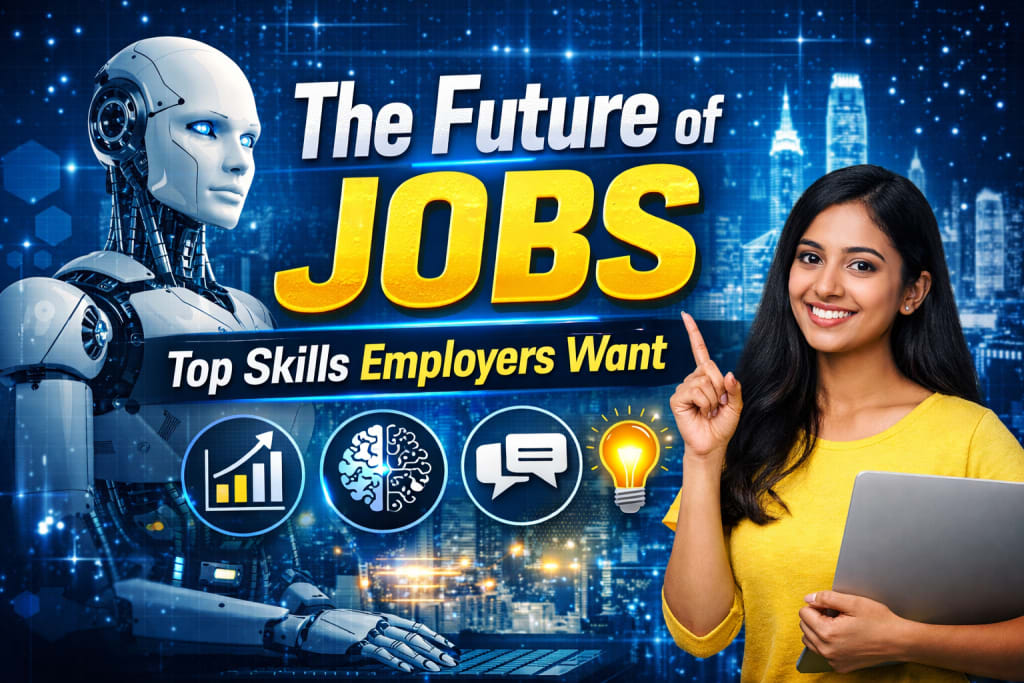
The world of work is changing faster than ever. Artificial intelligence, automation, remote work, and digital transformation are reshaping industries across the globe. Many traditional roles are evolving, while new job categories are emerging. For professionals, students, and job seekers, one question matters most: What skills will employers value in the future?
Understanding these changes is essential. The future doesn’t belong to those with fixed knowledge—it belongs to those who can learn, adapt, and grow.

The Changing Job Market: What’s Happening?
Technology is automating repetitive tasks, reducing the need for routine manual and administrative work. At the same time, businesses are becoming more digital, data-driven, and customer-focused.
Employers today are not just looking for degrees. They want people who can:
- Solve complex problems
- Work with modern technology
- Communicate effectively
- Adapt to rapid change
This growing gap between current skills and future needs is known as the skills gap—and it’s one of the biggest challenges in today’s job market.

What Skills Employers Want Most
Here are the key skills that companies are actively looking for as the future of work evolves.
1. Digital Literacy
Almost every job today involves technology. From basic software to advanced tools, employees must be comfortable working in digital environments.
Important areas include:
- Cloud-based tools
- Cybersecurity awareness
- Digital collaboration platforms
- Basic tech troubleshooting
Even non-technical roles now require strong digital confidence.
2. Data Analysis and Critical Thinking
Businesses rely on data to make decisions. Employers value professionals who can:
- Understand data reports
- Identify trends
- Make logical decisions
- Solve problems based on evidence
Critical thinking is equally important. Companies need people who can analyze situations and make smart decisions, not just follow instructions.
3. Artificial Intelligence and Automation Awareness
You don’t need to be a programmer, but understanding how AI and automation work is becoming a major advantage.
Useful knowledge includes:
- AI tools (like automation platforms and chatbots)
- Basic understanding of machine learning concepts
- Using AI to improve productivity
Employees who can work with AI instead of competing against it will have a strong career advantage.
4. Communication Skills
As remote and hybrid work grows, communication has become more important than ever.
Employers look for people who can:
- Write clear emails and reports
- Present ideas confidently
- Collaborate in virtual teams
- Listen and respond effectively
Strong communication improves teamwork, leadership potential, and career growth.
5. Adaptability and Continuous Learning
The most valuable skill for the future may be the ability to learn new skills quickly.
Industries change. Tools change. Job roles change. Employers prefer candidates who:
- Stay updated with trends
- Take online courses
- Learn new technologies
- Accept change positively
A mindset of lifelong learning is now essential for career stability.
6. Emotional Intelligence (EQ)
While technology is advancing, human skills remain irreplaceable. Emotional intelligence helps employees:
- Manage stress and pressure
- Work well with others
- Handle conflicts professionally
- Show empathy and leadership
Companies value employees who can build strong relationships and maintain a positive work environment.
7. Creativity and Innovation
Automation can handle routine tasks, but creative thinking is uniquely human. Employers want people who can:
- Generate new ideas
- Improve processes
- Think outside the box
- Adapt solutions to new challenges
Innovation drives business growth, making creativity a highly valuable skill.

How to Prepare for the Future Job Market
The good news is that future-ready skills can be learned. Here are practical steps to stay competitive:
Take online courses on platforms like Coursera, Udemy, or LinkedIn Learning
- Learn basic data and digital skills
- Practice communication and presentation skills
- Stay updated with industry trends
- Build a habit of continuous learning
- Use AI tools to improve productivity
Even small learning efforts today can create big career opportunities tomorrow.

Conclusion
The future of jobs is not something to fear—it’s something to prepare for. Employers are looking for professionals who combine technical knowledge, human skills, and a willingness to learn.
The workplace will continue to evolve, but one thing is clear:
Those who stay adaptable, curious, and future-focused will have the greatest success.
Start building these skills today, and you won’t just survive the future of work—you’ll thrive in it.
About the Creator
Muhammad Irfan Afzal
I write clear, practical, engaging articles on technology, online safety, and modern digital life. My goal is to help readers understand complex. My aim to provide value, awareness, and real-world solutions for everyday digital challenges.
Keep reading
More stories from Muhammad Irfan Afzal and writers in Education and other communities.
7 Strategies That Help Startups Grow Faster
Starting a business is exciting, but growing it can be challenging. Many startups struggle to find the right strategies to accelerate growth while staying sustainable. In 2026, with technology and markets evolving rapidly, startups need smart, actionable approaches to stand out and expand quickly.
By Muhammad Irfan Afzal15 days ago in 01
The Strength You Never Showed: A Letter to Those Who Feel Everything but Express Nothin
# The Strength You Never Showed: A Letter to Those Who Feel Everything but Express Nothing *For the ones who carry the weight quietly, who love deeply but say it rarely, whose hearts are full but whose words come out empty.*
By youssef mohammedabout 8 hours ago in Education
How Collective Giving Shapes Stronger and More Compassionate Communities
Giving back to the community reflects a shared desire to uplift others and create meaningful change. Although many associate giving with financial donations, it can take countless forms, including volunteering, mentoring, or offering skills to local organizations. Each contribution matters because it strengthens the support networks that help communities thrive. As individuals continue to give, they build a culture where charitable involvement becomes a natural and valued part of everyday life.
By Jason Pruet5 days ago in Education
The Pride Flag and the Diversion
For nearly a decade, the LGBTQIA Pride Flag rippled in the wind at Christopher Park, a kaleidoscope of color staked into the soil of America’s first national monument to LGBTQIA+ liberation. That flag came down this week. Federal officials, citing new guidance from the Trump Administration, silently lowered the rainbow flag from its pole across the street from the Stonewall Inn. The birthplace of the modern gay rights movement now flies only the United States flag.
By Tim Carmichael2 days ago in Pride


Comments
There are no comments for this story
Be the first to respond and start the conversation.