
The Future of Healthcare Documentation with Medical Scribes
How Scribes Are Revolutionizing Patient Records

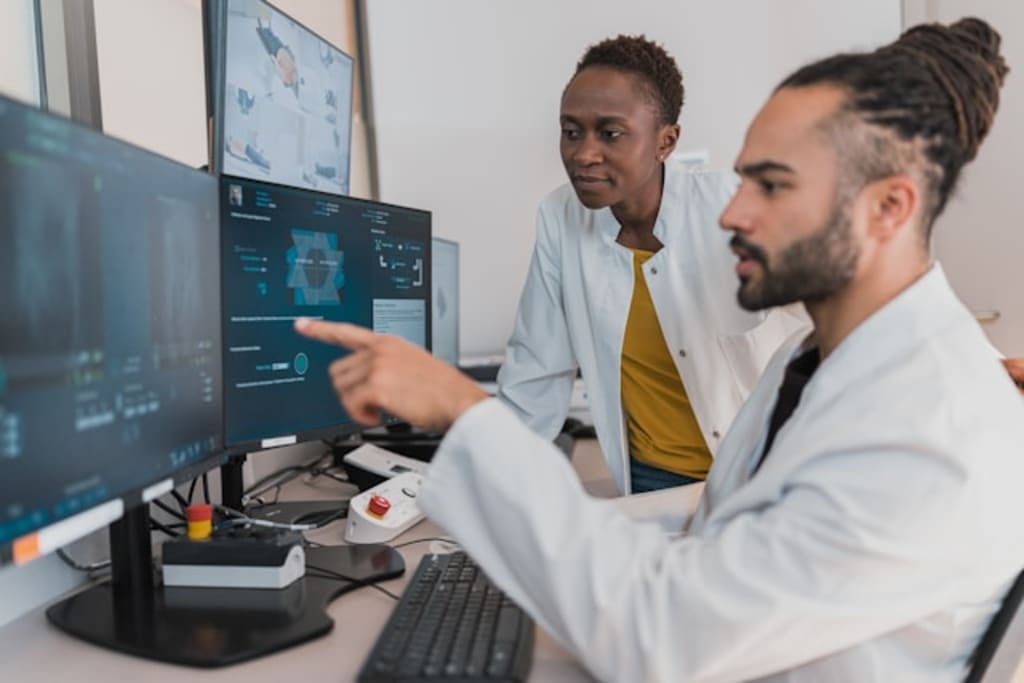
With more medical breakthroughs coupled with more people living longer, it’s all the more critical that documentation keeps pace with increased expectations for patient care outcomes. Long gone are the days of the infamous illegible doctor’s scribbles and bulky files serving as the main repositories for every individual’s life in medical memos. At the same time, more and more people are opting for the convenience of telehealth for an increasing myriad of reasons that are continuing to necessitate more digital tools that are accessible for patients and support best practices for medical professionals.
Because of this, it’s important to note some of the most pressing issues related to the future of healthcare documentation, especially the role of virtual medical scribes.
Improved Patient Outcomes
Increasing medical documentation is critical for a variety of reasons. First and foremost, more documentation is simply the right thing to do for the patient, especially when that individual is in a particularly medically complex circumstance in which it can be hard to diagnose a chronic and/or rare illness or other condition.
The more documentation is available - and especially that which can be easily searched through supportive search functions and generated algorithms - the more likely a medical team can more quickly and accurately pinpoint the issue and create a solution that is most likely going to be responsive to the patient’s individual needs.
Knowledge is power, and while more information leads to that knowledge, it can be cumbersome using traditional methods, including the formerly tried-and-true doctor’s notepad. The future of healthcare documentation is increasingly reliant on meeting the doctors’ and nurses’ professional needs as well, with more options for text-to-speech, both in the office and during telehealth visits, and for outsourcing the role of documentation to trained medical scribes who are ready to assist their team in capturing the data. All of these services best ensure that the rest of the workforce can more directly focus on directly working with the patient and their personalized care plans.
Convenience for All
Similarly, the future of medical documentation’s move towards digital record keeping is being rolled out with convenience in mind. This is particularly true when we consider user-friendly apps for telehealth, including by providing easily accessible records that can empower patients with a few touches on a screen or clicks of a button, from asking their care provider a question, to accessing medical charts, to sending their information to another medical specialist.
In particular, therefore, the future of healthcare documentation is being rolled out with more intentionality behind mobility. In an era where area codes tell more of a story than denote a person’s whereabouts, the ability for patients and professionals alike to send and store encrypted data in the cloud is a huge time-saver, with added bonuses that virtual methods of capturing and sending medical information also reduces the risk of accidentally misplacing or sending the wrong file, or even destroying medical records prematurely due to either an accident or a prolonged lapse in a patient’s visits.
ever-larger amounts of data, but it will also help to protect against medical malpractice as individuals who fill these specific roles are also entrusted more directly with the task of accurately retaining such records for posterity. This increased oversight is a net benefit that can lead to both convenience at the time of patient care, as well as to protect against any damaging audits or other malpractice concerns.
Data Privacy and Security
With mobility and convenience comes an increased need for secure data protection. Electronic Health Records, or EHRs, are constantly developing to address the shared interest in efficiency, a quality end-user experience, and accuracy alongside the overarching demand for top-notch cybersecurity.
It is no surprise to any that cyber criminals and other bad faith actors are continuing to get savvier in their pursuit of sensitive information, whether to actively cause harm or to profit off vulnerable people and institutions by selling information on the dark web.
With the rise of medical scribes and more digital healthcare documentation also comes a rise in training for HIPAA best practices from the intimate conversation in the doctor’s office to what is stored on a server. Investing in training, and additional medical IT professionals is an additional investment in new technologies that keep pace with new realities as well as new discoveries and treatments.
Conclusion
Just like any advancement in medicine, persistent dedication along with innovation is what makes the once impossible become a routine standard of care. The same can be said for how we as a society continue to embrace a future that relies on increased specialization in our fields, along with an increase in the delegation of more tasks to the digital arena. By empowering medical scribes to be at the forefront of medical documentation, we are empowering the rest of the medical community to focus more on the special relationship between patients and their healthcare providers, and through this relationship, more empowered patients.
About the Creator
Aaron Smith
Aaron is a content strategist and consultant in support of STEM firms and medical practices. He covers industry developments and helps companies connect with clients. In his free time, he enjoys swimming, swing dancing, and sci-fi novels.
Keep reading
More stories from Aaron Smith and writers in Education and other communities.
VR Game Mechanics: Innovative Ways to Interact in Virtual Worlds
Virtual reality (VR) has transformed gaming experiences. You can visit new worlds and socialize like never before in the history of games. These experiences have become truly immersive, taking you to destinations far and wide, real and fictional.
By Aaron Smith2 years ago in 01
When Healing Leads the Way: How Outcome-Driven Healthcare Reshapes Systems, Costs, and Trust
Healthcare is at a crossroads. Rising costs, overwhelmed providers, and frustrated patients have exposed deep flaws in systems that prioritize financial performance over human well-being. For decades, success in healthcare was often measured by revenue, service volume, and utilization rates. While economic sustainability is essential, problems arise when profit becomes the primary goal rather than a byproduct of adequate care. Shifting the focus from profits to outcomes fundamentally changes how healthcare operates, who it serves, and how success is defined.
By Evan Weiss St Louis4 days ago in Education
Lean Management Principles in Healthcare: A Practical Guide to Better Patient Care
Lean management principles in healthcare focus on improving patient outcomes by reducing waste, streamlining workflows, and strengthening team collaboration. Originally developed in manufacturing, Lean has become a powerful approach for hospitals, clinics, and medical practices that want to deliver higher-quality care with fewer delays and less frustration.
By Brady Beitlich4 days ago in Education


Comments
There are no comments for this story
Be the first to respond and start the conversation.