
The Future of Delivery: AI Robots at Your Doorstep
How intelligent robots are transforming logistics, enhancing customer experience, and reshaping the way goods reach us.

Introduction
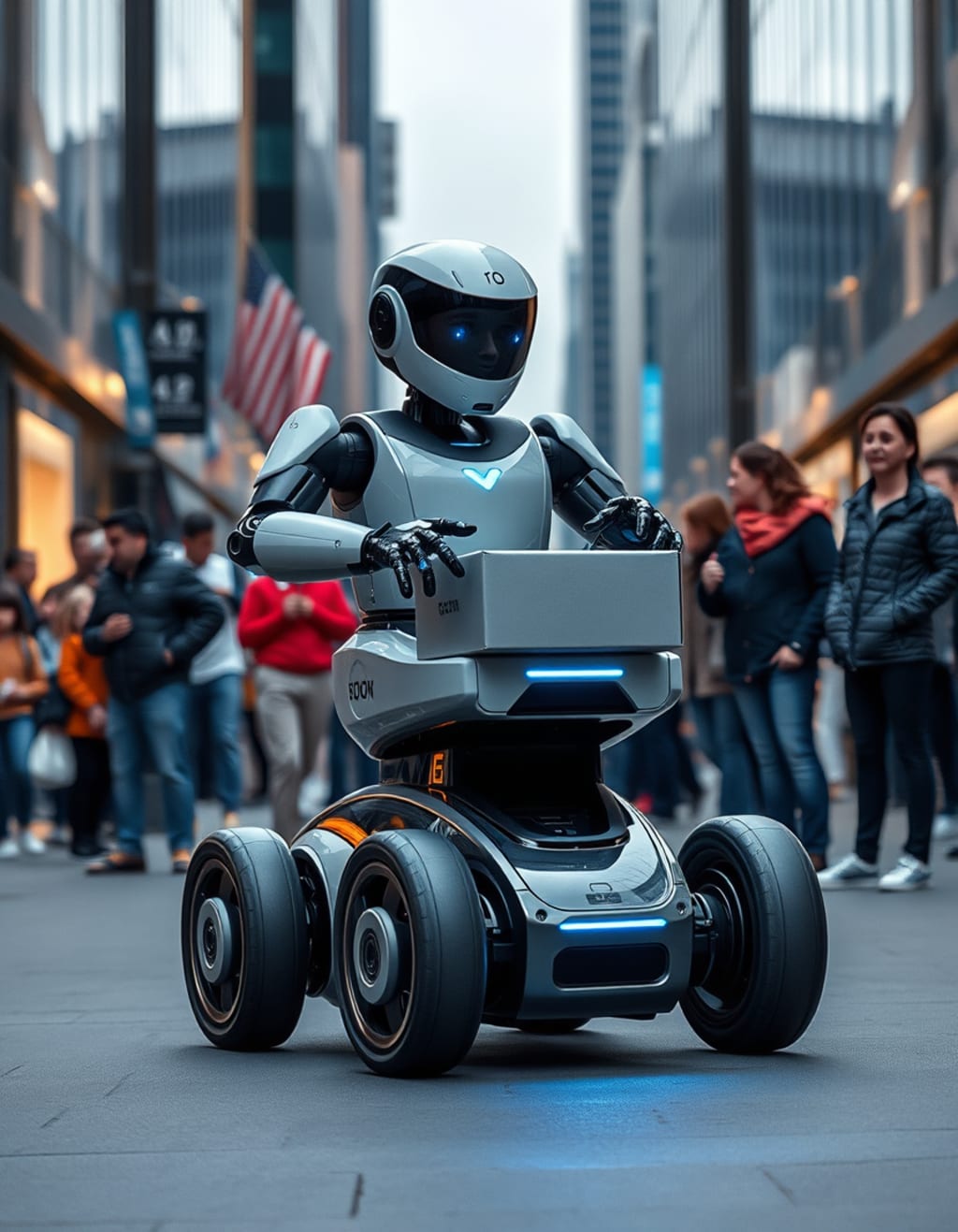
Imagine a world where the packages you purchase online are not brought to your doorstep by a typical delivery person, but by a sleek, autonomous robot speeding quietly to your front door. That's no longer fantasy science — it's quickly becoming reality. AI-powered delivery robots are at the forefront of a revolution in logistics and last-mile delivery, promising to bring faster, more secure, and more efficient service.
In this article, we’ll explore the technology behind these futuristic delivery bots, how they work, the benefits they bring, challenges they face, and what their widespread adoption means for businesses and consumers alike.
What Are AI Delivery Robots?
AI delivery robots are advanced self-driving cars equipped with high-end cameras, sensors, and AI software that enable them to navigate through thick city streets, pass through obstacles, and deliver goods safely to customers. These robots come in various forms and sizes, from small wheeled robots walking along sidewalks to big drone-like machines flying short distances.
Unlike traditional human-messenger-based delivery systems, the robots require no human intervention and use AI to sense their surroundings, make decisions in real time, and plan delivery paths in real time.
How AI Delivery Robots Operate
Behind these robots is a cutting-edge marriage of hardware and software:
Cameras and Sensors: These provide a 360-degree view of the environment surrounding the robot, detecting obstacles such as pedestrians, automobiles, pets, and street furniture.
Machine Learning and Computer Vision: AI software interprets the sensor data to identify safe roads, recognize landmarks, and interpret traffic lights or crossings.
Navigation and Mapping: With onboard mapping and GPS software, robots plan optimal routes from warehouses or stores to customers' homes.
Communication: Robots communicate with customers through apps or messaging, providing real-time tracking, arrival time estimates, and secure drop-off package options.
Security Features: To prevent theft or tampering, delivery robots generally have sealed compartments that only get unlocked after authorized customer verification, either via facial recognition or one-time-use passcodes.
Benefits of AI Robots in Delivery
AI delivery robots are motivated by a number of advantages that they deliver:
Quick Delivery: Robots never get fatigued, and thus are able to work 24/7 without losing their rhythm, reducing delays caused due to human breaks or routines. AI dynamically optimizes routes to avoid traffic and roadblocks.
Cost Savings: In the long run, automated delivery is cheaper in terms of labor and fuel costs, to the benefit of businesses, and may even lower prices for consumers.
Environmentally Friendly: Electrically driven delivery robots produce zero direct emissions, greening the logistics industry.
Contactless Delivery: When hygiene and social distancing are a worry, robots allow total contactless delivery, minimizing human contact.
Improved Customer Experience: Real-time tracking, accurate ETAs, and safe handling build confidence and convenience.
Real-World Applications and Usage
Some of the world's leading businesses and cities have begun embracing AI delivery robots in their operations:
Starship Technologies: A true pioneer, Starship uses small six-wheeled delivery robots on sidewalks in cities across the globe, carrying groceries, meals, and packages.
Amazon Scout: Amazon's delivery robot goes out into neighborhoods autonomously delivering small packages to consumers, already in trials in certain areas.
Nuro: Nuro autonomous electric cars deliver groceries on behalf of big chains.
Drones: Wing and Zipline use AI-powered drones to deliver medical supplies and small packages in remote areas.
Cities are also adapting infrastructure to accommodate such robots, with designing intelligent sidewalks, robot drop-off areas, and regulations for enabling safe coexistence with humans and cars.
Challenges and Concerns
While opportunities are immense, delivery robots with AI also face some obstacles:
Technical Limitations: Foraying into complex and dynamic spaces, especially in bad weather or high-density areas, remains difficult.
Security and Theft: Package protection during transit and upon point of delivery is crucial.
Regulatory Issues: Laws regulating autonomous robots are immensely diverse and may stifle rollout.
Public Acceptance: There are some who may not want to share sidewalks with robots or worried about jobs for traditional delivery work.
Cost of Deployment: Steep up-front cost in technology and infrastructure will keep adoption out of reach for small to medium-sized firms in the first place.
What the Future Holds
Despite challenges, the trend for AI delivery robots is decidedly upward. Advances in AI, battery life, and city planning will increase capability and safety.
Future potential includes:
Collaborative Delivery Networks: Flocks of cooperating robots, handing off packages for maximum efficiency.
Multi-Modal Delivery: Consolidating ground robots, drones, and human couriers to provide end-to-end seamless service.
Personalized Delivery Services: Learning robots that know customers' habits, favorite drop locations, or can handle returns and exchanges autonomously.
More Use Cases: Packages are only the tip of the iceberg — robot cooks delivering freshly made meals, mobile pharmacies delivering prescriptions, or even robots offering instant courier services on demand.
How Consumers and Businesses Can Prepare
To thrive in this new delivery age:
Businesses need to invest in AI technology partnerships, maximize logistics for robot usage, and communicate with consumers through new delivery channels.
Consumers need to get used to digital tools for tracking and interacting with AI delivery services, provide feedback for robot route optimization and service quality, and wait while cities adapt to these new players.
Conclusion
The future is now — AI robots that bring your packages, snacks, and necessities with quiet reliability and accuracy. This integration of technology and logistics can bring us a world where speed, convenience, and sustainability walk hand in hand. Challenges still exist, but the movement toward a robot-driven delivery system is unstoppable.
By adopting these smart messengers into our doorsteps, we are entering an innovation-centric future, intelligent cities, and a new customer experience — an experience where technology comes through at last.
About the Creator
coderex
I’m Coderex — passionate about AI, tech, and storytelling. I write to inspire, inform, and imagine the future through code, creativity, and meaningful narratives.
Free Laptop with GED Classes 2026: How Low-Income Adults & Students Can Get One
Earning your GED is a powerful step toward better jobs, higher pay, and long-term stability — but trying to study without a reliable laptop makes everything harder. The good news? In 2026, several legitimate programs and nonprofits are still giving free laptops specifically to people working on their GED or HiSET.
By Free Laptops From Governmentabout 3 hours ago in Education
The Value of Respect
On a cold winter morning, the school hallways were still quiet when Bashir arrived, as he always did before sunrise. He unlocked the gates, swept the corridors, wiped the classroom windows, and cleaned the floors before the students came rushing in.
By Waleed khana day ago in Education


Comments
There are no comments for this story
Be the first to respond and start the conversation.