
"The Future of AI: Will It Replace Creativity or Enhance It?"
"Exploring the Impact of Artificial Intelligence on Artistic Expression and Human Innovation"

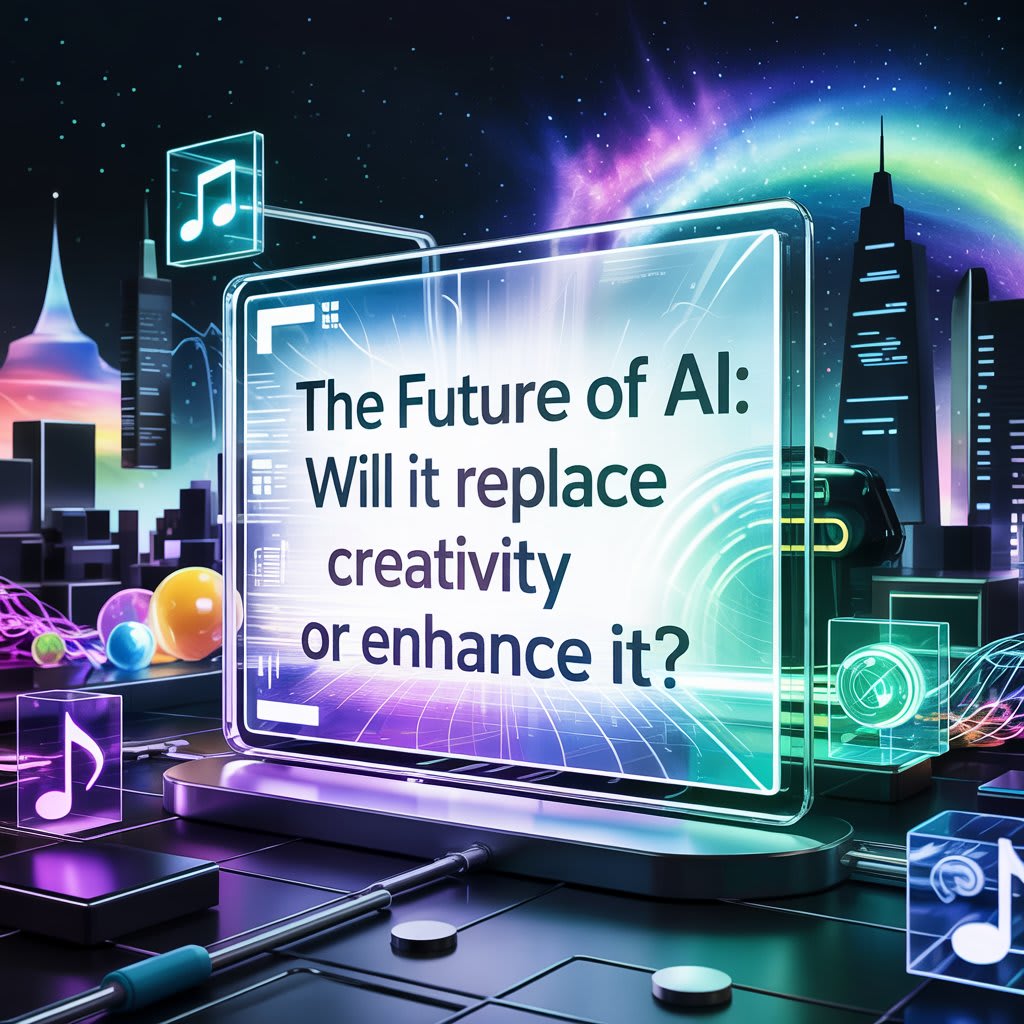
The Future of AI: Will It Replace Creativity or Enhance It?
Exploring the Impact of Artificial Intelligence on Artistic Expression and Human Innovation
In a world that is increasingly being shaped by algorithms, code, and data, the rise of artificial intelligence (AI) has sparked a profound question: Will AI replace human creativity or enhance it? As machines become more sophisticated—capable of composing music, generating artwork, writing stories, and even curating museum exhibitions—the traditional boundaries of human ingenuity are being redrawn. This intersection of AI and creativity is not just a technological shift; it’s a philosophical and cultural reckoning.
The Rise of Creative Machines
AI is no longer confined to crunching numbers or automating mundane tasks. Modern algorithms like OpenAI's GPT models, Google’s DeepDream, and DALL·E have demonstrated remarkable capabilities in artistic domains. From generating stunning visual art to writing poetry and screenplays, these systems can mimic—and sometimes surpass—human output in terms of speed and novelty.
One compelling example is the music industry. AI tools like Amper Music and AIVA can compose original music in various genres, tailored to the mood or purpose of a specific user. Visual artists are now using tools like Mid Journey or DALL·E to co-create surreal and imaginative pieces that were previously unthinkable. These examples show that AI can be an extraordinary partner in the creative process.
Redefining Creativity
To understand whether AI will replace or enhance creativity, we must first redefine what creativity truly is. Creativity involves not just the production of novel ideas but also emotional depth, context-awareness, and intent. While AI can simulate creativity, it currently lacks consciousness, subjective experience, and the cultural memory that humans carry.
AI doesn’t create from personal struggle, joy, or love—it generates based on data and patterns. It can remix and replicate, but true innovation often comes from lived experience and human emotions. That distinction is critical in evaluating AI's role in the creative space.
AI as a Collaborative Tool
Rather than replacing artists, AI is more likely to serve as a powerful collaborative tool. Just as the invention of the camera didn’t end painting, or digital software didn’t eliminate traditional animation, AI won’t replace creativity—it will transform it. It democratizes access to creative tools, enabling people who might not have formal training to express themselves in new ways.
For instance, a writer facing creative block might use AI-generated prompts to spark new ideas. A fashion designer might employ AI to visualize hundreds of fabric patterns and color combinations in seconds. In these examples, the human remains the visionary—the one making the final decision, interpreting nuance, and injecting soul into the work.
Challenges and Ethical Concerns
Of course, the integration of AI into creative fields isn’t without complications. One major concern is authorship. Who owns an AI-generated piece of art—the programmer, the user, or the machine? As intellectual property laws struggle to keep pace, this gray area raises serious questions about rights and originality.
Moreover, there's the danger of homogenization. Because AI models are trained on existing works, they often reflect dominant styles, biases, and tropes. Without careful design and oversight, this could stifle diversity rather than encourage it.
There’s also the potential devaluation of human creativity. If AI can produce endless streams of content at minimal cost, how will we value human-made art? Will audiences be able to distinguish—or care—whether a piece was crafted by a person or an algorithm?
The Human Touch Still Matters
Despite these concerns, the human element remains irreplaceable. Art is not merely about the final product—it’s about the story behind it. The sweat, mistakes, revisions, and moments of inspiration that go into creating something unique are deeply human and deeply valuable.
Think of Van Gogh’s brushstrokes, Maya Angelou’s prose, or Hans Zimmer’s compositions. These works resonate not just because of their aesthetic qualities but because they are imbued with the experiences and emotions of their creators. AI can assist in execution, but it cannot replicate that raw, emotional essence.
A Symbiotic Future
Looking ahead, the future of AI and creativity is likely to be symbiotic. Just as past technological revolutions gave rise to new art forms—film, digital photography, electronic music—AI will inspire entirely new genres and mediums. Artists will evolve, adopting AI not as a rival, but as a muse, assistant, and collaborator.
Educational institutions and industries must prepare for this future by teaching not only traditional creative skills but also how to work alongside intelligent systems. The creatives of tomorrow will be those who know how to blend imagination with computation, emotion with logic.
Conclusion
AI is not the death of creativity—it’s its next great chapter. It challenges us to think differently, to experiment boldly, and to push the limits of what’s possible. Whether it enhances or replaces human creativity ultimately depends on how we choose to use it.
Rather than fearing a world where machines create, we should embrace the opportunity to redefine what it means to be creative in the 21st century. In doing so, we not only preserve the essence of human innovation but also elevate it to new heights.
About the Creator
Abdul Haq
Hi, I’m Abdul Haq, Storyteller. Dream chaser. I write about growth, mindset, and building a life on your own terms. one bold step at a time. Real, honest, and always from the heart.
New stories weekly. Raw, real, and relatable.
I Quit My 9–5 to Chase a Dream—Here’s What Really Happened
It was a typical Tuesday morning. Coffee in one hand, laptop in the other, and a calendar full of Zoom calls I didn’t care about. I sat at my desk, staring at a screen filled with spreadsheets, feeling like my soul had clocked out years ago—even if my body hadn’t. That’s when the thought hit me again: Is this really it?
By Abdul Haq10 months ago in Motivation
Top 5 Educational Game Websites That Truly Improve Learning
Introduction Modern learners no longer respond well to passive instruction alone. Research in educational psychology shows that students learn best when they are actively involved, emotionally engaged, and able to experiment without fear of failure. Educational game websites succeed because they combine practice, feedback, motivation, and curiosity into a single experience.
By Backlinks Cart6 days ago in Education
Easy-to-understand explanations of current technology news
Easy-to-understand explanations of current technology news It can be difficult to keep up with the latest news because technology changes so quickly. New gadgets, apps, updates, and inventions appear on a daily basis. Virtual reality, artificial intelligence, and blockchain are all common terms, but not everyone knows what they really mean. In order for anyone to keep up with what's going on in the tech world, this article provides an explanation of the most significant technology trends of the present in language that is straightforward and simple to comprehend.
By Farida Kabir8 days ago in Education


Comments
There are no comments for this story
Be the first to respond and start the conversation.