
The Future is Now: Exploring the Limitless Possibilities of 3D Printing Technology
The future of the 3D printers
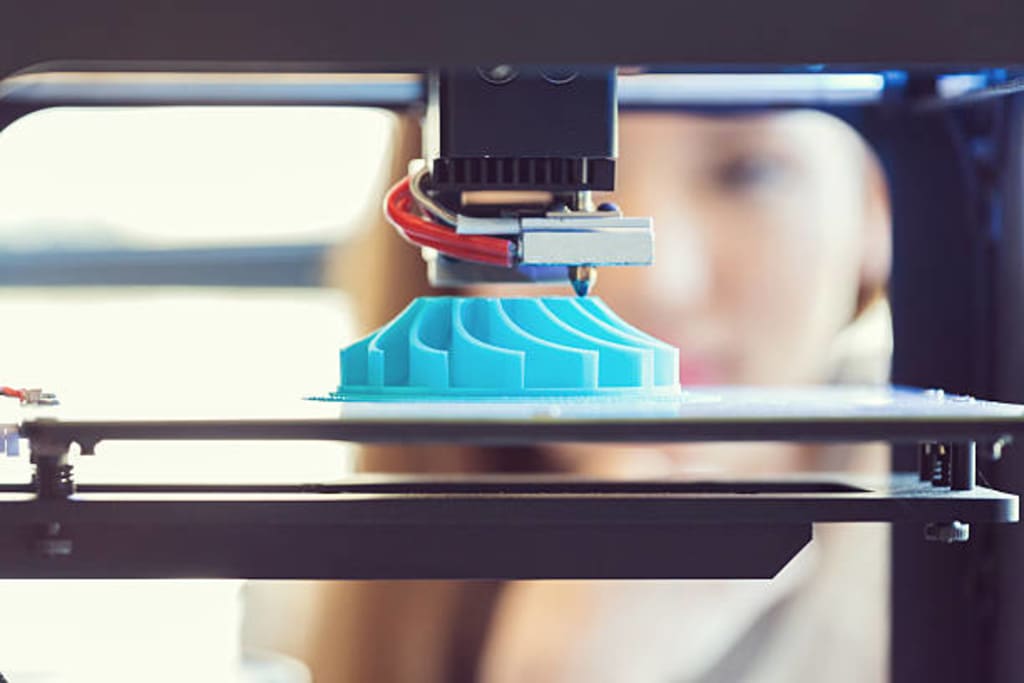
The 3D printing technology has been one of the most exciting and revolutionary inventions of the 21st century. This technology has transformed the manufacturing industry and has also had a significant impact on various fields such as medicine, education, and art. With the continued advancements in 3D printing technology, the future is looking even brighter, and the possibilities seem limitless.
One of the biggest advantages of 3D printing is its ability to create highly customized and complex objects quickly and easily. This has been particularly valuable in the aerospace industry, where the need for lightweight and intricately designed parts is critical. With 3D printing, these parts can be produced much faster and at a lower cost than traditional manufacturing methods, making it a game-changer for the industry. The aerospace industry is just one example of how 3D printing has transformed manufacturing. Many industries such as automotive, construction, and even food production are exploring the potential of this technology.
Another area where 3D printing is making an impact is in the medical field. From prosthetics to customized implants, 3D printing is allowing doctors and researchers to create personalized solutions for patients. In some cases, 3D printing is even being used to create human organs for transplant, which could help to solve the organ shortage crisis. The ability to create patient-specific models of organs and tissues is also improving surgical planning and training.
Beyond manufacturing and healthcare, 3D printing is also being used in the art world to create stunning sculptures and installations. With the ability to produce complex shapes and designs that would be impossible to create by hand, 3D printing is opening up new avenues for artistic expression. The technology is allowing artists to create intricate pieces that are not only visually stunning but also functional. For example, Dutch artist Joris Laarman used 3D printing to create a functional bridge that was printed in situ in Amsterdam.
As 3D printing technology continues to evolve, there are many exciting possibilities on the horizon. One area of development is the use of new materials, such as graphene and carbon fiber, which could make 3D printed products even stronger and more durable. Another area of interest is the use of 3D printing in space exploration, where the ability to create objects on demand could be essential for long-term missions. The ability to 3D print objects in space would eliminate the need to transport spare parts or tools from Earth, which would significantly reduce the cost and complexity of space missions.
However, there are also challenges that must be addressed to fully realize the potential of 3D printing technology. One of the biggest hurdles is the cost of 3D printers and materials, which can be prohibitive for some individuals and businesses. This cost can be a significant barrier to entry for smaller businesses and individuals who may not have the financial resources to invest in the technology. Another concern is the environmental impact of 3D printing, particularly when it comes to the disposal of waste materials. Some materials used in 3D printing, such as plastics, can be challenging to recycle, which could lead to an increase in waste.
Despite these challenges, it is clear that the future of 3D printing is bright. With the ability to create highly customized and complex objects quickly and easily, 3D printing is changing the way we design, manufacture, and consume products. As the technology continues to evolve, we can expect to see even more exciting applications in fields such as aerospace, healthcare, and beyond. The future is now, and the possibilities are truly limitless.
One area that is already being explored is the use of 3D printing in education. The technology is allowing students to explore complex concepts in a hands-on and engaging way. 3D printing is also allowing educators to create customized teaching aids that are tailored to the needs.
About the Creator
murat alizade
I am a student on Turkiye which is using his free time for technologies. I am into the 3D printers for 5 years so i think i am very great at 3D printing stuff
Keep reading
More stories from writers in Education and other communities.
A Priceless Lesson in Lif
A Priceless Lesson in Life – Story No. 2641 Do not rush to judge anyone. Shazia Mubashir Once, there was a man who had four sons. He wished for his sons to learn an important lesson: never make hasty judgments about anyone or anything. He wanted them to understand that judging without experience and observation over time can lead to misunderstandings. To teach them this valuable lesson, the man devised a plan. He decided to send each son on a journey to observe a pear tree in a distant area.
By Sudais Zakwan2 days ago in Education
The Secret to Thriving Client-Consultant Relationships: Trust, Clarity, and Commitment
Strong client-consultant relationships are essential for delivering successful outcomes and sustaining long-term business growth. These partnerships are built on a foundation of shared purpose, open dialogue, and mutual respect. A consultant who can foster a deep connection with their client becomes more than just an external resource; they become a trusted partner in problem-solving and strategic growth.
By Nicole Metz6 days ago in Education
The Path to Salvation
The late autumn evening air filled the monk's lungs, but it wasn't the season that chilled his bones. The heavy-handed presence of evil he had sensed upon entering the woods surrounding this mountain village had not bothered to conceal itself from him.
By Made in DNA5 days ago in Fiction


Comments
There are no comments for this story
Be the first to respond and start the conversation.