
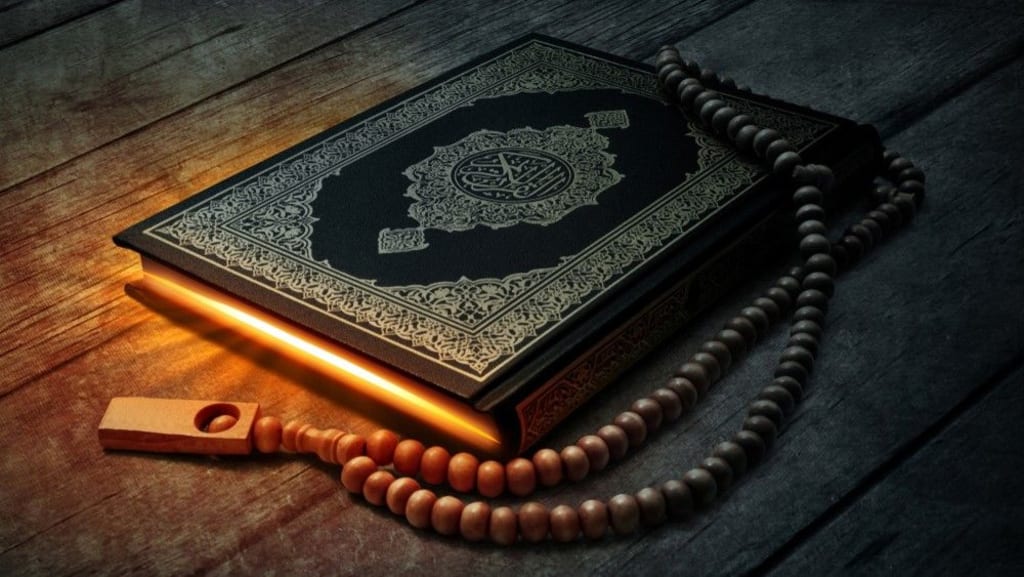
Islam is a religion that emphasizes the importance of leading a meaningful and fulfilling life. It provides guidance on how to improve one's life by following a set of principles that are based on the teachings of the Quran and the Prophet Muhammad. These principles include practicing regular prayer, fasting, and engaging in charitable acts. By incorporating these practices into one's daily routine, a Muslim can improve their physical, mental, and spiritual well-being.
The Five Pillars of Islam are the fundamental principles and practices that form the foundation of Muslim life. They are as follows:
1. Shahada
2. Salah
3. Zakat
4. Sawm
5. Hajj
These Five Pillars of Islam are considered the foundation of Muslim life and are practiced by Muslims around the world.
1. The Shahada is the declaration of faith in Islam and the first of the Five Pillars of Islam. It is the most important pillar and is recited by Muslims throughout their lives as a testimony of their faith. The Shahada is a simple statement that consists of two parts:
1. "La ilaha illa Allah" which means "There is no god but Allah." This part of the Shahada emphasizes the oneness of Allah and affirms that there is no deity worthy of worship except Allah.
2. "Muhammadun rasul Allah" which means "Muhammad is the messenger of Allah." This part of the Shahada affirms that Prophet Muhammad (peace be upon him) is the final messenger of Allah and that his teachings and actions serve as a guide for Muslims.
By reciting the Shahada, a person is acknowledging their faith in Allah and their belief in the prophethood of Muhammad (peace be upon him). The Shahada is considered the foundation of the Islamic faith and is recited during various occasions such as the call to prayer, the initiation of new converts to Islam, and daily prayers.
The Shahada is more than just a statement of faith; it is a way of life for Muslims who strive to live their lives in accordance with the teachings of Allah and the Prophet Muhammad (peace be upon him).
2.Salah, also known as prayer, is the second of the Five Pillars of Islam. It is a mandatory form of worship that Muslims perform five times a day, showing their submission and devotion to Allah. The five daily prayers are performed at specific times throughout the day, as follows:
1. Fajar: The early morning prayer, performed before sunrise.
2. Dhuhr: The midday prayer, performed after the sun has passed its zenith.
3. Asr: The afternoon prayer, performed in the late afternoon.
4. Maghrib: The evening prayer, performed just after sunset.
5. Isha: The night prayer, performed after the twilight has disappeared.
The performance of salah involves specific physical movements, such as standing, bowing, and prostrating, as well as reciting verses from the Quran and supplications. The prayer is performed facing the Kaaba in Mecca, which is considered the holiest site in Islam.
Salah is an important act of worship for Muslims, as it helps to strengthen their faith and their relationship with Allah. It serves as a reminder to Muslims of their duty to Allah and their commitment to living righteous life. Through the performance of salah, Muslims seek guidance, forgiveness, and blessings from Allah.
Salah is also a means of uniting Muslims, as it is performed in congregations at mosques or other places of worship. It helps to foster a sense of community and brotherhood among Muslims, regardless of their race, nationality, or social status.
Overall, salah is an essential aspect of the Muslim faith and a means of seeking Allah's guidance, blessings, and forgiveness in one's daily life.
3.Zakat is the third of the Five Pillars of Islam and refers to the mandatory giving of alms to the poor and needy. It is a form of charity that is considered an act of worship and an obligation for all Muslims who are financially capable. The word Zakat means "purification" or "growth," and it is believed that the giving of Zakat purifies one's wealth and helps it grow.
The giving of Zakat is based on the principle of social justice and is intended to help those in need. The recipients of Zakat include the poor, the orphans, the widows, and those in debt, among others. It is usually given in the form of money or assets such as livestock, crops, or gold.
The amount of Zakat that a person is required to give is based on their wealth and
4.Sawm, also known as fasting, is the fourth of the Five Pillars of Islam. It refers to the practice of abstaining from food, drink, and other physical needs during daylight hours for the entire month of Ramadan, the ninth month of the Islamic lunar calendar. Fasting is a means of purification, self-discipline, and spiritual growth.
During Ramadan, Muslims are required to fast from dawn until sunset every day. This means that they must refrain from eating, drinking, smoking, and engaging in sexual activity during this time. The fast is broken at sunset with a meal called iftar, which is typically shared with family and friends.
Fasting is a means of self-discipline and self-control, as it requires Muslims to restrain their physical desires and focus on spiritual development. It is also a means of demonstrating solidarity with the less fortunate, as it reminds Muslims of the hunger and thirst experienced by those who are less fortunate.
5.Hajj is one of the five pillars of Islam and is considered to be one of the most significant events in the Islamic calendar. Every year, millions of Muslims from all around the world gather in Mecca, Saudi Arabia, to perform this holy pilgrimage. This journey is an opportunity to spiritually connect with Allah, seek forgiveness for one's sins, and strengthen one's faith. The Hajj pilgrimage is an intense and physically demanding experience, involving days of prayer, fasting, and self-reflection. The Hajj begins on the eighth day of the Islamic month of Dhul-Hijjah and lasts for five days. The first day of Hajj is known as the Day of Tarwiyah, where pilgrims dress in Ihram, a simple white cloth, and head to Mina, a small town located about six kilometers from Mecca. Here, they spend the night in tents and prepare for the next day. The second day of Hajj is the Day of Arafat, where pilgrims gather in a vast open plain called Arafat, located about 20 kilometers from Mina. This is a day of intense prayer and supplication, where pilgrims seek forgiveness for their sins and make a heartfelt dua to Allah. The Day of Arafat is considered to be the most significant day of Hajj, and it is believed that on this day, Allah forgives the sins of those who sincerely seek His forgiveness. After the Day of Arafat, pilgrims head to Muzdalifah, a small town located between Mina and Arafat, where they spend the night. The following day, they travel back to Mina and perform the ritual of stoning the devil by throwing pebbles at three pillars known as Jamarat. This ritual symbolizes the rejection of evil and the triumph of good over evil. The final days of Hajj are spent performing the Tawaf, circling the Kaaba seven times, and performing the Sa'i, which involves walking seven times between the hills of Safa and Marwa. The Hajj pilgrimage is an intense and challenging experience, but it is also a deeply rewarding one. The spiritual benefits of this journey are immeasurable, and it is an experience that every Muslim hopes to undertake at least once in their lifetime.
About the Creator
Keep reading
More stories from Mohsin Razzaq. and writers in Education and other communities.
Mastering the Mental Game: Pro Poker Strategies to Eliminate Tilt for Good
Avoiding tilt is one of the most crucial elements for long-term success in poker. Tilt, the emotional state that leads to poor decision-making, can unravel even the most skilled player’s efforts. Professional poker players understand that maintaining a calm, composed mindset is as important as knowing the odds or mastering bluffing techniques. Here’s how the best in the game stay mentally sharp and emotionally resilient.
By Micah Raskin Poker 3 days ago in Education



Comments (1)
I really liked learning about the five pillars of islam