
The Fascinating World of Time Travelers | Unraveling the secrets of Time Travel
From Fiction to Reality, the Endless Possibilities of Time Travel and its impact on our lives

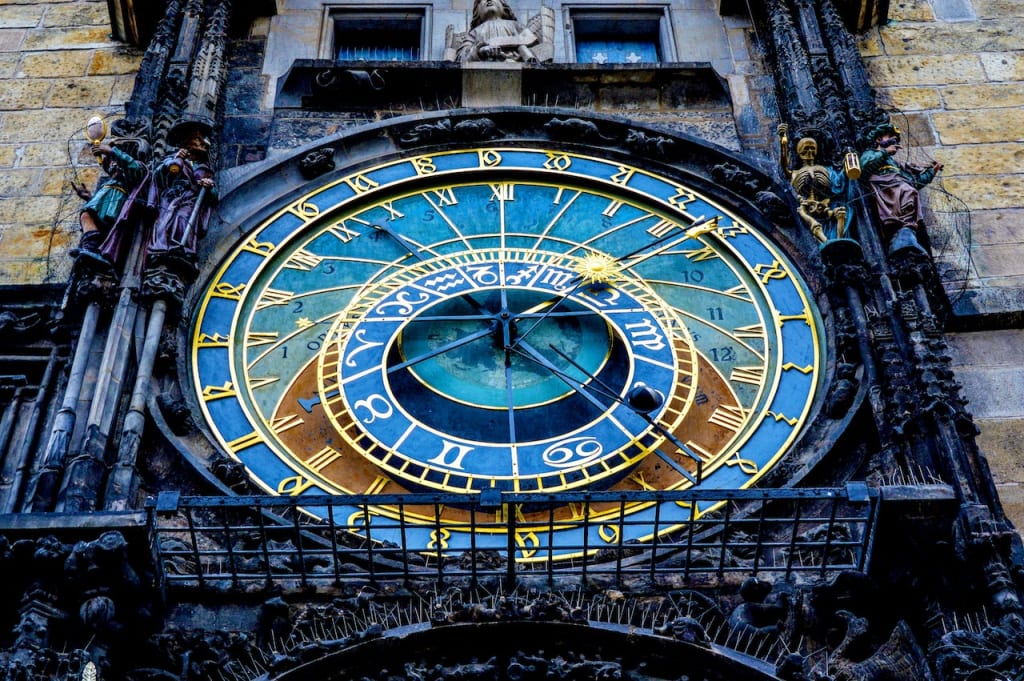
Time travel has been a topic of fascination for people for centuries, with the concept being explored in literature, movies, and TV shows. The idea of going back in time to witness historical events or traveling to the future to see what lies ahead is both thrilling and intriguing. In this article, we will explore the concept of time travel and its implications.
What is time travel?
Time travel has long been a topic of fascination for people around the world. It refers to the hypothetical concept of moving through time, either forwards or backwards, in a way that is beyond the normal human experience. The idea of time travel has been explored in various forms of media, from literature to movies and TV shows.
At its core, time travel is the ability to move through time, much like we move through space. This means that a person could potentially travel to any point in the past or future, and witness historical events or visit places that no longer exist. However, the concept of time travel also raises many questions about the nature of time and the universe itself.
While the concept of time travel is often explored in science fiction, it is also a topic of serious study for some scientists and researchers. Theories and hypotheses about the possibility of time travel continue to be developed and tested, and the concept remains a subject of ongoing scientific inquiry.
Theories of time travel:
Time travel has been a popular topic in science fiction and has captured the imagination of many people. While time travel may not yet be possible, the theories surrounding it are fascinating to explore. Here are some of the most popular theories of time travel:
- Time dilation: According to Einstein's theory of relativity, time is relative to the observer. Time dilation suggests that as an object approaches the speed of light, time will slow down for that object. This means that if a person were to travel close to the speed of light, time would slow down for them, making it possible for them to travel into the future.
- Wormholes: Wormholes are hypothetical passages through space-time that connect two different points. The theory suggests that if we could travel through a wormhole, we could travel back and forth through time.
- Grandfather paradox: This theory suggests that if time travel were possible, it could create a paradox. For example, if a person were to go back in time and kill their own grandfather, they would cease to exist, which would mean they couldn't have gone back in time to kill their grandfather in the first place.
- Many-worlds interpretation: This theory suggests that every time a choice is made, the universe splits into multiple versions of itself. If time travel were possible, it would be like jumping between different universes.
- Closed time-like curves: This theory suggests that time travel is possible through the use of a closed time-like curve, which is a path through space-time that loops back on itself. While this theory is mathematically possible, it requires exotic matter with negative energy, which has not yet been observed in the universe.
While these theories of time travel may seem far-fetched, they are fascinating to explore and can spark the imagination. As technology advances and our understanding of the universe expands, who knows what possibilities may be revealed in the future.
The science behind time travel:
Time travel has always been a subject of fascination for humans. The idea of being able to go back in time or fast-forward into the future is intriguing. But is it possible? Let's explore the science behind time travel.
According to Einstein's theory of relativity, time and space are interconnected. This theory suggests that the closer an object is to a massive object, the slower time moves for that object. This phenomenon is known as time dilation.
To explain this, imagine two clocks – one on Earth and the other in space. The clock in space would run slower than the one on Earth because it is farther away from the massive object. This means that time passes differently for objects in different gravitational fields.
Another theory related to time travel is the concept of wormholes. Wormholes are hypothetical tunnels in space-time that connect two distant points in the universe. If we could manipulate a wormhole and control its opening and closing, we could theoretically travel through time.
However, the idea of wormholes is still in the realm of science fiction. Scientists are still trying to find ways to prove their existence and figure out how to control them.
Implications of time travel:
The concept of time travel has been a subject of fascination for a long time, and it has been explored in numerous works of fiction. However, if we consider the implications of time travel in the real world, it becomes clear that it could have far-reaching consequences.
Firstly, time travel could result in changes to the timeline and could lead to the creation of paradoxes. For example, if a person goes back in time and changes a significant historical event, it could have a ripple effect on the future. This could lead to unpredictable and potentially disastrous consequences.
Secondly, time travel could lead to ethical and moral dilemmas. For example, if a person goes back in time and kills someone, would it be considered murder or an act of heroism? The answer to this question is not clear, and it highlights the ethical complications of time travel.
Thirdly, time travel could result in the alteration of personal identities. If a person goes back in time and interacts with their past self, it could lead to confusion and uncertainty about their identity. This could have significant psychological consequences and could lead to a loss of sense of self.
Finally, time travel could result in the creation of alternate realities. If a person goes back in time and makes changes to the timeline, it could result in the creation of alternate realities that are vastly different from the current reality. This could have far-reaching consequences and could lead to the creation of new civilizations and cultures.
Conclusion:
In conclusion, the concept of time travel has been fascinating people for centuries, and it continues to captivate our imagination today. From the possibilities it presents for exploring history and altering the course of events, to the philosophical and ethical questions it raises about free will and determinism, time travel is a subject that invites endless speculation and debate. While we may never know if time travel is truly possible, the thought experiments and fictional depictions of it will continue to inspire and challenge us. Whether we use it as a means of escape, a tool for discovery, or a way to contemplate the mysteries of the universe, time travel remains a powerful and enduring idea that will continue to capture our imaginations for years to come.
About the Creator
Muhammad Saad Satti
I am a multi-talented professional with expertise in content writing, web development, graphics design. With a passion for creativity and attention to detail, I strive to provide innovative solutions that exceed client expectations.
Keep reading
More stories from Muhammad Saad Satti and writers in Education and other communities.
Time Travel: The Ultimate Guide to Exploring the Fourth Dimension
Have you ever thought about what it would be like to travel through time? To experience different eras, witness historical events, and explore the future? Time travel has been a popular topic in science fiction for decades, but could it actually be possible? In this article, we will delve into the science of time travel, explore the different theories and methods proposed, and discuss the ethical implications of this revolutionary concept.
By Muhammad Saad Satti3 years ago in Education
This is what happens in your brain when you can't recall and word
You’re sure you know your third grade teacher’s name— it’s like you’re hovering over it in your mind, but it just won’t materialize. Researchers call this tantalizing torment a “tip-of-the-tongue state,” and it's something everyone experiences. But what's actually happening when a word gets caught here? And how can you best get it unstuck? Most of the time, our brains seamlessly summon words from vast stores of knowledge, paring their meaning and sounds, and stringing them into sentences.
By Munesh Yadava day ago in Education
How to Succeed at the Benson Directory®
Congratulations and welcome to the Benson Directory® employee #22391! As our newest call handler, you will have the privilege of speaking with dozens of unique and interesting people on a daily basis as well as the opportunity to earn bonuses for high performance. Contained within this handbook you will find a set of ease to follow instructions designed to help you settle in to your new role and begin paving the way to success.
By S. A. Crawford4 days ago in Fiction



Comments
There are no comments for this story
Be the first to respond and start the conversation.