
The Fascinating World of Compound Microscopes
A Window Into the Microscopic Universe
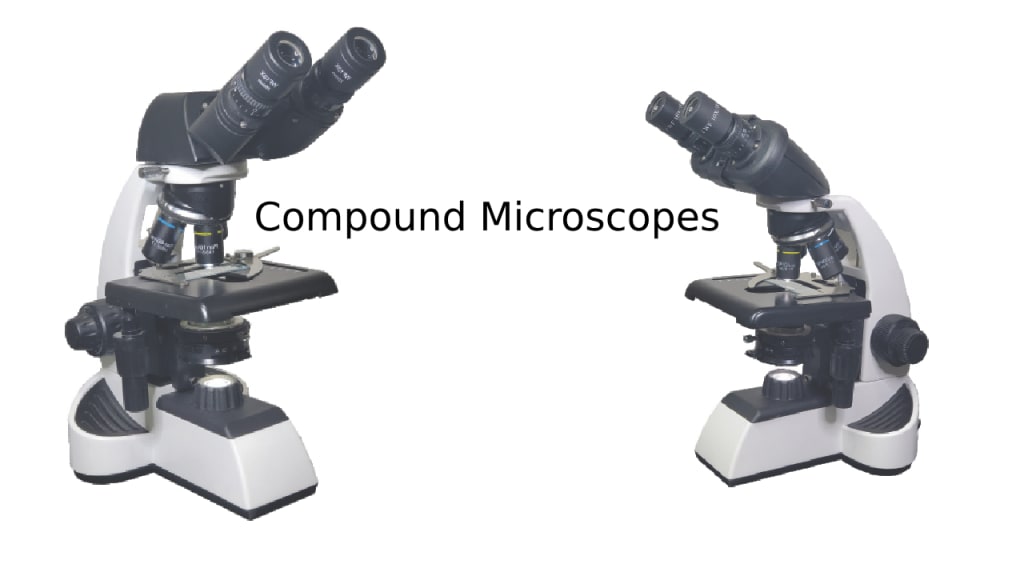
A compound microscope is more than just a tool; it’s a gateway to discovering the unseen. From educational institutions and research labs to clinical diagnostics and industrial applications, compound microscopes play a vital role in understanding the microscopic world. Their ability to magnify specimens with extraordinary clarity has made them indispensable for scientists, students, and professionals alike.
What is a Compound Microscope?
A compound microscope uses a combination of lenses to magnify objects, providing detailed and precise images. It features two primary lenses: the objective lens (closer to the specimen) and the eyepiece lens (closer to the observer). By combining these lenses, the microscope achieves high magnifications, often ranging from 40x to 1000x or more.
Compound microscopes are ideal for studying thin specimens like cells, tissues, and microorganisms, making them essential in biology, pathology, and microbiology. They are also used in materials science to examine small structural details.
Key Features of Compound Microscopes
High Magnification and Resolution
Compound microscopes offer superior magnification compared to other types, such as stereo microscopes. With multiple objective lenses (commonly 4x, 10x, 40x, and 100x), users can explore specimens in incredible detail. Advanced models provide exceptional resolution, ensuring sharp and clear images.
Illumination Options
Equipped with LED or halogen light sources, compound microscopes offer bright and even illumination. Many models feature adjustable diaphragms and condensers to control light intensity and focus, enhancing image clarity.
Versatility in Applications
Compound microscopes are versatile tools used in a variety of fields:
- Education: Essential for biology classes, helping students understand cell structures and basic life processes.
- Medical Research: Crucial in pathology for diagnosing diseases and in microbiology for identifying microorganisms.
- Industrial Applications: Used to inspect small components in electronics, metallurgy, and materials science.
Ease of Use
Advanced compound microscopes are user-friendly, with ergonomic designs, adjustable stages, and digital enhancements for seamless operation. Digital models allow for image capture and analysis, making data sharing more efficient.
Types of Compound Microscopes
Monocular Microscopes
Featuring a single eyepiece, these are ideal for beginners and educational purposes. They are cost-effective and easy to handle.
Binocular Microscopes
Designed with two eyepieces, these microscopes reduce eye strain and provide a more comfortable viewing experience, especially during prolonged use.
Trinocular Microscopes
These advanced models include a third port for connecting cameras, enabling image capture and live streaming, perfect for research and presentations.
Specially designed for observing transparent specimens, phase contrast microscopes enhance contrast without staining, preserving the natural state of cells.
Why Choose a Compound Microscope?
Investing in a compound microscope opens doors to exploration and discovery. Whether you’re a student eager to learn, a researcher uncovering the mysteries of life, or a professional seeking precision, compound microscopes cater to all levels of expertise.
When selecting a compound microscope, consider key factors like magnification, optical quality, illumination, and compatibility with accessories. Brands like Getner Instruments and others are known for their reliable and high-performing models, ensuring you receive top-notch results every time.
The Digital Era of Microscopy
The integration of digital technology into compound microscopes has revolutionized their functionality. Digital microscopes come equipped with cameras, software for measurements, and real-time image sharing, making them indispensable in modern research and education.
With Wi-Fi connectivity and high-resolution imaging, these microscopes allow users to document, analyze, and collaborate effortlessly, transforming how we explore the microscopic world.
Conclusion
Compound microscopes are indispensable tools that continue to shape the way we study and interact with the microscopic world. Their ability to reveal the unseen makes them essential in science, medicine, and industry. Whether you’re examining cells, diagnosing diseases, or inspecting materials, a compound microscope is your trusted companion in discovery.
Explore the fascinating world of compound microscopes and unlock a universe of possibilities!
About the Creator
GetnerInstruments
Getner Instruments Pvt. Ltd. is a renowned manufacturer of premium microscopes, celebrated for precision and innovation, we offer an extensive range of optical instruments tailored to the needs of research, education, and industry.
Keep reading
More stories from writers in Education and other communities.
The Duelist
The rays of a dying red sun flashed against the onrushing blade. The grey beards say the key to dueling lies in size, speed, reach, righteous fury, whatever the person in front of them pays them to say. Matteo knew better than any it was none of these and had an undefeated record on these sands to prove it.
By Matthew J. Fromm4 days ago in Fiction


Comments