
The evolution of Artificial intelligence (AI) : From early beginnings to modern breakthroughs
"From Concept to Advancement: Tracing the Dynamic Journey of Artificial Intelligence"
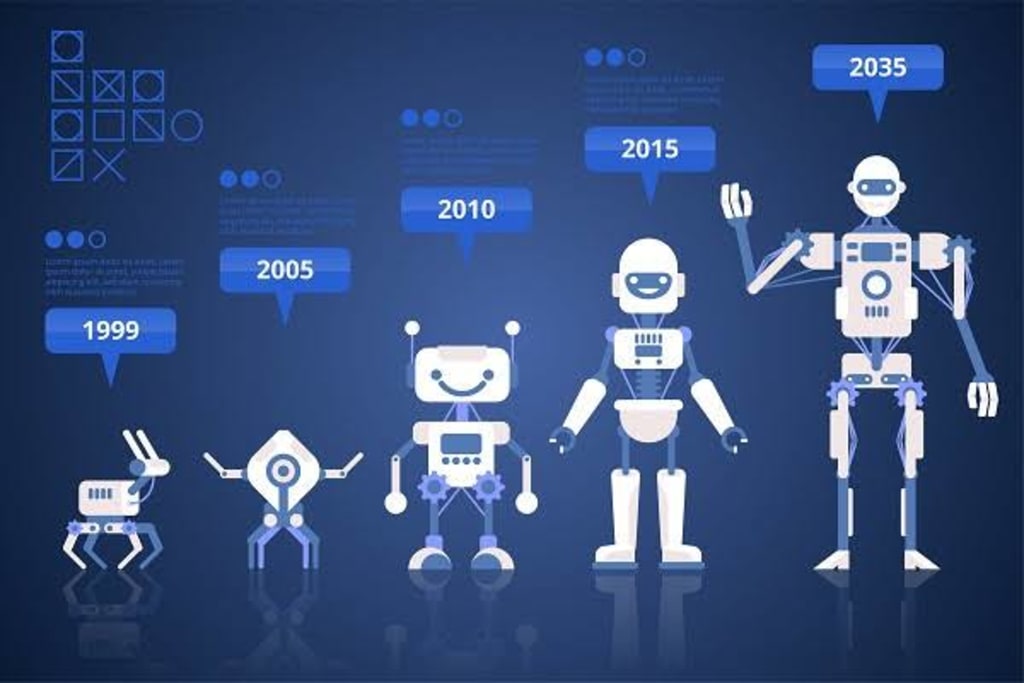
Title: The Evolution of Artificial Intelligence: From Early Beginnings to Modern Breakthroughs
Introduction:
Artificial Intelligence (AI) has undergone a remarkable evolution since its inception, transitioning from theoretical concepts to transformative technologies that shape various aspects of our lives. This article delves into the captivating journey of AI, tracing its origins, major milestones, and breakthroughs that have propelled it to its current state.
1. The Birth of AI:
The roots of AI can be traced back to the mid-20th century when pioneers like Alan Turing and John McCarthy laid the foundation for this field. Turing's concept of a "universal machine" and McCarthy's invention of the programming language LISP set the stage for the development of intelligent machines.
2. Early Development:
In the 1950s and '60s, the field of AI witnessed significant progress. Researchers explored symbolic AI, focusing on logic and rule-based systems. Programs like the General Problem Solver (GPS) and the Logic Theorist showcased early attempts at creating intelligent problem-solving machines.
3. The Rise and Fall of AI:
The late 1960s and '70s marked a period of heightened optimism in AI. Researchers believed that AI systems capable of human-level intelligence were just around the corner. However, limited computational power and difficulties in modeling human cognition led to what became known as the "AI winter" in the 1980s, where funding and interest in AI dwindled.
4. Machine Learning Revolution:
The resurgence of AI came with advancements in machine learning, particularly neural networks. In the 1990s, breakthroughs like backpropagation and the development of more efficient algorithms paved the way for neural networks to tackle complex problems such as image recognition and speech processing. This era saw the rise of applications like handwriting recognition and early voice assistants.
5. Big Data and Deep Learning:
The early 2000s brought about a revolution in AI with the advent of big data and deep learning. The availability of vast amounts of data and improvements in computational power enabled the training of deep neural networks. Deep learning algorithms demonstrated exceptional performance in tasks like object detection, natural language processing, and autonomous driving.
6. Reinforcement Learning and AlphaGo:
Reinforcement learning, a paradigm where AI systems learn through interaction with an environment, gained prominence. One remarkable milestone was the victory of AlphaGo, an AI developed by DeepMind, over the world champion Go player in 2016. This breakthrough showcased the ability of AI to master complex, strategic games through reinforcement learning techniques.
7. Natural Language Processing and Chatbots:
Advancements in natural language processing (NLP) have revolutionized human-computer interaction. Chatbots and virtual assistants, such as Apple's Siri and Amazon's Alexa, have become commonplace, employing sophisticated NLP algorithms to understand and respond to user queries, transforming the way we interact with technology.
8. AI in Healthcare and Robotics:
AI has found numerous applications in healthcare, aiding in medical imaging analysis, disease diagnosis, and drug discovery. Robotics has also benefited from AI advancements, enabling the development of autonomous robots for tasks like warehouse automation, surgery, and exploration.
9. Ethical Considerations and Future Directions:
As AI continues to advance, ethical considerations become increasingly important. Questions about bias, privacy, job displacement, and the responsible use of AI need to be addressed. Researchers and policymakers are actively working to ensure that AI benefits society while mitigating potential risks.
Conclusion:
The evolution of AI has been a fascinating journey, from its early beginnings as a theoretical concept to its integration into various industries. As AI continues to progress, it holds immense potential to revolutionize our lives further. Balancing technological advancements with ethical considerations will be crucial as we navigate the future of AI and its profound impact on society.
About the Creator
Keep reading
More stories from Universal Gamer and writers in Education and other communities.
Unmasking Corruption: The Plague That Hinders Progress
Title: Unmasking Corruption: The Plague That Hinders Progress Introduction: Corruption, a term synonymous with deceit, dishonesty, and abuse of power, continues to pose a significant threat to societies worldwide. From embezzlement in high-ranking government offices to bribery at the grassroots level, corruption takes on various forms, eroding public trust, undermining economic development, and perpetuating inequality. In this article, we delve into the nature of corruption, its detrimental consequences, and the urgent need for collective action to combat this pervasive issue.
By Universal Gamer3 years ago in Education
The Intersection of Inclusion, Mental Health, and Legal Protections: Understanding IDEA’s Role in Safeguarding Students’ Educational and Emotional Well-Being
Timotheus Homas Abstract Inclusion under the Individuals with Disabilities Education Act (IDEA) is often framed as a civil rights mandate concerned with access and equality. This article argues that inclusion also serves a critical mental health and developmental protection function, particularly during early childhood. Drawing on Timotheus Homas’ scholarship, the article examines how inclusive educational environments mitigate psychological harm, while exclusionary practices exacerbate vulnerability. The analysis contends that IDEA’s protective purpose cannot be fulfilled without recognizing inclusion as a safeguard against developmental and mental health injury.
By Emma Wegenast3 days ago in Education
What Recruiters Really Look for in Remote IT Candidates
What Recruiters Really Look for in Remote IT Candidates Remote IT roles are more competitive than ever. With companies hiring globally, recruiters are no longer limited to local talent — which means candidates must stand out in new ways. While technical skills still matter, they are no longer the only deciding factor. In reality, recruiters evaluate remote IT candidates through a much broader lens.
By Bahati Mulishi7 days ago in Education




Comments
There are no comments for this story
Be the first to respond and start the conversation.