
The Eco-Warriors
Saving the Planet One Invention at a Time

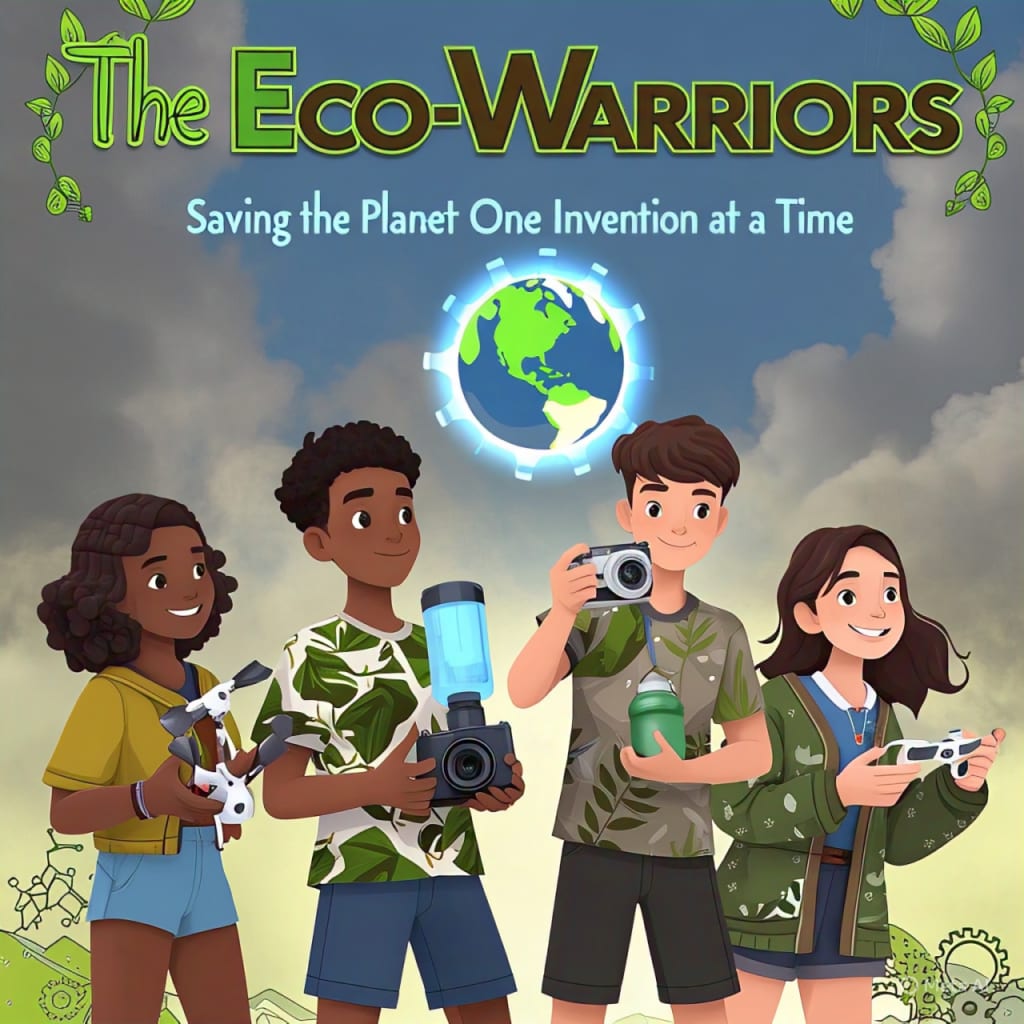
Tara Khan stared out the window of her science classroom, watching the smoke rise from a nearby factory. “How did we let the planet get this bad?” she wondered.
She had just turned fourteen, but already she knew the world was in trouble. Melting glaciers, plastic in the oceans, rising temperatures — the Earth was sending out distress signals. What bothered her most was the feeling that no one was doing enough to stop it.
But Tara wasn’t the type to sit back and complain. She had an idea — what if students like her could create small inventions that actually made a difference?
She shared her idea with three friends: Jamal, a tech genius who loved coding drones; Priya, a chemistry lover who made her own plant-based cleaning products; and Ayan, a nature photographer who knew more about endangered species than anyone else in school.
Together, they formed a team. They called themselves “The Eco-Warriors.”
Their mission: to build inventions that could fight pollution, protect nature, and raise awareness about climate change — one project at a time.
---
Their first invention was a plastic-detecting drone.
Jamal had discovered that rivers near their town were filled with floating plastic waste. So, he programmed a small drone to fly over rivers and use sensors to identify concentrations of plastic. When the drone found a polluted area, it sent the location data to a cleanup team — a group of local volunteers the Eco-Warriors partnered with.
Their second project was Priya’s idea: a biodegradable soap made from orange peels and aloe vera. Many soaps contain phosphates that pollute water and harm aquatic life. Priya’s natural soap cleaned just as well and broke down safely in the environment. They sold it at the school fair and donated the profits to tree-planting campaigns.
Tara worked on a carbon-capture planter — a pot that not only grew plants but also filtered carbon dioxide using activated charcoal and moss. She explained it during a science exhibition:
“Plants naturally absorb CO₂, but with added materials like biochar, we can capture more carbon and improve air quality.”
Their biggest breakthrough came from an unexpected source: Ayan’s camera.
While exploring a nearby forest, Ayan filmed illegal deforestation. With drone footage and time-lapse photography, he captured how fast trees were disappearing. They used the videos to launch a campaign on social media, and within weeks, local news stations picked it up. The pressure forced authorities to investigate, and logging was stopped.
But being Eco-Warriors wasn’t always easy.
One day, someone spray-painted “NERDS” on their lab door. Some students teased them, saying, “You think a soap or a drone will save the world?”
Tara was hurt, but she remembered something her science teacher once said:
“Every great change begins with someone who refuses to give up.”
They kept going.
---
By the end of the school year, the Eco-Warriors had built five working inventions, held three environmental workshops, planted over 300 trees, and helped clean up two rivers. They were even invited to the National Student Innovation Summit, where young inventors from all over the country gathered to share ideas.
At the summit, Tara stood on stage with her team. She looked out at the crowd of students, teachers, and scientists. Her voice was calm but firm:
“We may not be able to fix the whole planet in one day, but every invention, every tree, every line of code, every idea — it matters. We’re not just the future. We’re the now.”
The crowd erupted in applause.
After the event, a professor from a top university approached them.
“Your work is impressive,” she said. “Would you like to join our youth accelerator program? We’ll fund your next eco-project.”
The team couldn’t believe it.
That summer, they worked on their biggest idea yet: a solar-powered water purifier that used nanomaterials to filter dirty water. It required no electricity, making it ideal for rural or disaster-affected areas. They tested it at a village that lacked clean drinking water — within hours, families had access to safe, filtered water powered only by sunlight.
The Eco-Warriors’ story spread. News channels featured them. Schools invited them to speak. Kids from different cities wrote to them saying they’d started their own teams too.
One letter said:
"We thought only grown-ups could change the world. But now we know — anyone can be an Eco-Warrior."
---
Today, Tara and her team continue their mission. They aren’t superheroes. They don’t wear capes. But in labs, forests, rivers, and classrooms, they fight for the planet every single day.
Because they believe that every action matters, and that saving the Earth is not one big act — but thousands of small ones, made by ordinary people with extraordinary courage.
About the Creator
Syed Kashif
Storyteller driven by emotion, imagination, and impact. I write thought-provoking fiction and real-life tales that connect deeply—from cultural roots to futuristic visions. Join me in exploring untold stories, one word at a time.
Keep reading
More stories from Syed Kashif and writers in Education and other communities.
Is Gold Still a Safe Haven? Latest Trends in the Global Gold Market
Gold has long been recognized as a haven in times of financial uncertainty. For centuries, investors, governments, and institutions have relied on gold to preserve wealth during periods of economic instability. Its reputation as a store of value has survived wars, economic crises, and major changes in the global financial system.
By George Drazenovic3 days ago in Education
Writing To Succeed
If you want to find something that will help readers find your writing, possibly expand your audience, and maybe even get you noticed for other things, then you’re not alone. But how can you get it done in a world full of want-to-be writers? Look less at what you’re writing now, and more at what other writers have used to boost their views and reads.
By Jason Ray Morton 6 days ago in Writers



Comments
There are no comments for this story
Be the first to respond and start the conversation.