
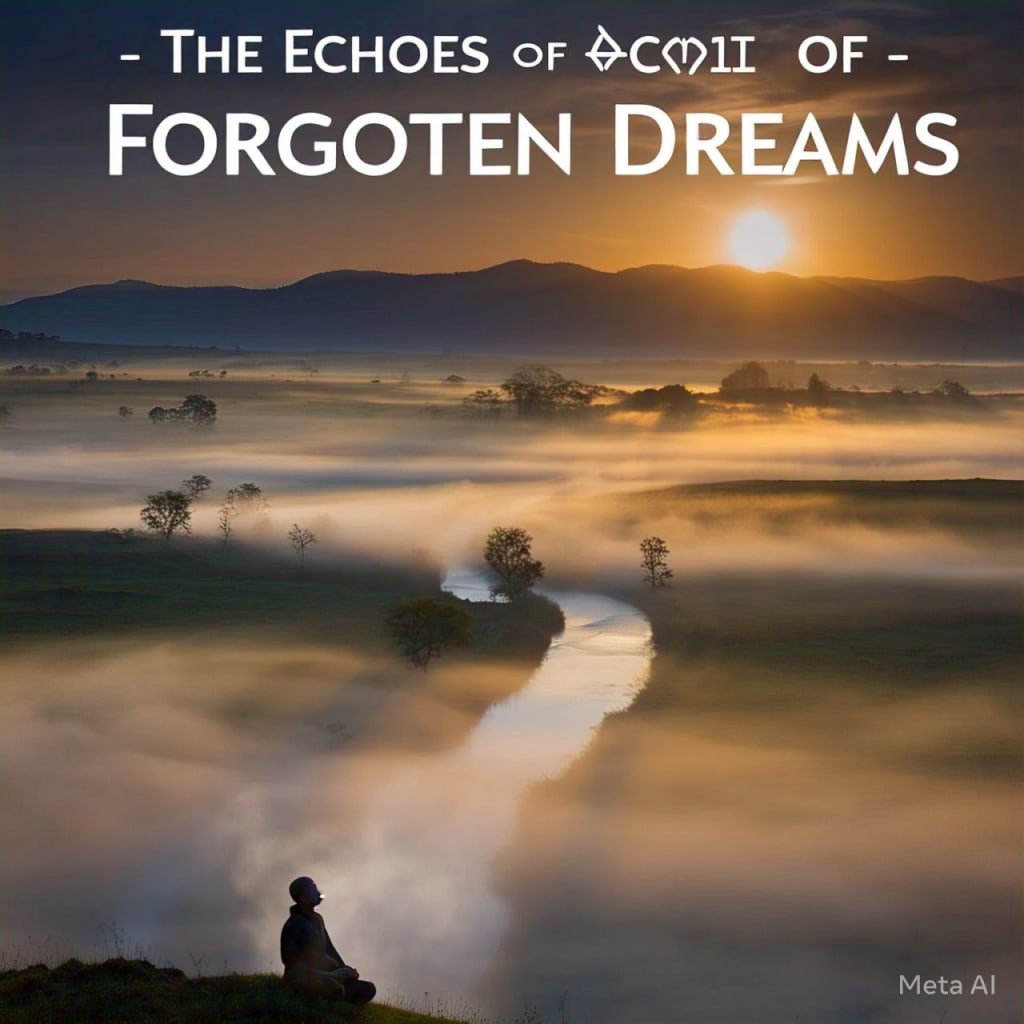
The Echoes of Forgotten Dreams
A Journey Through the Wounds of Despair
It was a cold winter morning when Emma stood by the window, gazing at the frost-covered world outside. The once-vibrant city now seemed muted under a blanket of snow. The streets, usually alive with the rhythm of bustling life, now felt distant, as though even time had slowed down in its tracks. Her breath fogged up the glass as she exhaled, her thoughts swirling like the snowflakes in the air.
Three years ago, Emma had been a woman full of ambition, hope, and dreams. She had believed in the power of hard work, in the possibility of creating a life that was beautiful and meaningful. She had always dreamed of opening her own art gallery—an oasis of creativity where she could display her work and the work of others, a space for artists to connect and inspire one another.
But as the years went by, the dream had slipped further and further from her grasp. The gallery that she had once imagined with so much passion and excitement had become a distant memory, overshadowed by the weight of harsh reality. Bills piled up, financial setbacks turned into a constant threat, and the people she had hoped would support her dreams had long since turned their backs.
It wasn’t that Emma didn’t try. She had given everything she had—her time, her energy, her money—into making the gallery a reality. But life had a cruel way of throwing obstacles in the path of those who dared to dream. The gallery space she had found had seemed perfect at first: a charming old building in the heart of the city, with brick walls and large windows that allowed the light to pour in like liquid gold. But when the renovations turned out to be more expensive than she had anticipated, when the city’s zoning laws proved to be more complicated than she had expected, the costs spiraled out of control.
Every day felt like a battle. Emma was forced to take out loans, putting herself deeper into debt, and still, the gallery remained just out of reach. The emotional toll of it all had been crushing. The late nights spent working alone in her apartment, painting her heart out only to feel the weight of doubt gnawing at her, had taken its toll. The worst part was the loneliness—the feeling that no one understood. Her friends had tried to comfort her, but their words felt hollow. They had moved on with their lives, pursuing their own successes, while Emma was left behind, watching as her dreams slipped away, one fragment at a time.
Today, as she stood at the window, she could almost hear the echoes of the gallery she had once envisioned. The sounds of footsteps on the wooden floors, the laughter of artists and patrons mingling in conversation, the hum of excitement as someone discovered a new piece of art. But those sounds were now just ghosts, fading away with each passing day.
"Maybe I’m just not meant for this," she whispered to herself, the words feeling foreign in her mouth. "Maybe I’m just not good enough."
It was a thought that had plagued her for months, a creeping doubt that gnawed at her soul. It had started as a whisper, a fleeting thought that she could easily brush aside. But over time, it had grown louder, until it became the only voice she could hear. The voice that told her she was a failure, that her dreams were too big, too unrealistic, that she would never amount to anything more than someone who once had potential.
As the day wore on, Emma’s mind continued to spiral, each thought feeding the next. She remembered the moment she had first decided to pursue the gallery. It had been a warm summer day, the sun shining down on her face as she stood in front of a modest storefront, imagining what it would look like once it was filled with beautiful art. She had felt so certain then, so full of hope.
But hope had become a fragile thing, easily shattered by the harsh winds of reality. She had told herself that she would keep going, that she would never give up, but now, standing here in the quiet of her apartment, she wasn’t so sure anymore.
The gallery had always been her dream, but it had also been a symbol of something larger—the belief that she could create something meaningful, something that would make a difference in the world. Without it, she wasn’t sure who she was anymore. The doubt was suffocating, and for the first time in a long time, she felt the weight of it crushing her chest.
Emma sank onto the couch, her eyes welling up with tears. She wiped them away quickly, embarrassed by her weakness. She had always prided herself on being strong, on pushing through adversity. But now, the strength she had once relied on felt like an illusion, something she had clung to in order to hide the cracks in her heart.
It was in that moment, as she sat there with her head in her hands, that a small voice broke through the darkness.
"You don’t have to be perfect."
The words were quiet, but they carried a weight that made Emma pause. They weren’t from anyone else. They weren’t the words of a friend or a family member. They were her own voice, a gentle reminder that she didn’t have to have it all figured out, that it was okay to fail, to fall, to stumble. It was okay to let go of the image of perfection she had been holding onto for so long.
And in that brief moment of clarity, Emma realized something profound: the loss of her dream didn’t mean the loss of herself. She was still capable of creating, still capable of finding beauty, even if it wasn’t in the way she had originally imagined. The gallery might have been the dream she had built her identity around, but it wasn’t the only dream she could have.
Hope wasn’t gone. It had just taken on a new form. It was no longer a distant, unreachable thing. It was something that could be found in the quiet moments, in the small acts of creation, in the acceptance of imperfection.
With a deep breath, Emma stood up. The road ahead was uncertain, but it was still a road. And with that, she knew, the journey was not over.
About the Creator
Why Higher Education in Germany Is Reshaping Global Academic Choices
Germany Higher Education Landscape and Its Rising Influence Germany has produced many of the world's leading academics, innovators, and researchers. The higher education system is becoming increasingly popular, as students seek low-cost, high-quality, and world-class higher education opportunities in the country. Once regarded as a professional school of engineering and technical disciplines, it is now a global academic institution that attracts students from around the world.
By deepanshu Thakur2 days ago in Education
Why I Decided on Business Before I Even Finished School
I’ve always had the need to create something of my own. I never had a dream job. Not even once. When people asked me what I wanted to become, there was no clear answer—because deep inside, I knew I didn’t want to be stuck anywhere. I tried to think about college, about following a “safe” path, but it never felt right. I didn’t feel it. The only thing that ever felt natural to me was business.
By Affiliates Eve5 days ago in Education



Comments
There are no comments for this story
Be the first to respond and start the conversation.