
The Death of the Lecture Hall
Why I Stopped Reading Textbooks to My Students (And You Should Too)
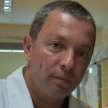

Thirty-seven years ago, I remember sitting in a wooden seat in our medical school's largest auditorium, surrounded by 300 other first-year students. We were all clutching our heavy anatomy textbooks, pencils poised, ready to transcribe whatever our respected professor was about to share regarding the intricacies of human muscle attachments.
Then, Professor Alexander Mironov walked in. At barely forty, he was the youngest full professor in our entire medical school. Instead of opening his lecture notes, he looked out at us and asked a question that still gives me chills:
"Tell me, why exactly are you sitting here waiting for me to read you information that is already printed in the book you are holding?"
The auditorium was dead silent. Here was our professor essentially calling out the absurdity of what we were all participating in.
What happened next transformed my understanding of learning itself. Mironov introduced us to something radical: creating knowledge instead of simply consuming it.
That moment changed everything for me, not just how I learned, but eventually how I would teach. Professor Mironov went on to become the Head of the Department at the Institute of Molecular Oncology in Milan, where he recently retired.
In fact, the first time I truly understood the power of systematic knowledge creation was not in medical school, it was in a linear algebra classroom at the Technion in Haifa several years later. I was struggling with matrices, vector spaces, and transformations that seemed like abstract mathematical torture. Then something clicked. I started visualizing the external world through the lens of matrices, seeing rotations, transformations, and systematic relationships everywhere. Traffic patterns became linear transformations, architectural structures revealed geometric systematization, and biological processes started mapping onto mathematical planes. When I began organizing these mathematical concepts into my own visual and systematic frameworks, the abstract suddenly became concrete and personally meaningful.
These early experiences in transforming abstract information into personalized, systematic knowledge helped me approach various aspects of life beyond just learning. It was not just about the original study technique; it fundamentally changed how my brain engages with complex data.
The Digital Dilemma We Are Ignoring
Here is the uncomfortable truth about modern medical education: we are living through the greatest information revolution in human history, yet we are still teaching like it is 1950!
Students today carry more anatomical detail in their smartphones than existed in entire medical libraries when I was student. Netter's Atlas? It is an app. 3D organ visualization? There is VR for that. Detailed dissection videos? YouTube has thousands, available on demand, with better camera angles than most lecture halls can provide.
Yet we persist in packing hundreds of brilliant minds into auditoriums to hear someone read information that is already beautifully presented elsewhere. The cognitive science here is brutal: students retain roughly 10% of what they hear in lectures, compared to 20% from reading the same material independently. We are literally using the least efficient teaching method available to us!
Edgar Dale's research on learning retention, introduced in 1946, should have revolutionized education decades ago. But here we are in 2024, still defending an approach that treats students like passive information vessels rather than active knowledge creators.
What Mironov Actually Discovered
Mironov's method was deceptively simple: teach students to systematize information through personalized tables and frameworks. But the crucial insight was that each student had to develop their own organizational system.
He did not hand us pre-made classification tables for cranial nerves. Instead, he taught us the principles of systematization and challenged us to build our own frameworks. I spent entire weekends creating complex tables that organized cranial nerves not just by name and function, but by embryological origin, clinical testing methods, pathological presentations, and functional relationships.
The process was exhausting but the results were transformative!
When you start to create knowledge rather than passively consume it, something remarkable happens in your brain. You are not just memorizing facts and events; you are building interconnected networks of understanding that continually adapt and grow with new information.
The Neuroscience of Knowledge Creation
As someone who has spent years studying how brains process complex information, I can tell you that Mironov intuitively understood what cognitive science has now validated. When we actively construct our own understanding, multiple powerful learning mechanisms engage simultaneously.
- Active processing forces our brains to work with information rather than passively receive it. We become architects of understanding rather than storage containers for facts.
- Personal relevance becomes crucial. Information organized according to our own logical frameworks becomes exponentially more memorable than information organized by someone else.
- Pattern recognition emerges naturally. When you are systematizing information, you start seeing relationships and recurring themes that passive learners miss entirely. Anatomy stops being isolated facts and becomes interconnected systems with logical patterns.
- Flexible recall develops automatically. When information exists in multiple overlapping organizational systems, you create multiple retrieval pathways, making recall more reliable under pressure.
The Transformation in My Own Classroom
After years of testing this approach, first as a student and struggling researcher trying to decode complex neurobiological data, then as an educator watching students' glazed expressions, I can confirm that Mironov was absolutely right.
I no longer explain the branches of the facial nerve for the thousandth time. Instead, I teach students how to build their own classification systems. I show them how to create tables organizing cranial nerves by function, location, clinical significance, embryological origin. Then I watch them realize something profound: they can apply this methodology to anything.
Histology transforms from tissue memorization into elegant classification systems based on structure, function, and staining properties. Embryology becomes dynamic frameworks showing how developmental relationships actually work. The methodology becomes the message.
This addresses the elephant in the room: in an age where students can access more anatomical information on their phones than I had in my entire medical school library, what exactly are we adding to their education?
If we are just delivering information, we have already lost. Wikipedia does it better. YouTube does it better. Their textbooks do it better.
But here is what those resources cannot do yet: they cannot teach students how to think systematically, how to build personal frameworks that grow and adapt, how to create knowledge that serves them throughout their careers.
Beyond the Medical School: A Method for Life
The real power of this approach extends far beyond the anatomy course. I have watched many students apply successfully these principles to biochemistry, organizing metabolic pathways into personalized flowcharts that reveal elegant interconnections between seemingly disparate reactions. In pathology, they create diagnostic frameworks linking symptoms, lab findings, and histological features into coherent clinical pictures.
But perhaps most importantly, this approach transforms how they think about problems throughout their lives. Whether evaluating treatment options for complex clinical cases, analyzing intricate research data, or making specific personal decisions, they instinctively create systematic frameworks. They don't just consume information, they organize it, find patterns, build understanding that serves them across contexts and throughout their careers.
The Courage to Change
Let us be honest: this shift really terrifies many educators.
It is much easier to deliver the same lecture you have perfected over years than to guide students through the messy, unpredictable process of creating their own understanding. It is much more comfortable to stick with established curricula than to embrace novel methodologies that might look different for every student.
But the potential yields are undeniable! Students who learn to create knowledge don't just ace exams—they become doctors who adapt to anything, researchers who see patterns others miss, clinicians who synthesize complex information under pressure. In fact, they develop deep, flexible understanding that doesn't just survive their careers—it thrives and grows with every challenge.
The Future of Medical Education
We are actually standing at a crossroads. We can continue defending a system that turns brilliant minds into human photocopiers, or we can do something revolutionary: teach people how to think.
I firmly believe that the lecture hall doesn't need to disappear.
I still genially love the energy of a packed auditorium.
But what happens in that space must fundamentally change. Instead of information delivery, it should become a workshop for developing systematic thinking.
The best educators don't just share what they know, they teach others how to think.
In our information-saturated world, that's not just important.
It is everything!
About the Creator
Baruh Polis
Neuroscientist, poet, and educator—bridging science and art to advance brain health and craft words that stir the soul and spark curiosity.
Keep reading
More stories from Baruh Polis and writers in Education and other communities.
The real cost of skipping college that no one talks about
As someone who has spent years in both medicine and neuroscience research, I have been watching the recent surge of "skip college, get rich quick" content with growing concern. Just last week, I reviewed "The Millionaire Fastlane" by M.J. DeMarco on Medium, and while I really appreciate the entrepreneurial spirit, I cannot shake the feeling that, in fact, it is selling young people a dangerous fantasy.
By Baruh Polis10 months ago in Education
How Financial Advisors Make Millions Behind the Scenes
Many people trust financial advisors to guide their money decisions. Advisors help clients save, invest, and plan for retirement. They often appear helpful and knowledgeable. Yet many people do not know how advisors earn their real income. The truth is simple. Financial advisors are secretly making millions through systems that most clients never notice.
By Keith D'Agostino4 days ago in Education
Is Gold Still a Safe Haven? Latest Trends in the Global Gold Market
Gold has long been recognized as a haven in times of financial uncertainty. For centuries, investors, governments, and institutions have relied on gold to preserve wealth during periods of economic instability. Its reputation as a store of value has survived wars, economic crises, and major changes in the global financial system.
By George Drazenovic5 days ago in Education



Comments
There are no comments for this story
Be the first to respond and start the conversation.