
The Dark Side of Social Media Nobody Wants to Talk About
It’s Not Just Distraction—It’s a Fundamental Rewiring of Our Humanity

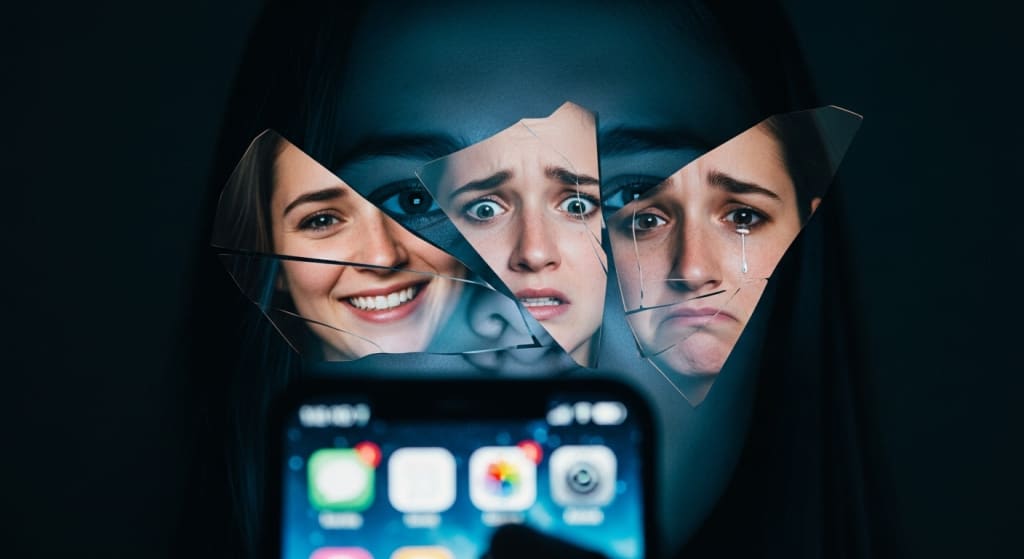
We talk about screen time. We talk about echo chambers and fake news. But we tiptoe around the deeper, more insidious damage. The conversation focuses on what social media does to our time, not what it’s doing to our souls. The dark side isn't just in the content; it's in the very architecture of these platforms, and how they are systematically altering our psychology, our relationships, and our perception of reality.
The Performance Prison: When Life Becomes a Brand
The most profound shift is the transformation of lived experience into a performance. Every moment is now a potential piece of content. The sunset isn't just a sunset; it's a backdrop for a post. A meal isn't just nourishment; it's a photoshoot. A personal triumph isn't just a victory; it's a status update.
This creates a psychological split. We are no longer just living our lives; we are constantly curating them for an invisible audience. We become the star, director, and critic of our own reality show. This performance anxiety is a constant, low-grade hum of stress. We are living for the "proof" of a life well-lived, rather than living it for itself. The authentic self is slowly eroded, replaced by a personal brand that must be consistently maintained, polished, and marketed.
The Erosion of Empathy and the Commodification of Connection
Social media promises connection, but it often delivers something thinner: connection theater. A "like" is not a conversation. A "heart" is not empathy. A comment is often a performance in itself.
Worse, these platforms train us to see other people as units of engagement. A friend's post about a personal tragedy appears in the same feed as a meme, a political rant, and an ad for shoes. We are conditioned to scroll, react, and move on. The depth of human emotion is flattened into a scalable, scrollable commodity. This constant, context-less exposure to both the trivial and the traumatic can lead to compassion fatigue, where we become desensitized to the very human struggles we log on to witness.
True empathy requires presence, nuance, and time—three things the endless scroll is designed to destroy.
The Theft of Boredom and the Death of the Inner World
Before the age of the feed, boredom was a fertile space. Waiting in line, sitting on a bus, lying in bed before sleep—these were moments for the mind to wander, to daydream, to process, and to simply be. This mental downtime is not idleness; it is the incubator for creativity, self-reflection, and a stable sense of self.
Social media has declared war on boredom. Every spare second is now a slot to be filled with external stimulus. The result is a generation that is terrified of being alone with its own thoughts. Our inner world—the quiet, messy, beautiful landscape of our own mind—is being paved over with a highway of viral trends and curated content. We are losing the ability to be our own source of entertainment, comfort, and reflection.
The Unspoken Toll: The Comparison Engine
We all know comparison is a thief of joy. But social media isn't just a gallery we visit; it's a relentless, 24/7 comparison engine. It's not just comparing ourselves to the polished highlights of others; it's comparing our own messy, behind-the-scenes reality to everyone else's highlight reel.
This creates a unique form of psychological torture. It’s not merely envy; it’s a pervasive feeling of inadequacy and inauthenticity. We feel we are failing at life because our reality doesn't resemble the aggregated fiction of our feed. This constant benchmarking chips away at our self-worth, making us feel like we are perpetually behind, less interesting, less successful, and less happy than we "should" be.
Facing the Truth: From Mindless Consumption to Mindful Use
Acknowledging this dark side is not a call to delete our accounts and live in a cabin. It is a call for radical honesty. We must stop pretending these platforms are neutral tools. They are engineered to be addictive, to manipulate our emotions, and to keep us engaged at any cost.
The path forward isn't abstinence, but intentionality.
Curate your space ruthlessly. Unfollow accounts that make you feel bad. Your feed should be a garden, not a landfill.
Reclaim boredom. Leave your phone at home during a walk. Don't reach for it in line. Allow your mind to wander.
Prioritize embodied connection. A one-hour, phone-free coffee with a friend is worth a thousand comments.
Audit your "why." Before you open an app, ask: "What is my intention here?" Is it connection, or is it escape?
The darkest part of social media is the way it quietly convinces us that this hyper-connected, performative existence is normal. It is not. The choice is ours to reclaim our attention, our time, and most importantly, our authentic, un-curated, beautifully messy human selves. The first step is to simply talk about it, without filter.
About the Creator
The 9x Fawdi
Dark Science Of Society — welcome to The 9x Fawdi’s world.
Keep reading
More stories from The 9x Fawdi and writers in Education and other communities.
The Human Guide Behind Technical Excellence
Mentorship of skilled technicians plays a decisive role in shaping strong careers and reliable work standards. Technical skill alone does not make a technician capable. Real growth comes from shared experience, steady guidance, and trust built over time. In many industries, mentorship fills the gap between classroom learning and real job demands. It helps technicians move from basic ability to confident performance. This article explores how mentorship supports learning, builds skills, and strengthens the future workforce.
By Michael Gastinel3 days ago in Education
Pioneering Therapies for Untreated Diseases
Medical science has made incredible progress in treating many illnesses. Yet, some diseases remain resistant to conventional therapy. These untreated diseases affect millions of people worldwide, causing long-term disability or shortened lifespans. Pioneering therapies for untreated diseases aim to fill this gap, offering hope where traditional treatments have failed. Scientists, clinicians, and biotech companies are working together to create therapies that are both innovative and effective.
By Dr. Janet Chollet4 days ago in Education
Miss Persephone's Manual to a Seemingly Ordinary Life
Miss Persephone was found at the dining table, her blue eyes swollen, her tears arriving and retreating like the tides of the ocean. Earlier that day, her family had visited her in the retirement home where she had lived for eight years. It was her eightieth birthday.
By Imola Tóth4 days ago in Fiction


Comments
There are no comments for this story
Be the first to respond and start the conversation.