
The Composition of Stars: A Journey Through Time and Light
The Universe 101
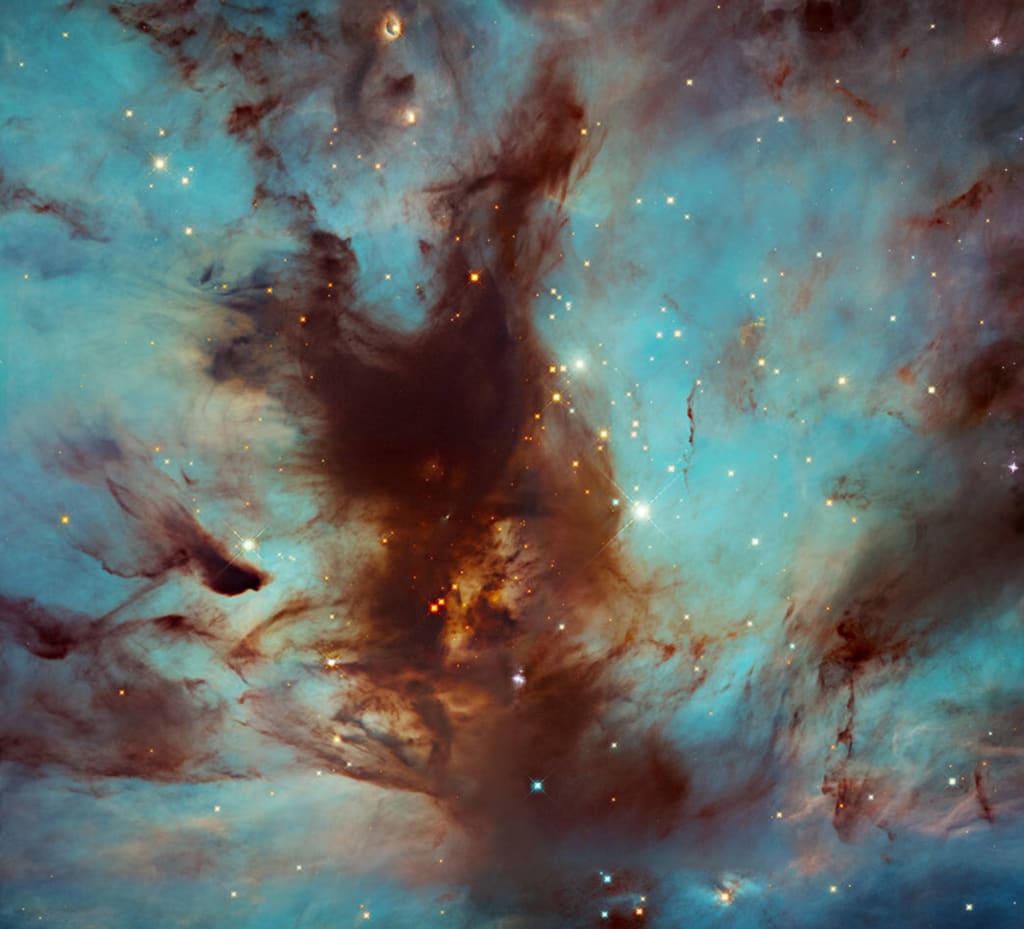
Throughout human history, the twinkling stars have captivated our imagination. When night falls, and the sky fills with countless pinpricks of light, our curiosity is piqued. We yearn to comprehend the cosmos, but there's a challenge—the vastness of the universe. How can we hope to understand something so distant, something we can't touch?
The stars, residing in the distant reaches of the cosmos, are beyond our physical reach. We cannot simply extend our hand and grasp them to unravel their secrets. Yet, this remoteness does not block the path to understanding. Over centuries, astronomers have learned that stars indeed share their mysteries, but we must learn to observe them in a unique way.
Long ago, ancient philosophers like Anaxagoras likened stars to fiery stones glowing with intense heat but too far for us to sense their warmth. Yet, Aristotle saw things differently. He believed stars couldn't be composed of earthly elements like fire or stone because they behaved differently. They didn't move like falling objects; instead, they circled around us as they rose and set, seemingly unchanging and eternal. Aristotle proposed they were made of a heavenly substance, the ether, which held sway for centuries.
Then, a new star burst onto the celestial scene in 1572—a supernova, the explosive demise of a massive star. It displayed that even stars could change. This discovery ignited a spark of curiosity, leading to the invention of the telescope. With the telescope, planets transformed from mere dots to fully formed worlds, and it confirmed that stars were vastly farther away than previously thought. Suddenly, the heavens and Earth seemed connected by shared principles.
In 1687, Isaac Newton underscored this connection, demonstrating that the law of gravity applied not just to falling apples but also to the moon and planets. Newton's work brought heaven and Earth even closer together. But it was his 1704 treatise on optics that revealed how white light could be separated into a spectrum of colors through a prism. This revelation showed that sunlight contained all colors, like a rainbow.
However, it wasn't until 1802 that William Wollaston refined this concept further by observing thin dark lines within the sun's spectrum. He believed these lines were borders separating colors. It was Joseph Fraunhofer, a German instrument maker, who, in 1814, took the next crucial step by creating a device to measure the refraction of light through different types of glass. When he turned it towards sunlight, he discovered hundreds of dark lines in the spectrum. These lines concealed a celestial barcode that would reveal the universe's secrets when deciphered.
In 1835, French philosopher Auguste Comte declared that understanding the chemical composition of stars would forever elude human knowledge. He assumed that scientists would need to travel to the stars to learn their makeup, an impossible feat. Yet, the invention of the spectroscope soon proved him wrong.
The spectroscope worked by dispersing light into a spectrum of colors, revealing dark lines within the sun's spectrum. When light passed through a gas, specific atoms absorbed it at certain wavelengths, producing these lines. Kirchhoff and Bunsen, German physicists, made this groundbreaking connection. They recognized that the dark lines acted as a chemical fingerprint, revealing the gases present in the sun's atmosphere.
Kirchhoff and Bunsen also noted that energized atoms could emit light, creating a spectrum of bright lines, which astronomers called emission lines. Both emission and absorption lines formed the celestial barcodes that tied Earth's chemistry to the cosmos.
In 1862, William Huggins was among the first to attach a spectroscope to his telescope, examining the spectra of numerous stars and celestial objects. His wife, Margaret, also joined in their astronomical endeavor. Huggins observed the spectra of the Great Nebula in Orion, revealing it was composed of glowing gas—a potential birthplace for new stars.
In 1864, Huggins discovered a green emission line in the Cat's Eye Nebula, indicative of oxygen with two electrons stripped away, suggesting a high-temperature environment. The spectroscope was revealing the composition of the cosmos, one celestial object at a time.
In 1868, French astronomer Jules Janssen used a spectroscope during a solar eclipse to analyze the spectrum of a solar prominence, uncovering unknown emission lines. Simultaneously, in England, Norman Lockyer observed these lines as well and coined the term "helium" for the new element he believed he had discovered on the Sun.
In 1925, Henry Norris Russell proposed that stars were composed of elements commonly found on Earth. This notion revolutionized our understanding of the universe. The groundwork for this revelation had been laid by a group of brilliant women at the Harvard College Observatory. Led by E.E. Pickering, these women, including Annie Jump Cannon and Cecilia Payne, cataloged stars based on their spectral lines. Payne's pioneering work revealed that hydrogen was the dominant element in stars.
Today, we know that stars are born from clouds of hydrogen gas and shine through nuclear reactions, transforming hydrogen into helium and heavier elements. When stars end their lives, they release these elements into space, providing the building blocks for planets and life.
The spectroscope, a tool of light and knowledge, unveiled this great cosmic secret, shaped by a remarkable cast of scientists and astronomers over centuries. We have learned not only what stars are made of but also that, in a profound sense, we are made of stars.
About the Creator
Keep reading
More stories from Mariam Melikidze and writers in Education and other communities.
How the Universe Began: the Secrets of the Big Bang
In the quest to understand the origins of the universe, we journey back to a time when there was no space, no time—just everything in the known universe squeezed into a tiny dot, tinier than an atom. Then, suddenly, from this unimaginably small point, our universe burst into existence. Stars lit up, galaxies swirled into shape, and the universe as we know it today began to form.
By Mariam Melikidze2 years ago in Education


Comments (1)
Very interesting. Good job.