
The Chipko movement protect Indian forests
About Chipko Andolan

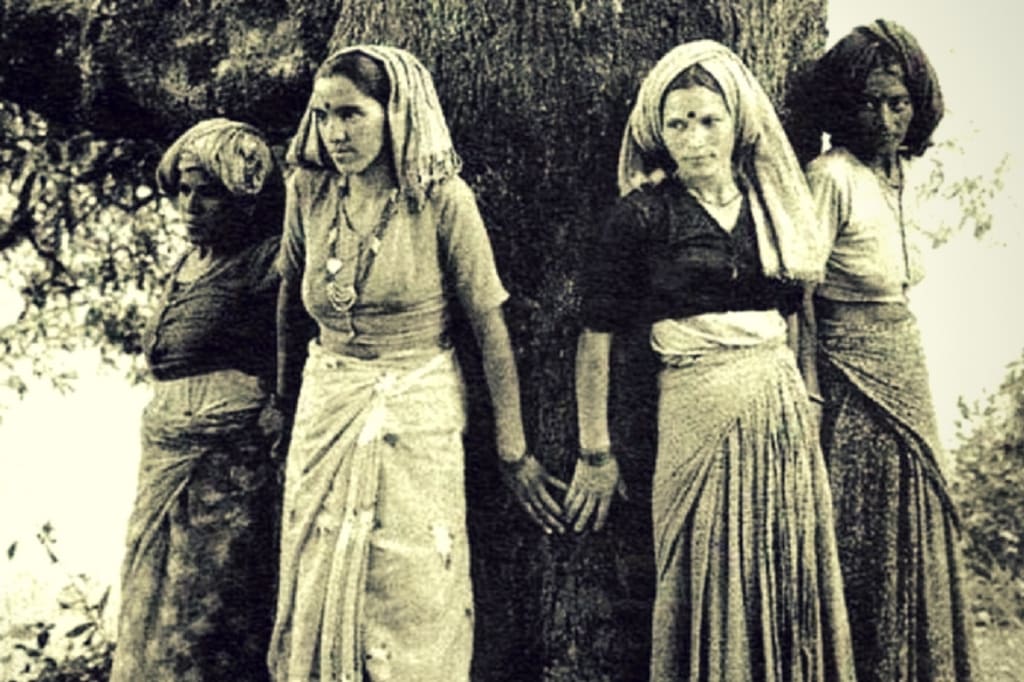
The Chipko Movement, a pivotal environmental initiative in India, emerged in the 1970s as a grassroots campaign to protect forests and promote ecological sustainability. Originating in the Himalayan region, the movement's impact transcended its geographical beginnings to become a symbol of environmental and social justice worldwide. Rooted in community participation and non-violent resistance, the Chipko Movement highlighted the critical link between forests and human well-being, raising awareness about the need for sustainable development practices.
Historical Context
The Chipko Movement's origins can be traced back to the village of Mandal in the Chamoli district of present-day Uttarakhand in 1973. This was a time when large-scale deforestation was rampant in India, driven by commercial logging operations. Local communities, heavily reliant on forests for their daily needs, found themselves increasingly deprived of vital resources such as firewood, fodder, and water. The resulting ecological imbalance led to soil erosion, landslides, and reduced agricultural productivity, further exacerbating the struggles of rural populations.
The immediate trigger for the movement was the government's decision to allow a sports goods company to fell trees in the region. The villagers, led by women, protested the decision, emphasizing the role of forests in their lives. They adopted a unique and symbolic form of resistance: physically hugging trees to prevent their destruction. This act of embracing trees, or "chipko" in Hindi, became the defining characteristic of the movement.
Leadership and Participation
While the movement was a collective effort, its leadership included prominent figures such as Chandi Prasad Bhatt, Sunderlal Bahuguna, and Gaura Devi. Chandi Prasad Bhatt, a social activist and founder of the Dasholi Gram Swarajya Sangh, played a key role in organizing the community and advocating for forest conservation. Sunderlal Bahuguna, an environmentalist, brought global attention to the movement with his emphasis on the spiritual and ecological importance of forests.
Gaura Devi, a local woman from Reni village, became a symbol of women’s leadership in environmental activism. In 1974, when loggers arrived to cut trees in Reni, Gaura Devi mobilized other women and led a courageous protest. They surrounded the trees, challenging the loggers to harm them first. This brave act not only saved the forest but also underscored the vital role of women in environmental conservation.
Objectives and Strategies
The Chipko Movement sought to protect forests from commercial exploitation and promote sustainable use of natural resources. Its objectives extended beyond environmental conservation to encompass social and economic justice for rural communities.
The movement employed Gandhian principles of non-violence and peaceful resistance. Instead of violent confrontations, villagers organized sit-ins, demonstrations, and educational campaigns. Their emphasis on non-violence gained widespread public support and highlighted the ethical dimensions of environmental conservation.
The involvement of women was a distinctive feature of the Chipko Movement. Women, who bore the brunt of ecological degradation due to their dependence on forests for sustenance, became the backbone of the movement. Their participation transformed Chipko into not only an environmental campaign but also a feminist movement advocating for women’s rights and empowerment.
Achievements and Impact
The Chipko Movement achieved significant success in its primary goal of protecting forests. In 1980, after years of sustained protests and advocacy, the Indian government imposed a 15-year ban on logging in the Himalayan region. This decision marked a turning point in India’s environmental policies, recognizing the importance of forests for ecological stability and community well-being.
The movement also inspired similar initiatives across India and the world. It became a model for grassroots environmental activism, demonstrating the power of community participation in challenging unsustainable practices. Chipko’s legacy is evident in subsequent campaigns for forest conservation, biodiversity protection, and sustainable development.
On a broader scale, the Chipko Movement brought environmental issues to the forefront of national and global discourse. It highlighted the interconnectedness of ecological, social, and economic concerns, emphasizing the need for holistic approaches to development. The movement’s success underscored the importance of recognizing local communities as custodians of natural resources and involving them in decision-making processes.
Challenges and Criticism
Despite its achievements, the Chipko Movement faced challenges and criticism. Some argued that its focus on halting deforestation overlooked the need for balanced development and alternative livelihoods. Others pointed out that the movement’s success was limited to specific regions and did not address broader issues of environmental degradation and resource management.
Nevertheless, the Chipko Movement remains a landmark in the history of environmental activism. Its emphasis on community involvement, non-violence, and sustainability continues to inspire environmental movements worldwide.
Conclusion
The Chipko Movement is a testament to the power of grassroots activism in driving social and environmental change. It demonstrated that ordinary people, united by a shared purpose, can challenge powerful interests and bring about transformative change. By protecting forests and advocating for ecological balance, the Chipko Movement laid the foundation for a more sustainable and equitable future. Its legacy serves as a reminder of the critical need to prioritize environmental conservation in the face of growing ecological challenges.
About the Creator
Bindu Bhardwaj
I am blogger crafting engaging content on diverse topics. Informative, relatable, and thought-provoking posts that connect with readers. Explore and learn through my words.
Keep reading
More stories from Bindu Bhardwaj and writers in Education and other communities.
How can I improve my concentration during study sessions?
Concentration is the cornerstone of effective studying. With increasing distractions from digital devices, social media, and our busy lives, maintaining focus can be challenging. However, by adopting proven strategies, you can enhance your concentration and make study sessions more productive. This article explores actionable steps to improve focus, ensuring a balance between efficiency and mental well-being.
By Bindu Bhardwajabout a year ago in Education
What Are Snapchat Planets and How Do They Work
Introduction to Snapchat Planets Snapchat planets are a visual feature that helps users understand how interaction works inside the Snapchat app. Many users notice planets next to friend profiles and feel curious about their meaning. Snapchat planets are designed to represent digital interaction levels in a simple and visual way rather than using numbers or charts.
By AWAIS TARIQ6 days ago in Education
Top 10 SEO Experts In Pakistan In 2026
Introduction Search optimization in 2026 no longer revolves around keywords or isolated ranking tactics. Google’s AI Overviews, entity-based indexing, and answer-first systems have changed how visibility is earned. Search engines now evaluate meaning, credibility, and contextual authority rather than mechanical signals.
By Sajid Ali Sharabout 8 hours ago in Education




Comments
There are no comments for this story
Be the first to respond and start the conversation.