
The Buzz of Beekeeping
The Sweet and Challenging World of Beekeeping: A Guide to Starting Your Own Hive
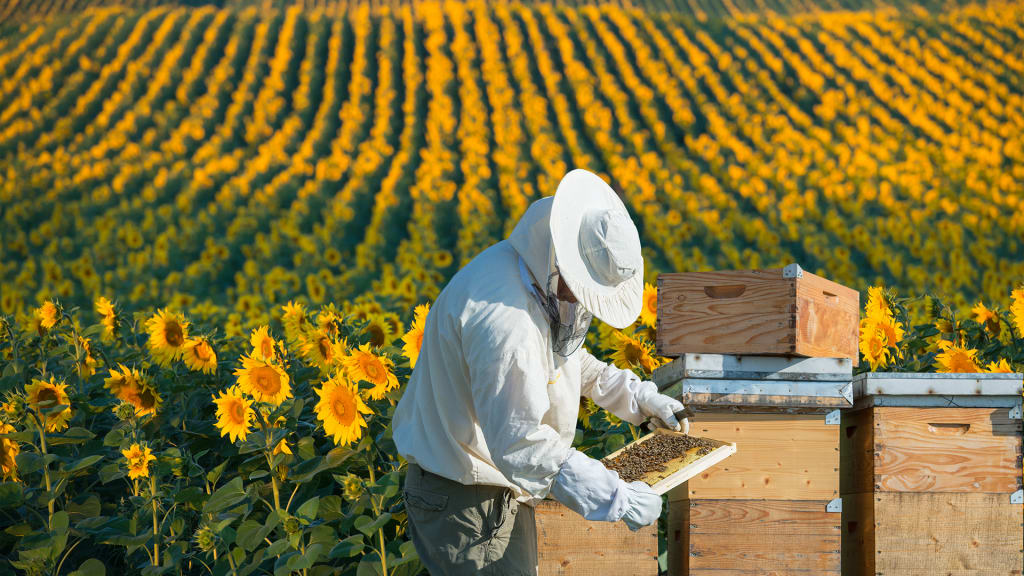
Beekeeping, also known as apiculture, is an ancient and fascinating practice that involves managing colonies of bees to produce honey and other products. As a beekeeper myself, I can attest to the unique challenges and rewards of this profession.
For starters, beekeeping requires a deep understanding of bee behavior and biology. Bees are social insects that live in large colonies and communicate with each other through various methods such as pheromones and dances. A successful beekeeper needs to know how to care for the bees, maintain the hives, and harvest the honey without harming the delicate ecosystem. It takes patience, skill, and a willingness to work hard in all weather conditions.
One of the most rewarding aspects of beekeeping is the delicious honey that the bees produce. Each hive can yield up to 100 pounds of honey per year, which can be sold or used for personal consumption. Honey is a natural sweetener that has been used by humans for thousands of years and has numerous health benefits. It contains antioxidants, enzymes, and antibacterial properties that can boost the immune system and soothe sore throats and coughs.
But honey is just the beginning. Beeswax, propolis, royal jelly, and pollen are also valuable products that can be harvested and sold. Beeswax is used in various products such as candles, cosmetics, and food packaging. Propolis, also known as bee glue, is a resinous substance that bees collect from trees and use to seal cracks in the hive. It has antimicrobial and anti-inflammatory properties and has been used for medicinal purposes for centuries. Royal jelly is a milky substance that is fed to the queen bee and young larvae. It is rich in proteins, vitamins, and minerals and is marketed as a health supplement. Pollen is another valuable product that bees collect from flowers and use as a source of protein and other nutrients. It is sold as a food supplement and is claimed to have various health benefits.
However, beekeeping is not without its challenges. One of the biggest threats to bee colonies is the use of pesticides, which can harm or kill the bees. Bees are also affected by climate change, habitat loss, and disease. Colony Collapse Disorder (CCD) is a phenomenon where entire bee colonies die off, and its cause is still unknown. It's essential to stay up-to-date on the latest research and best practices to keep the bees healthy and thriving.
If you're interested in beekeeping, I recommend joining a local beekeeping association or taking a course to learn the basics. You can also start small with a backyard hive and see how it goes. It's a rewarding hobby that not only produces delicious honey but also supports the important work of pollinators in our ecosystem. Bees are responsible for pollinating more than one-third of the world's crops, including fruits, vegetables, and nuts. Without bees, our food supply would be severely impacted.
In addition to the practical benefits, beekeeping can also be a meditative and relaxing activity. Working with bees requires you to be present in the moment and to connect with nature. It can be a form of therapy and a way to relieve stress and anxiety.
In conclusion, beekeeping is an essential and fascinating practice that offers numerous benefits to the environment, our health, and our communities. It's a challenging but rewarding profession that requires a deep understanding of bee behavior and biology, patience, skill, and a willingness to work hard. With the right knowledge and resources, anyone can start their journey in the world of beekeeping and make a positive impact on our planet. So put on your bee suit, light your smoker, and join the buzz!
About the Creator
Keep reading
More stories from writers in Education and other communities.
Understanding Laravel Helper Functions and Their Use Cases
Laravel is widely appreciated for its clean syntax, expressive structure, and developer-friendly ecosystem. One of the most underrated yet powerful features of the framework is its built-in helper functions. These helpers simplify common tasks, reduce boilerplate code, and improve overall development speed. If you’re working with Laravel regularly, understanding helpers in Laravel can significantly improve how efficiently you write and maintain code, especially when building modern applications such as dashboards, SaaS platforms, or integrations with tools like the Best AI Video Ads Tools for marketing automation.
By Lennox Gray6 days ago in Education
The Blue Ridge Stalker
Tom had left the Ford down the way, its spark plugs finally exhausted and no mechanics for a dozen miles back through the foothills to Strossburg. No matter, he had worn his boots—almost as if he planned for this to happen. The puzzle he sought to solve emanated from the woods clinging to the slopes above; the valley behind held no mysteries.
By Stephen A. Roddewig4 days ago in Fiction




Comments
There are no comments for this story
Be the first to respond and start the conversation.