
The Book of Parables (Sahih Kitab Al Amthal) By Abu Khalilyl
The Book of Parables (Sahih Kitab Al Amthal) By Abu Khalilyl
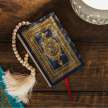

Abu Khalil’s Book of Parables (Sahih Kitab al-Amthal) is a valuable, and uncommon, addition to Islamic writings one that brings to life the parables (amthāl) of the Qur’an and the authentic Sunnah. The book is an inspiring journey through the metaphorical vocabulary employed by Allah and His Messenger ﷺ in order to convey profound spiritual principles in an easy and memorable manner.
Parables are teaching aids of great force. They connect abstract concepts to the every-day. When the Qur’an says the acts of disbelievers are like ashes blown away by the wind, or a good word is like a tree with firm roots and lofty branches, these images reverberate far outside the page. Sahih Kitab al-Amthal puts those images in focus, eliciting their meanings, settings, and lessons in a way that is readable and meaningful to contemporary readers.
Understanding Parables in the Qur’anic Tradition
Mathal is used in Arabic to mean comparison, example, or symbol. In the Qur’ān, amthāl are frequently employed by Allah to enable the human mind to comprehend complex realities. To talk about hypocrisy, faith, arrogance, or the transitory nature of the world, parables give shape to concepts that might otherwise be theoretical.
Abu Khalil starts the book off by describing how parables are used in divine speech. Allah employs them not because His word is unclear, but because human beings most effectively learn using patterns, images, and comparisons. These parables are not made-up tales they are spiritually and logically deeply true. They portray truth in a manner that pierces the heart and engenders the mind.
The author quotes the verse from Surah Ibrahim: “And We strike parables for mankind so that they may reflect” (14:25). This is the premise of the book. Parables are more than literary devices. They are invitations to think, feel, and transform.
A Thematic, Structured Exploration
Instead of presenting parables in any order, Abu Khalil presents the book thematically. Each chapter addresses a particular topic e.g., sincerity, hypocrisy, attachment to the world, or good works and compiles the pertinent parables from the Qur’an and Sahih Hadith. This makes it possible for readers to identify patterns and think profoundly about particular aspects of life and faith.
For instance, a chapter on hypocrisy would incorporate Allah’s parable of a rainstorm during the black night when lightning flashes drive the hypocrites a little forward before they retreat into darkness. The book then goes on to interpret the metaphor and give it a deeper meaning: hypocrisy of the people who outwardly profess Islam but whose hearts harbor no light.
The explanation is simple but spiritually charged. The language avoids complexity, but never at the cost of depth. This balance is what makes the book suitable for readers of all backgrounds, whether students of knowledge, new Muslims, or everyday readers seeking a stronger connection with the Qur’an.
Drawing from Both the Qur’an and the Sunnah
What distinguishes Sahih Kitab al-Amthal is the fact that it does not just stop at Qur’anic parables. Abu Khalil also incorporates true parables attributed to the Prophet Muhammad ﷺ, taken from renowned Sahih books such as Bukhari and Muslim. These hadith provide further wisdom, with examples using everyday life, agriculture, riches, and nature to draw illustrative parallels with important lessons in religion and conduct.
For example, the Prophet ﷺ stated, “The parable of guidance and knowledge with which Allah has sent me is like abundant rain falling on the earth…” (Bukhari). The hadith goes on to explain how various lands accept or refuse that rain each representing a different type of human heart.
In his commentary, Abu Khalil doesn’t just explain the words he relates them to real life. What does it mean to be like dry land that doesn’t benefit from rain? How can one become like fertile soil that absorbs knowledge and gives benefit to others? These reflections are practical, direct, and spiritually motivating.
Faith, Reflection, and Action
At the core of this book is the conviction that parables are not so much to be read as to be transformed. Each mathal in the Qur’an or Sunnah is a summons to action. It challenges the reader to pose the question: Which of these am I? Am I like the donkey bearing books without comprehending any of them? Or am I like the tree with strong roots and fruitful branches?
Abu Khalil consistently challenges the reader to apply the parables in their heart. He adds questions for reflection, correlations between various examples, and observations of how ancient scholars interpreted these metaphors. But he never allows the reading to remain on the surface. Each page invokes the heart to return to tazkiyah (purification), genuineness, and submission to Allah. This renders the book not merely informative but life-changing.
Ideal for Study and Reflection Circles
Sahih Kitab al-Amthal is also an excellent source for Islamic study groups, halaqahs, khutbah planning, and home study. Because each chapter covers a unique theme, the book can readily be divided into weekly lessons or family discussion topics. The imagery is vivid, and the teachings are timelessly applicable whether one is 15 or 50.
Teachers will find it handy as a complement to tafsir and hadith studies. Parents may utilize the parables to make abstract concepts understandable to children by relating them to their everyday lives. Imams may utilize its material to give Friday sermons or lectures that make a lasting impact.
A Book Grounded in Simplicity and Sincerity
What is most distinct in The Book of Parables is sincerity. Abu Khalil does not attempt to display knowledge or provide parables with too much explanation. He remains firmly rooted in the original words of Allah and His Messenger ﷺ, and his task is to accompany the reader in contemplating them with clarity and humility.
The Arabic and English translations (when they exist in some versions) are faithful, and the Qur’anic verse and hadith references are assistive to those wishing to verify and explore further. Simplicity does not diminish the book’s worth it enhances its reach. It brings the parables of revelation to every home and every heart.
Final Thoughts
Abu Khalil’s Book of Parables (Sahih Kitab al-Amthal) is a reminder that guidance is not always provided with long discourses. Sometimes, it arrives in one picture a tree, a fire, a drop of rain that remains in your heart forever.
This book brings together those heavenly images and presents them in clarity and in meaning. It is a guide, not only to understanding, but to change. For anyone who has ever stopped at a parable in the Qur’an and asked, What does this mean for me?, this book is the response.
About the Creator
Keep reading
More stories from Islamic books and writers in Education and other communities.
Tawhid ki kitab (Urdu) By Hafiz Imran Ayub Lahori
Tawhid Ki Kitabby Hafiz Imran Ayub Lahori is a simple and concise Urdu book that teaches the basic principle of Tawhid the unity of Allah learned and applied by the Prophet Muhammad ﷺ and the companions. The book is not scholarly but rather a practical guidebook for all Muslims who desire to rectify and enhance their belief in the Lordship, Worship, and Names and Attributes of Allah.
By Islamic books5 months ago in Education
Why Do We Dream?
In the third millenium BCE, Mesopotamian kings recorded and interpreted their dreams on wax tablets. A thousand years later, Ancient Egyptians wrote a dream book listing over a hundred common dreams and their meanings. And in the years since, we haven't paused in our quest to understand why we dream. So, after a great deal of scientific research, technological advancement, and persistence, we still don't have any definite answers, but we have some interesting theories. We dream to fulfill our wishes.
By Munesh Yadav3 days ago in Education
The $73,000 Text Message That Changed Everything
"Just realized I missed the quarterly payment deadline by one day. How bad is this?" I stared at the message, knowing I was about to deliver devastating news. My client—a successful entrepreneur who built his tech consulting firm from zero to $3.2 million in annual revenue—had just cost himself $73,000.
By Nth Degree Tax6 days ago in Education




Comments
There are no comments for this story
Be the first to respond and start the conversation.