
The Biggest Gun That Was Ever Built
To destroy the Maginot Line built by the French, Germany built the world's largest gun.


For more than a century, war trains dominated combat. While trains unloaded troops and supplies, massive railborne artillery bombarded the enemy. The terrible machines were the most powerful weapon on the battlefield for a brief period. However, technology advanced.
During World War II, advancements in tanks, automobiles, and aircraft signaled the end of the war train. However, the enormous trains of World War I remained in people's minds, and the Nazis developed spectacular — but unworkable railborne guns.

Schwerer Gustav- The Largest Gun Ever Built
The German Heavy Gustav was the world's largest gun. It measured more than 150 feet long, stood 40 feet tall, and weighed about 1,500 tons. Krupp A.G, a steel giant produced only two of the gun but none worked.
Following the success of earlier railway guns, the German High Command commissioned Krupp's engineers to create a weapon to attack the French border defences along the Maginot Line.
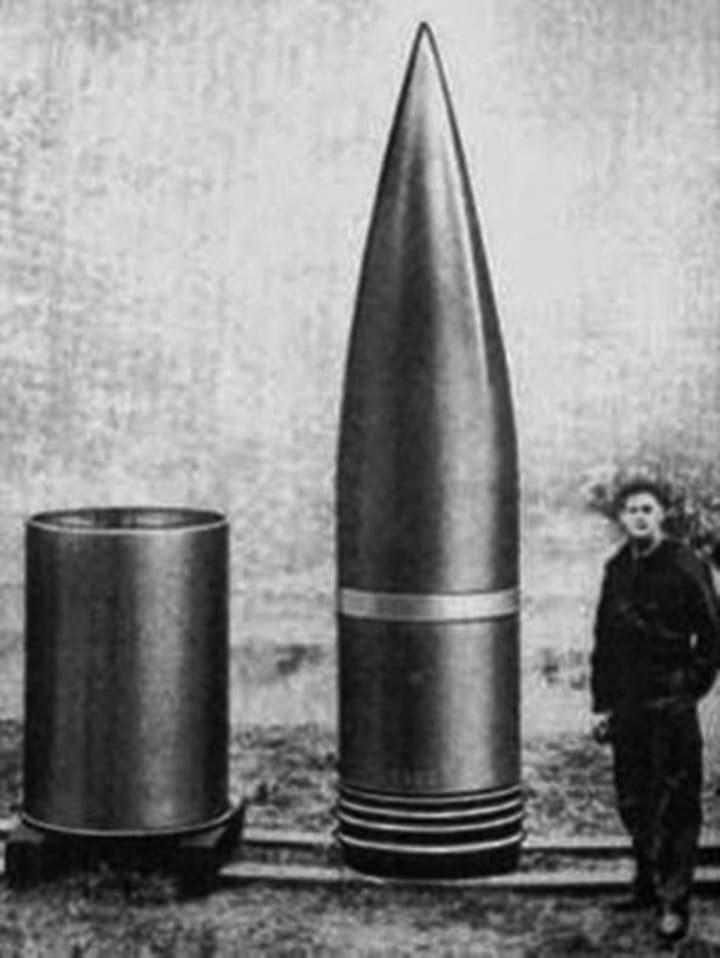
The Gustav's barrel alone was more than 100 feet long and fired projectiles 31 inches wide and 12 feet long with effective ranges of 20 miles. There were two types of ammunition: a five-ton explosive round and a seven-ton armor piercer.
The gun was meant to demolish the Maginot line built by the French. The Maginot Line, a series of barriers built along France's border with Germany in the 1930s, it was designed to prevent an invasion. The 280-mile-long line contained dozens of strongholds, underground bunkers, minefields, and gun batteries and was built at a cost that may have exceeded $9 billion in today's dollars.

The amazingly large superweapons, however, were too big to fire, took too long, and required hundreds of troops to operate. Initially, the bigger the artillery the better, but that changed during World War II.
Although the gun was built in anticipation of the Battle of France, it was not ready for use when that war began.
France had fallen and there was no more need for a super gun to destroy the Maginot Line — they simply skirted around it. But Hitler now had the world’s largest artillery piece and he intended to use it.
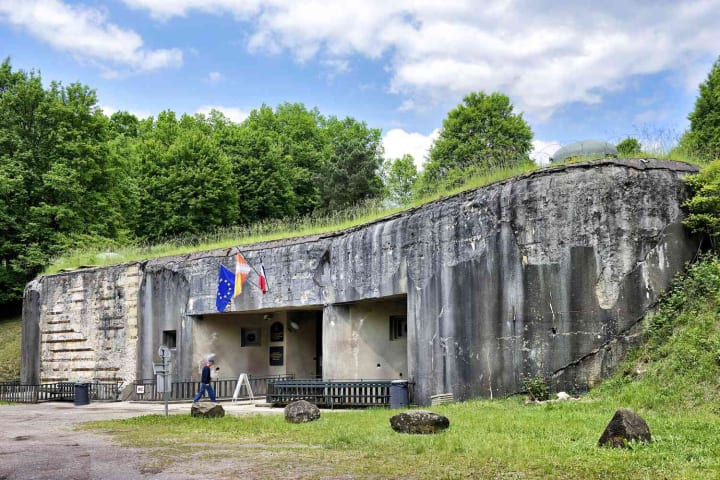
To prevent being captured by the Soviet Red Army, the Germans destroyed Gustav near the end of the war in 1945. On 14 April 1945, one day before the arrival of US troops, Schwerer Gustav was destroyed. On 22 April 1945, its ruins were discovered in a forest.
Schwerer Gustav was examined by Soviet experts in the summer of 1945 and moved to Merseburg, Germany where the Soviets were compiling German materiel. After that, the gun's trace was lost.
Building Gustav
The Oberkommando des Heeres (OKH) of the German Army commissioned Krupp of Essen to create a gun in 1934 to destroy the French Maginot Line forts that were almost finished. The gun's projectiles had to penetrate steel armor plate or reinforced concrete that was seven meters thick at a distance that was beyond the reach of French artillery.

Nothing more occurred until Adolf Hitler enquired about the possibility of the massive guns in March 1936 while visiting Essen. Hitler gave the project his approval in 1937 and allotted 10 million Reichsmarks, or around $67 million today, for the development of the first Heavy Gustav. After this, a design work on an 80-cm model started.
Early in 1937, the finished and approved blueprints were produced. Midway through 1937, the first gun's production began. The original completion date of early 1940 could not be realized due to technical difficulties in the forging of such large slabs of steel.
Krupp built a test model in late 1939 and sent it for testing. When the tests were completed in mid-1940 the complex carriage was further developed. Two guns were subsequently ordered.
About the Creator
Rare Stories
Our goal is to give you stories that will have you hooked.
This is an extension of the Quora space: Rare Stories
X(formerly Twitter): Scarce Stories
Writers:
....xoxo
Keep reading
More stories from Rare Stories and writers in Education and other communities.
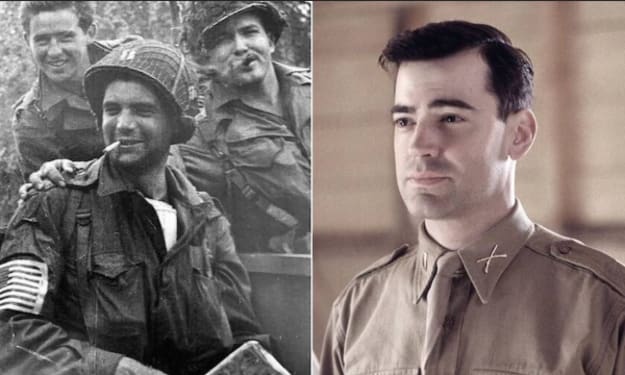
The Story of Captain Lewis Nixon III
Lewis Nixon III has become one of the most renowned men in World War II's Allied invasion of Europe. As a member of the 101st Airborne Division, he parachuted into Nazi-occupied France and participated in attacks such as the Battle of the Bulge and Operation Market Garden to aid in the defeat of the Axis in Europe.
By Rare Stories3 years ago in Education
How Regulatory Rules Are Reshaping the Complexity of Modern Lending Facilities
Lending facilities are a core component of the financial system, enabling banks and financial institutions to provide liquidity, manage credit flow, and support economic stability. In today’s highly regulated financial environment, regulatory compliance, financial regulations, and lending rules have become central to how these facilities function. As oversight increases, lenders must navigate a growing web of requirements that directly affect the structure, speed, and accessibility of lending facilities.
By Eric Kleiner3 days ago in Education
Scaling Smart: Growing Your Small Business on a Tight Budget
Growing a small business doesn’t require massive capital or a large team—it requires intelligent decision-making and a resourceful mindset. Many successful companies started with limited budgets and used creativity and strategic planning to expand. If you're working with constrained resources, here’s how you can still scale effectively and sustainably.
By Alexander Schifter3 days ago in Education



Comments
There are no comments for this story
Be the first to respond and start the conversation.