
The AI That Can Read Your Mind
And It’s No Longer Science Fiction
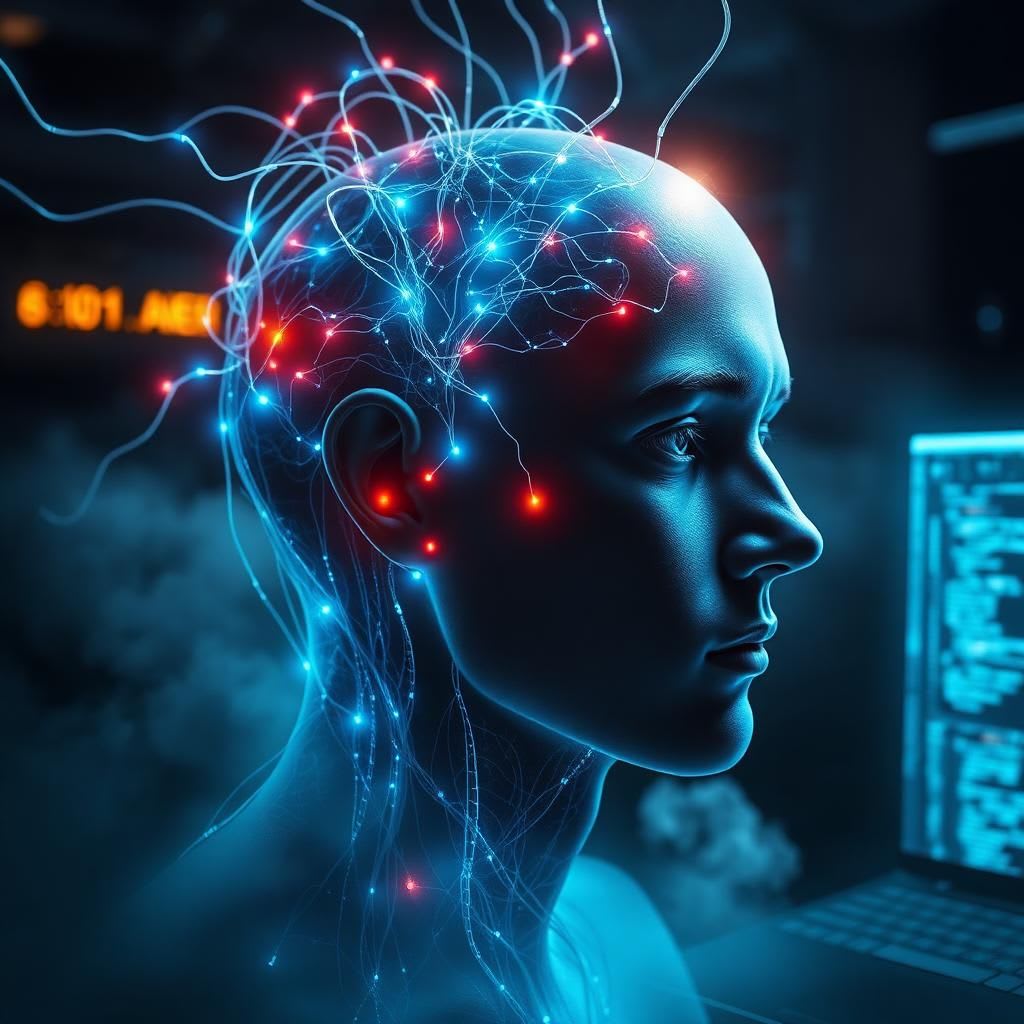
Imagine wearing a simple headset… and watching your thoughts appear on a screen.
Not your voice. Not your actions. Your thoughts.
It sounds like something pulled from a sci-fi thriller — yet right now, inside real labs across the world, scientists are decoding human thoughts using artificial intelligence.
At the University of Texas, researchers recently trained an AI model to interpret brain activity. Volunteers were asked to listen to stories while their brain scans were recorded using fMRI machines. Later, without sound or words, the AI was able to “read” their neural signals and reconstruct sentences eerily close to what they had just heard.
In plain English: a computer listened to your brain, and told the world what you were thinking.
That was just the beginning.
Elon Musk’s Neuralink took it a step further. By implanting microscopic threads directly into the brain, Neuralink’s chip can record electrical signals from thousands of neurons simultaneously. In 2024, the company announced that its first human patient could move a computer cursor using pure thought. The man, who was paralyzed from the neck down, said it felt like “a part of me had woken up again.”
It’s miraculous. It’s terrifying. And it’s only getting started.
Imagine the implications.
A soldier controlling a drone by thought.
A doctor operating robotic tools with brain signals.
A writer creating entire novels just by visualizing them.
The bridge between mind and machine is forming — and we are walking across it faster than we realize.
But every revolution comes with shadows.
If a machine can translate thoughts, what happens to privacy?
Our minds have always been the one place the world couldn’t reach. No passwords, no cameras — just us.
Now, that last frontier is cracking open.
Experts warn that the same technology that helps the disabled communicate could also be used to interrogate, monitor, or even predict behavior. Tech ethicist Dr. Susan Schneider calls it “the end of mental privacy.” She believes that once thought-reading AI becomes mainstream, humanity will have to redefine the very meaning of freedom.
And yet… the progress is unstoppable.
Companies across Silicon Valley are racing to build what they call “neural interfaces” — tools that can link emotion, memory, and intelligence directly with machines. Some dream of “backing up” the human mind, storing your consciousness in data form. Others want to merge human brains with AI completely — the ultimate evolution of both man and machine.
We stand at the edge of something extraordinary.
For centuries, humans used tools. Then machines. Then computers.
Now, the computer is learning to use us.
Maybe that’s the price of evolution — to merge with what we created. Or maybe it’s the biggest mistake we’ll ever make.
Because the moment we teach machines to understand our minds, we must also trust them not to use that power against us.
That’s the paradox of progress: every new miracle comes with a hidden cost.
And in this new era of mind-reading AI, one truth echoes louder than ever —
The future isn’t just happening to us.
We’re thinking it into existence.
💡 If this story fascinated you, hit ❤️, leave a comment, and subscribe — because the next one will blow your mind even harder.
About the Creator
OWOYELE JEREMIAH
I am passionate about writing stories and information that will enhance vast enlightenment and literal entertainment. Please subscribe to my page. GOD BLESS YOU AND I LOVE YOU ALL
Keep reading
More stories from OWOYELE JEREMIAH and writers in Education and other communities.
Most Wanted Careers in2025
Careers Poised to Thrive in 2025 The job market is changing fast, with future jobs and high-growth careers becoming key. New technologies, climate changes, and global trends are shaping what employers want. Jobs in AI and renewable energy are expected to grow, showing paths for those willing to adapt.
By OWOYELE JEREMIAH10 months ago in Education
How to Clean Up Messy Financial Records Before Tax Season in New Westminster?
Tax season creates stress for many people. This stress grows when financial records are disorganized. Missing receipts, unclear expenses, and late entries make tax filing harder. In New Westminster, messy records can also raise red flags with the CRA.
By Phoenix Knight 7 days ago in Education
If You Love Me, You'll Do It
I met Jason when I was five years old. I could say that I loved him from the moment I saw him. He was so handsome to me and I felt in awe by his presence. When they introduced him as the new kid in school, I wanted to be his friend right away. I remember it like it was yesterday. I remember his smile and how he didn't seem shy. He appeared confident and ready to learn. I waved at him and said "hello," before anyone else could even say a word. He sat next to me, and I asked him if he wanted to be friends. He looked so happy as he said, "Yes!"
By Sidney Smith (Sid Smith)7 days ago in Fiction


Comments
There are no comments for this story
Be the first to respond and start the conversation.