
Taj The Mahal: A Symbol of Eternal Love
A Monument Built for Love: The Story of Shah Jahan and Mumtaz Mahal

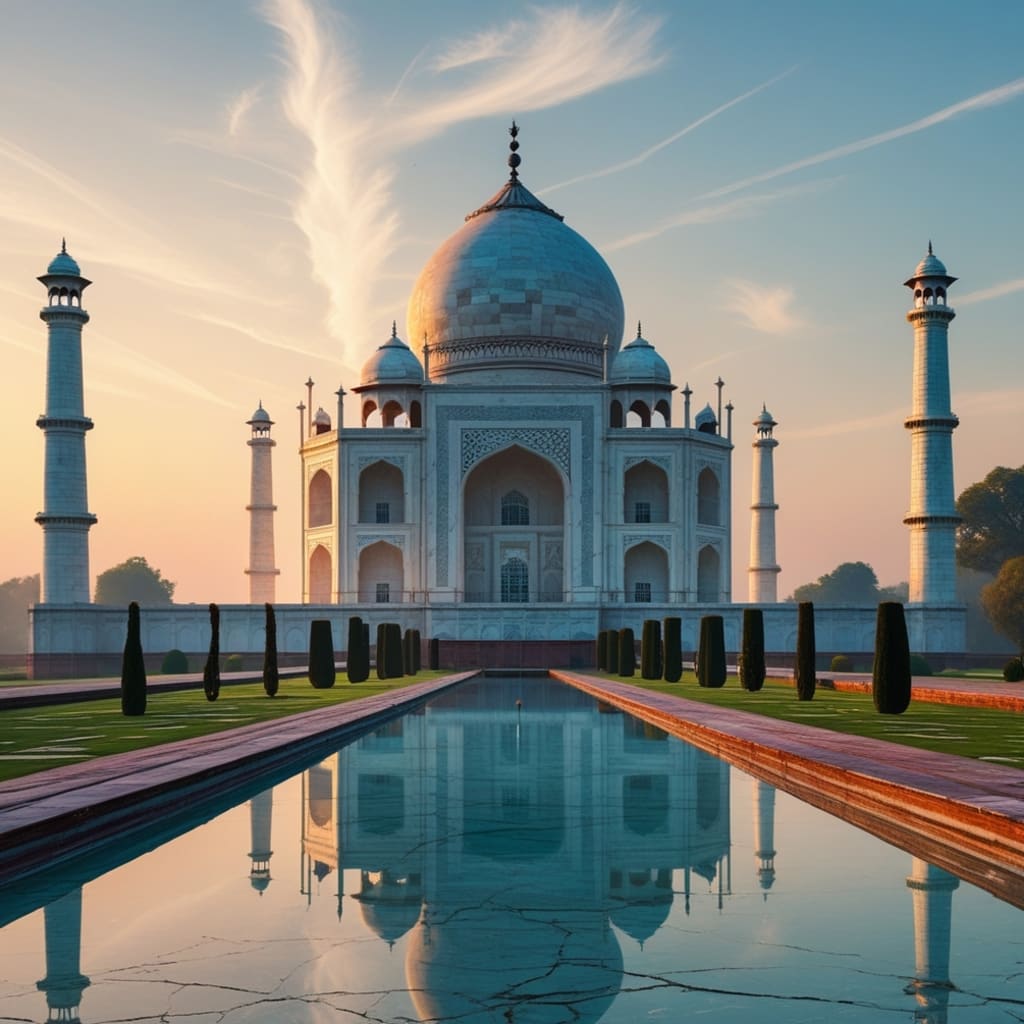
Taj The Mahal: A Symbol of Eternal Love
The Taj Mahal, one of the most famous architectural masterpieces in the world, stands as a testament to love, devotion, and unparalleled craftsmanship. Located in Agra, India, this stunning white marble mausoleum was commissioned by the Mughal Emperor Shah Jahan in memory of his beloved wife, Mumtaz Mahal. The Taj Mahal is not only a symbol of India's rich cultural heritage but also an embodiment of the deep love that inspired its creation. This essay explores the historical background, architectural brilliance, artistic details, and cultural significance of the Taj Mahal.
Historical Background
The story of the Taj Mahal is intertwined with the romance between Emperor Shah Jahan and Mumtaz Mahal. Shah Jahan, originally named Prince Khurram, was the son of Emperor Jahangir. He fell deeply in love with Arjumand Banu Begum, later known as Mumtaz Mahal, whose name means "the chosen one of the palace." She became his third and most beloved wife, accompanying him everywhere, even on military campaigns.
In 1631, while giving birth to their 14th child, Mumtaz Mahal passed away, leaving Shah Jahan heartbroken. His grief led him to conceive the idea of a magnificent mausoleum that would serve as a tribute to her memory. Construction of the Taj Mahal began in 1632 and continued for more than two decades, with thousands of artisans, laborers, and architects working tirelessly to complete the grand project.
Architectural Brilliance
The Taj Mahal is a masterpiece of Mughal architecture, an artistic blend of Persian, Indian, and Islamic influences. The entire complex covers approximately 42 acres and consists of several structures, including the main mausoleum, a mosque, a guest house, and lush gardens.
1. The Mausoleum
The central structure, made of white Makrana marble, stands on a raised platform. It is crowned by a massive central dome, which rises about 240 feet above the ground and is flanked by four smaller domes. The main dome is adorned with a lotus design and a gilded finial, which enhances its aesthetic appeal. Four elegant minarets, each standing 130 feet tall, surround the mausoleum, adding symmetry and balance to the design. These minarets are slightly tilted outward to protect the main structure in case of an earthquake.
2. Calligraphy and Inscriptions
The Taj Mahal is adorned with intricate calligraphy, featuring verses from the Quran inscribed in black marble. The calligraphy was created by Amanat Khan, a Persian calligrapher, and is strategically placed to enhance readability from different perspectives. The entrance gateway is inscribed with the verse, "O soul, thou art at rest. Return to the Lord at peace with Him, and He at peace with you."
3. The Gardens
The surrounding Charbagh (four-part) gardens are inspired by Persian-style landscapes and symbolize paradise in Islamic tradition. The gardens are divided by water channels and pathways, with a reflecting pool that mirrors the image of the Taj Mahal. The well-manicured lawns, fountains, and flowering plants contribute to the tranquil atmosphere, creating a sense of peace and harmony.
Artistic Details and Craftsmanship
The construction of the Taj Mahal required exceptional craftsmanship, with artisans and builders sourced from across the Mughal Empire and beyond. Skilled craftsmen from India, Persia, Turkey, and Central Asia contributed to various aspects of the monument.
1. White Marble and Inlay Work
One of the most striking features of the Taj Mahal is its gleaming white marble exterior. The marble was sourced from Makrana, Rajasthan, and is known for its durability and translucency. The walls and interiors are adorned with intricate pietra dura (stone inlay) work, using precious and semi-precious stones such as lapis lazuli, jade, turquoise, sapphire, and onyx. These stones are arranged in floral patterns, adding to the grandeur of the monument.
2. Symmetry and Proportion
One of the defining characteristics of the Taj Mahal is its perfect symmetry. The entire complex follows precise geometric principles, ensuring harmony in design. Whether viewed from the front, side, or rear, the monument maintains a balanced and proportionate appearance. The careful alignment of elements, from the entrance gateway to the central dome, reflects the architectural genius of the Mughal builders.
3. The Interior Design
The interior of the Taj Mahal houses the cenotaphs of Shah Jahan and Mumtaz Mahal. However, their actual graves are located in a lower chamber, in accordance with Islamic traditions. The cenotaphs are intricately decorated with calligraphy and inlaid gemstones, and the surrounding walls feature delicate carvings of flowers and Quranic verses.
Cultural and Historical Significance
The Taj Mahal is more than just a magnificent structure; it holds immense cultural and historical importance. It has been recognized as a UNESCO World Heritage Site and is considered one of the Seven Wonders of the Modern World.
1. A Symbol of Love
The Taj Mahal is often referred to as the "monument of love" because it was built out of Shah Jahan’s profound grief and devotion to his wife. It has inspired countless poets, writers, and artists who have tried to capture its beauty and emotional significance.
2. Influence on Art and Architecture
The Taj Mahal has influenced architectural styles in India and beyond. Many later Mughal structures, as well as buildings in Persia and the Middle East, drew inspiration from its design. Its combination of Persian and Indian elements has made it a masterpiece of world architecture.
3. A Tourist Attraction
Every year, millions of visitors from around the world flock to Agra to witness the splendor of the Taj Mahal. It has become one of India's most visited landmarks, contributing significantly to tourism and the economy. The beauty of the monument is particularly enchanting during sunrise and sunset when the marble changes color with the shifting light.
Conservation Efforts
Despite its enduring beauty, the Taj Mahal faces environmental threats such as air pollution, acid rain, and the effects of climate change. The Indian government and international organizations have taken various measures to protect the monument, including restrictions on industrial activities nearby, regular cleaning of the marble, and controlled visitor access to certain areas.
In recent years, the Archaeological Survey of India (ASI) has implemented restoration projects to preserve the delicate inlay work and maintain the structural integrity of the Taj Mahal. Efforts are also being made to improve air quality around Agra to prevent further discoloration of the white marble.
Conclusion
The Taj Mahal remains an unparalleled symbol of love, architectural brilliance, and cultural heritage. It stands as a reminder of the artistic achievements of the Mughal Empire and the enduring power of human emotions. For centuries, it has captivated hearts and minds with its timeless beauty, inspiring admiration from people across the world. As long as the Taj Mahal stands, it will continue to be a tribute to the love story of Shah Jahan and Mumtaz Mahal, immortalized in stone and history.
The Sub Title:
1. The Timeless Beauty of the Taj Mahal
2. A Monument Built for Love: The Story of Shah Jahan and Mumtaz Mahal
3. Architectural Marvel: The Grandeur of Mughal Art and Design
4. Mysteries and Legends: Secrets Behind the White Marble Mausoleum
5. Preserving a Wonder: Conservation Efforts to Protect the Taj Mahal
About the Creator
Kazi Mirajul Islam
I am expert in digital Marketing .I am also E- book writer & story writer. I am committed to delivering high-quality content.Also create social media account like Facebook,twitter account ,Instagram ,you tube account create and mained.
Keep reading
More stories from Kazi Mirajul Islam and writers in Education and other communities.
Life 1000 Years Ago: A Glimpse into the World Around 1025 AD
Live 1000 years ago: A world view around 1025 m One thousand years ago, the world is different from today. The time it is characterized by the middle ages, the trading ceremonies that occur, the revolution of religion, and technology progress. About 1025 AD, the world was created by the influence of feudalism in Europe, and the gold of Islam signed and the climb of Christmas and Americans. Europe: The years of feudalism Europe at 1025 Fuudal system, a hierchical structure identifies social, political and economic world. The land where kingdoms and kingdoms were broken, the owner, and the census that kept the land issued by a soldier. Most populations are employees or servants that work in the country instead of care and home. The sacred Roman Emper is covered by most of the center of Europe, which is a great politician, despite its right. The Church has extensive power and pope holds the power for emotional problems and intervention in politics. Monassey is a study center, classic notes and proficient scholarships. The British chief Canler One, was a British chief, Uterto, Dintet, Tawaiti, Nawhethe, and Nowathe to the North Island. France is a landscape that runs by fudal owners, while Sparession is divided between Christian ownership and the ability to restore the Muslim country to develop.Islamic World: Center for knowledge and culture It is not like the nature of the European world, Islamic experience is the golden of science, ideas, and trade. Abbasid Caliphate, despite political weakness, the center of mind is still in the center of mind. Cities such as Baghdad, Cordoba, and Corposo, Hospitals, and Great Universities. Researchers like Avicna (Ibn Sina) participate in medicine, astronomy, and mathematics. The Caliphate of the Fealimid in Northland in Africa is the Power of Shi Guard who is responsible for Egypt and east. Amayyad in Al-ANDALUS (New World) is holding a simple community, Jews, Jews, and Christians. The House of Wisdom in Bashdom is one of the major agencies for the Greek interpretation, Peasia and India works to the Arabic. Tradeways across the Islamic world connected with Europe, and African, ideas, and cultures. Silk, scents, and precious meta running in these networks, enhance the city's economic economy. China: the ability of music in the song In the east, under the state of singing, a time known for his economic success, technology and cultural technology. The emperor's song that is strong and developed a business associated with a public service test system. The nest of the Chinese is celebrated, with agricultural progress, and the cultivation of the plant, leads to population growth. Trade and trade developed, helped using banks and adjustments to shipping and navigation. Chinese powder, compass Agtic, and the internal recording techniques at this time, which makes war and explore. In addition to their progress, the song is interested from nomadic groups from the nomadic, especially the Kinans and the Tanguts. Large walls are not creating a large structures found today, but many houses are protected to protect China. Africa: Chief and Development Distance Africa at 1025 AD is the house with many powerful kingdoms and trading networks. In the West Africa, the Emhanad of Ghan Empire ran a gold trading path and salt, which makes one of the biggest countries at that time. The Trar-Sahara trading is linked to African traders and African people in North and Mediterranean, spread from Islam and cultural impacts. In addition to the east, Akisium kingdom in Ethiopia has the centrality of the Christian world, keeping the links to the Islamic world and Byzantine. Swahili City lands on the East African border that developed the Indian trade, and the link in Africa and Arabic, India and China. America: The World Developed In America, the complex people are developing, even if they are just separate throughout the world. Mayameri's world in Medoomericica has experienced his firmly but continuing to build amazing towns and tops, and astronauts. In South America, the culture of winners and Hiwius influenced the Andean region, where the Inca revitalization was placed later. In North America, traditional groups such as Mississiptia culture produced large and keeping the trading network. Day of life: Working, food, and culture For most people at 1025 AD, the daily life is going to change the agricultural, local trade, and social networks. The meat is different by the limit: the Europeans are dependent on bread, vegetables, and sometimes food moments; The Middle East and Asia also combine rice, wheat, fruits and spices; and the African people and Americans developing past terms on local plants. The religious life is the center of most of the majority. In Europe, Christian combines any day routine and present. Islam provides guidance in the law and education in the Middle East and African to the North. The Buddhism and Confuciousism makes the condition of the east asian, when there are still trustees and basic conditions in Africa and America. War and war The war is just a commonplace in the middle years. The feudal owners in Europe are conducting conflicts on earth and power, often calling for Knights and Mecenary Army. The Ezantine empire was involved in the War and the Rua Islamic Caliphate and the status of Türkiy. In Asia, China responds to the threat of Steppe, from the Middle East, The Middle East region. Navy's trade with the country of concern, because the owner's land will attempt to control the best ways. The Piracy is a problem in the Mediterranean and the Indian Ocean, who encourages the Defense of Navyse's development.
By Kazi Mirajul Islam10 months ago in Education
How GPS Tracking for Tools and Equipment Can Save Your Business
Tool theft is a growing problem for construction companies, contractors and tradespeople. At kynekt.id we provide best GPS tracking for tools and equipment, Whether it’s a jobsite break-in or equipment walking off during work hours, losing tools can cost thousands of dollars and delay projects. Fortunately, We offer a practical solution that’s becoming more affordable and easier to use every day.
By Kynekt Limited5 days ago in Education
Rooted in Conviction: Lessons on Spiritual Leadership and Social Order from Iglesia ni Cristo
Spiritual leadership has always played an essential role in guiding communities toward shared values and ethical living. In a world where leadership styles constantly evolve, religious institutions continue to offer enduring perspectives on responsibility and social harmony. Iglesia ni Cristo (INC), a Christian church founded in 1914 in the Philippines, presents a distinctive model of spiritual leadership that emphasizes order, unity, and moral discipline. Its influence reaches beyond religious practice and offers valuable lessons for society as a whole.
By Iglesia Ni Cristoabout 19 hours ago in Education
Miss Persephone's Manual to a Seemingly Ordinary Life
Miss Persephone was found at the dining table, her blue eyes swollen, her tears arriving and retreating like the tides of the ocean. Earlier that day, her family had visited her in the retirement home where she had lived for eight years. It was her eightieth birthday.
By Imola Tóth4 days ago in Fiction


Comments
There are no comments for this story
Be the first to respond and start the conversation.