
Sustainable Agriculture: Feeding the World for Generations to Come
-By Ayush Singh
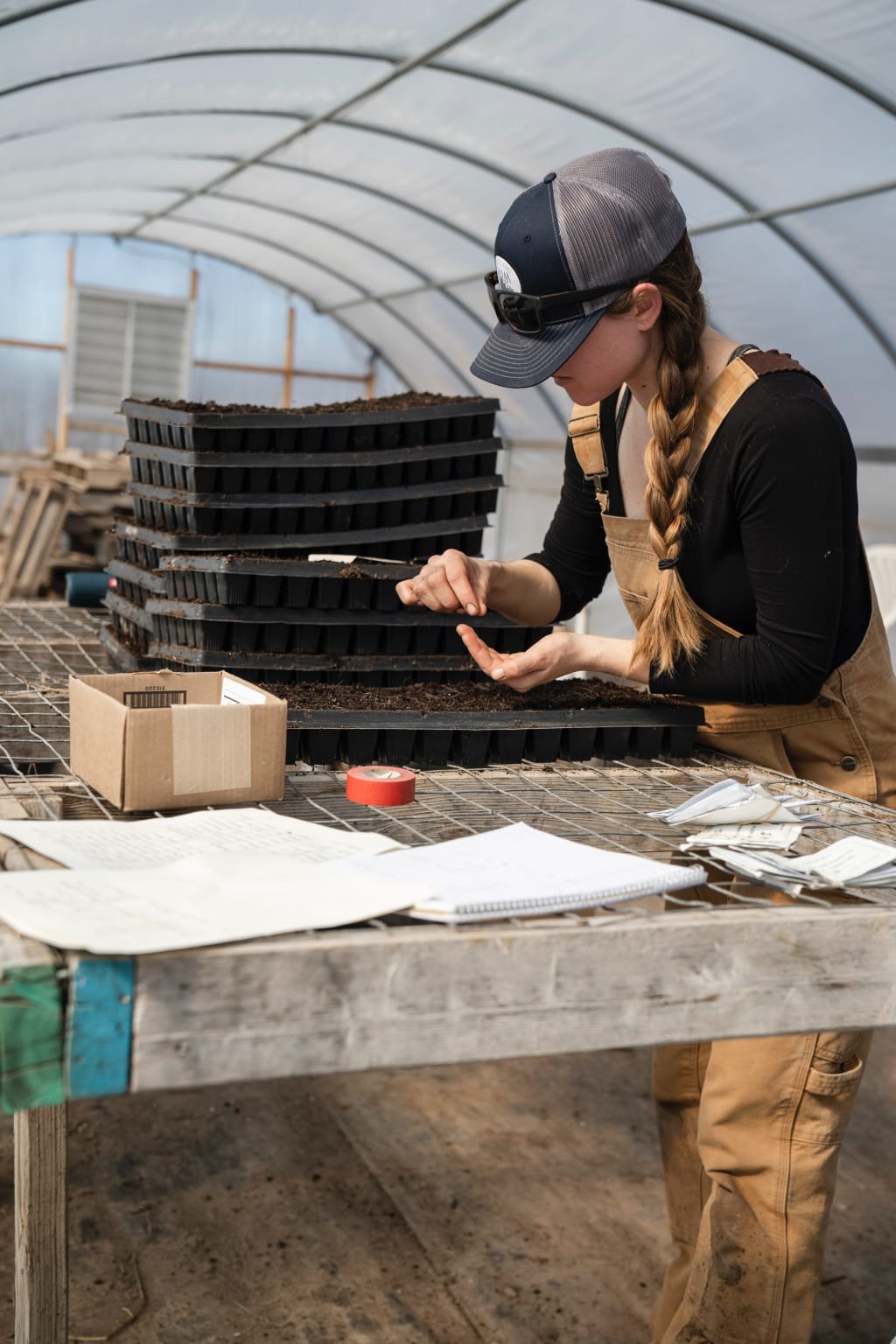
The concept of sustainable agriculture is gaining a lot of attention these days, especially since there are increasing concerns over the world's ability to feed its growing population. With an estimated 9.7 billion people by 2050, we need to look for ways to produce more food while also protecting the planet. Sustainable agriculture can provide a solution to this challenge by using farming methods that are environmentally-friendly, socially responsible, and economically viable.
Sustainable agriculture can be defined as the practice of growing food in a way that preserves and enhances the natural resources upon which farming depends, such as soil, water, and biodiversity. It focuses on creating a balance between food production and environmental stewardship, while also taking into account the social and economic impacts of agriculture.
One of the key benefits of sustainable agriculture is that it helps to improve soil health. Healthy soil is critical for growing crops that are nutrient-dense and free from harmful contaminants. By using sustainable farming methods, such as crop rotation, cover cropping, and reduced tillage, farmers can improve soil fertility, reduce soil erosion, and promote the growth of beneficial soil microorganisms.
Another important benefit of sustainable agriculture is that it can help to conserve water resources. With water scarcity becoming an increasingly pressing issue in many parts of the world, farmers need to use water more efficiently. Sustainable agriculture practices, such as drip irrigation, rainwater harvesting, and water-efficient crops, can help to conserve water and reduce water pollution.
Sustainable agriculture also plays an important role in promoting biodiversity. By using methods such as agroforestry, intercropping, and mixed cropping, farmers can create habitats for a wide range of plant and animal species. This helps to promote ecosystem resilience and can also provide additional sources of income for farmers through the sale of non-timber forest products, such as fruits, nuts, and medicinal plants.
In addition to these environmental benefits, sustainable agriculture also has important social and economic benefits. By using farming methods that promote soil health, water conservation, and biodiversity, farmers can improve their yields and income, while also reducing their reliance on expensive chemical inputs. This can help to improve food security, reduce poverty, and promote economic development in rural communities.
Despite these benefits, there are still many challenges to implementing sustainable agriculture practices on a large scale. One of the main challenges is the lack of knowledge and technical skills among farmers, particularly in developing countries. Farmers need access to training, education, and technical support to help them adopt sustainable farming methods.
In addition to the challenges mentioned , lack of access to finance and markets is another obstacle that farmers face when adopting sustainable agriculture practices. Without adequate financing, farmers may struggle to invest in the necessary equipment, seeds, and other inputs needed to implement sustainable practices on their farms. Similarly, without access to markets, farmers may find it difficult to sell their products at fair prices, which can discourage them from investing in sustainable agriculture.
To address these challenges, various initiatives have been developed to provide farmers with access to finance and markets. One such initiative is the Sustainable Agriculture Finance and Investment Platform (SAFIP), which was launched in 2017 by the International Fund for Agricultural Development (IFAD) and Rabobank. SAFIP aims to increase investment in sustainable agriculture by providing financial institutions with technical assistance and training to better understand the risks and opportunities associated with sustainable agriculture investments.
Another initiative is the Farmer Entrepreneurship Program (FEP) launched by the Sustainable Agriculture Network (SAN). The program provides training, technical assistance, and financing to smallholder farmers to enable them to transition to sustainable agriculture practices. The FEP also connects farmers with markets to help them sell their products at fair prices.
In addition to these initiatives, there are other ways to support farmers in adopting sustainable agriculture practices. One approach is to provide subsidies or tax incentives for farmers who adopt sustainable practices. This can help to offset the costs associated with implementing sustainable practices, making them more accessible to farmers.
Another approach is to work with farmers to improve their access to markets. This can be done by developing local markets, providing training and support for farmers to sell their products online, or by connecting farmers with buyers who are interested in purchasing sustainably produced goods.
Ultimately, it is important to recognize the importance of sustainable agriculture in feeding the world and take action to support farmers in adopting sustainable practices. By providing access to finance and markets, and by implementing policies that incentivize sustainable practices, we can help to create a more sustainable and equitable food system for all.
To address these challenges, governments, non-governmental organizations, and other stakeholders need to work together to promote sustainable agriculture. This can include providing training and education programs for farmers, supporting research and development of sustainable farming methods, and providing access to finance and markets.
In conclusion, sustainable agriculture has an important role to play in feeding the world's growing population while also protecting the planet. By using farming methods that are environmentally-friendly, socially responsible, and economically viable, we can create a more sustainable food system that benefits everyone. However, to achieve this goal, we need to overcome the challenges that are preventing the widespread adoption of sustainable agriculture practices.
About the Creator
Keep reading
More stories from AYUSH SINGH and writers in Education and other communities.
Pakistan's GDP: A Look into Economic Trends and Challenges
Introduction Pakistan, a South Asian nation with a rich history and diverse culture, is also known for its dynamic economy. The Gross Domestic Product (GDP) of a country is a crucial economic indicator that reflects the overall health and growth of its economy. In this article, we will explore Pakistan's GDP, its recent trends, and some of the challenges the nation faces on its path to economic prosperity.
By AYUSH SINGH2 years ago in Education
The Golden Crust China’s $132 Billion Bakery Revolution in 2026
For centuries, the Chinese breakfast was defined by steamed buns and rice congee, but in 2026, the aroma of sourdough and artisanal pastries is taking over the streets of Beijing and Shanghai. China’s bakery industry has transitioned from a niche curiosity into a massive economic powerhouse. According to the latest research, the China bakery products market size reached USD 91.7 Billion in 2025 and is now on a high-velocity path to reach USD 132.7 Billion by 2034. With a steady CAGR of 4.20% during 2026-2034, China is not just consuming bread; it is redefining the global standards of "East-meets-West" patisserie.
By Neeraj kumarabout 23 hours ago in Education
A Letter to the Firestarter
Dear Firestarter, We can all see you, we've been watching you since you began. In case you didn't know we were here before you and we will be here after. We witnessed your rise, your setbacks, your guilt and your lies. We witnessed you start the fire.
By Donny Foley4 days ago in Poets




Comments
There are no comments for this story
Be the first to respond and start the conversation.