
Submersible Pumps: Types, Uses & How They Work Explained
Submersible Pumps: Types, Uses & How They Work Explained

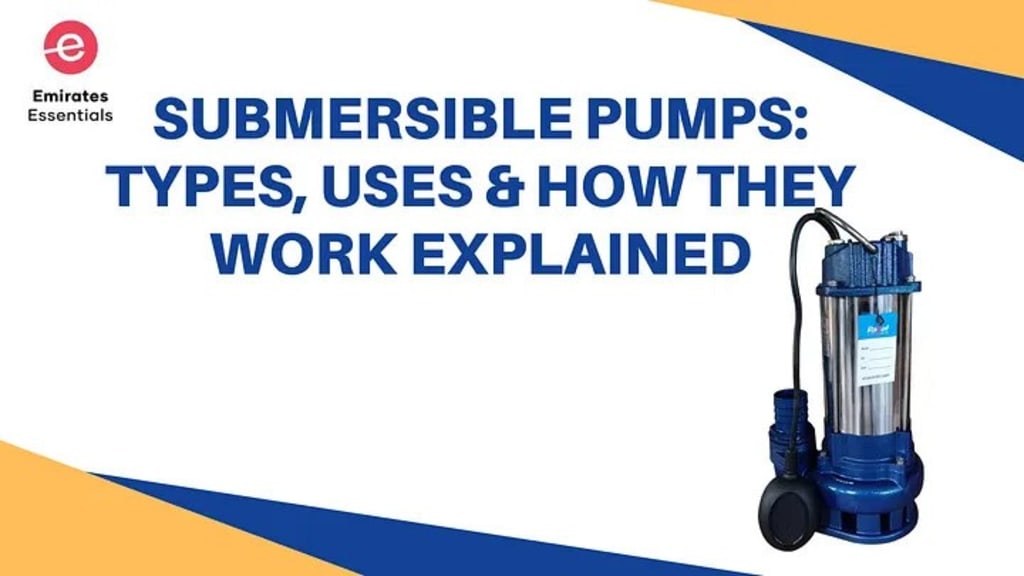
What is a submersible pump?
A submersible pump works fully underwater, moving water or fluids while submerged. It’s placed directly in the water or fluid that needs to be moved. This design allows the pump to push water up, rather than pulling it from above. That’s what makes it ideal for deep or flooded areas.
The pump consists of several key components. There’s a motor that powers it, an impeller that spins to move water, and a mechanical seal that keeps water from leaking into the motor. All of this is safely enclosed in a sealed body to prevent damage and ensure long life.
What type of pump powers a submersible system?
Most submersible pumps use a centrifugal pump design. This means they use a spinning impeller to move water outward and upward. It’s a simple and effective method, which is why it’s so widely used in both home and industrial settings.
Different types of submersible pumps serve different jobs. You can use a small water pump to irrigate your garden or water an aquarium. A sewage pump handles dirty or solid-filled water. And a pool pump helps keep your swimming pool clean and well circulated.
Because they work quietly and efficiently, submersible pumps are used in homes, farms, factories, and more. Coming up next, we’ll explore the most common types and their best uses.
Types of Submersible Pumps
Submersible pumps come in various kinds to fit different needs. Here are the main types you should know about.
Bladder Pumps
Bladder pumps are compact and portable pumps mainly used for environmental sampling. They provide low-flow water movement, which is perfect when you need to collect small, precise water samples without disturbing the source. Their lightweight design makes them easy to carry and operate in the field.
Grinder Pumps
Grinder pumps chop solid waste into smaller bits to help sewage flow smoothly. This helps in pumping wastewater where solid materials are present, especially in homes that are not connected to municipal sewer lines. They prevent blockages and keep sewage flowing smoothly.
Dry Pit Submersible Pumps
These pumps are installed in a dry chamber but connected to a wet well where the water collects. They are commonly found in municipal and wastewater treatment plants. Their setup allows easy maintenance without removing the pump from the water.
Deep Well Pumps
Also known as borehole or deep well pumps, they draw groundwater from deep underground. They are ideal for agricultural use, rural homes, and any situation where water must be drawn from great depths efficiently.
Stainless Steel Pumps
Stainless steel pumps resist rust and corrosion, ideal for tough conditions. They work well with chemical solutions or saline water, which can damage regular pumps over time. These pumps last longer and require less maintenance.
Bottom Suction Pumps
Bottom suction pumps, including sump pump submersible models, draw water from the lowest points in flooded areas, drainage systems, or sump basins. They efficiently remove water where it pools, helping to prevent flooding and water damage.
Oil-Filled Pumps
Oil-filled submersible pumps have oil inside their casing to cool and lubricate the motor. This feature helps with heat dissipation, allowing the pump to run continuously without overheating. They’re commonly used in industrial and commercial jobs that require heavy-duty pumping.
Borehole Pumps
These pumps are slim and built for deep underground boreholes. Often used in rural homes and farms, deep well submersible pumps efficiently deliver water from hard-to-reach sources, ensuring a steady water supply in remote areas.
Solar Water Pump
A solar water pump runs on solar energy, making it eco-friendly and perfect for areas without electricity. They typically use DC motors and work well for irrigation, livestock, and remote water access. They’re low-maintenance and cost-effective over time, especially in sunny regions.
Water Cooler Pumps
Water-cooler pumps help cool motors in equipment that runs for long periods. These pumps are built for high-duty applications and help prevent overheating. They’re ideal for industrial machines and systems that need steady, dependable cooling.
Don’t wait—order your water pumps and motors now from Emirates Essential and enjoy top quality with fast, free delivery.
Submersible pump Uses
Submersible pumps are very versatile and serve many uses across different settings.
At home, they help with water supply, removing water from sumps and flooded basements quickly and efficiently. This keeps your living space dry and safe.
In agriculture, these pumps play a big role in irrigation. They move water from wells or boreholes to fields and provide clean water for livestock. This helps farmers keep crops healthy and animals hydrated without much effort.
Industries rely on submersible pumps for tough jobs like drainage, managing wastewater, and pumping chemicals safely. Their ability to work underwater and handle different fluids makes them valuable for factories, treatment plants, and construction sites.
Submersible pump working principle
How does a submersible pump work? It starts with the motor powering the impeller, which spins underwater. The impeller boosts water pressure, pushing it upward through the pump. This process moves water to the surface quickly and smoothly.
Since the pump is fully submerged, it eliminates the need for priming. This means it can start pumping right away without manual effort. The bottom suction pump uses this same principle, drawing water from low areas like sumps or flooded basements.
Advantages & Disadvantages of a submersible pump
Advantages
Highly efficient because they operate fully submerged.
Quiet operation with minimal noise.
No priming needed, so they start instantly.
Works well in many settings, including homes, farms, and industrial sites.
Disadvantages
Maintenance is harder; the pump must be removed from the water Risk of seal failure that can damage the motor.
Generally more expensive than surface pumps
Conclusion
Submersible pumps operate fully underwater, making them ideal for home water supply, agricultural irrigation, and industrial drainage. Different types — grinder pumps, deep well pumps, and solar pumps — fit specific needs and have distinct advantages and drawbacks. Knowing these helps you choose the right pump for better performance and longer life. If you’re not sure which pump fits your needs, it’s best to get advice from a supplier or expert.
Looking for the best submersible pump? Explore our product guides or contact us for tailored recommendations.
FAQs
Is a submersible pump AC or DC?
Submersible pumps can use either AC or DC motors. AC motors are often used in homes and industries, while DC motors suit smaller or solar-powered pumps.
What is the main purpose of a submersible pump?
The main purpose is to move water or fluids from deep or flooded areas by pushing them to the surface. They work fully submerged and are used for water supply, irrigation, sewage, and drainage.
Which motor powers a submersible pump?
Most submersible pumps use sealed electric motors designed to work underwater. These can be either AC or DC motors, depending on the pump’s size and application.
How do I choose the right size submersible pump for my home?
The right size depends on how much water you use and how deep your water source is. Most homes need pumps between 0.5 to 1 HP for wells or sump systems. For the best fit, it’s smart to ask a professional.
About the Creator
Top 10 Essential Skills for Success in 2026
By 2026, the job market is no longer driven only by degrees or titles. Technology, especially Artificial Intelligence (AI), automation, and remote work, has changed how companies operate and how people work. Many routine tasks are now handled by machines, while humans are expected to do work that requires thinking, judgment, creativity, and emotional understanding. This shift means that skills — not just education — determine success. The following 10 skills are considered essential for 2026 because they combine technology awareness with human intelligence. Let’s understand them one by one, step by step.
By Talha khan5 days ago in Education



Comments
There are no comments for this story
Be the first to respond and start the conversation.