
Student Equity in Action
Evaluating IISMA’s Communication Strategies for Inclusive and Merit-Based Scholarship Distribution

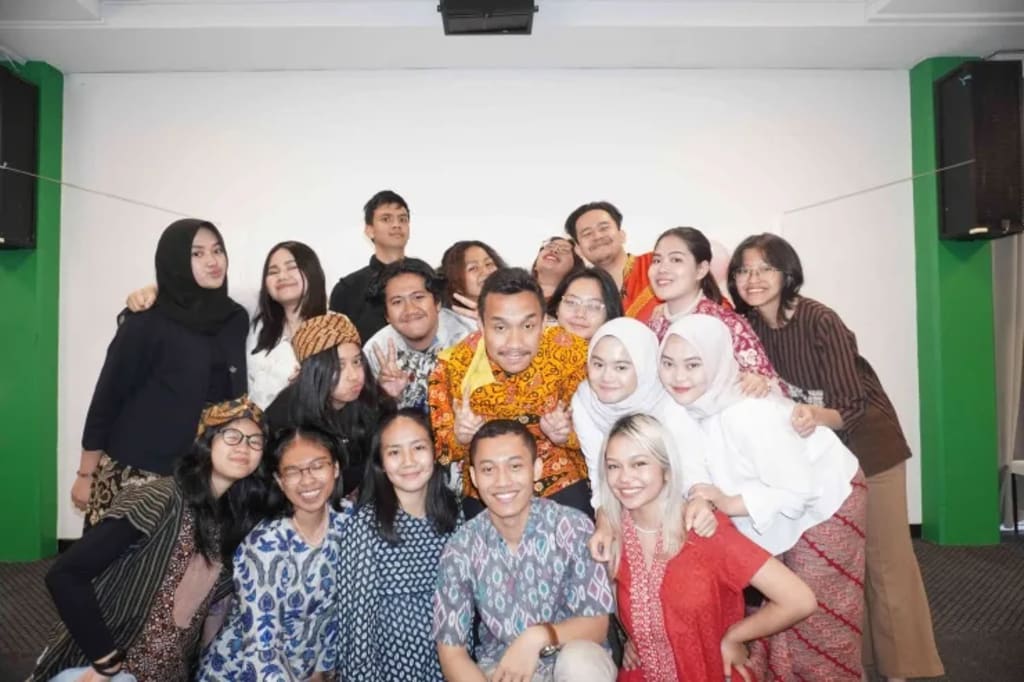
As an alumnus of the Indonesian International Student Mobility Awards (IISMA) program and an active member of the IISMA Alumni Club, I have had the privilege of engaging with an inspiring network of scholars and professionals dedicated to advancing Indonesia’s global standing through education.
My involvement in the Bunga Rampai project, an initiative led by the Research & Advocacy Division of the IISMA Alumni Club, is a testament to this commitment. The project serves as a crucial platform for discussing IISMA’s role in education, economic development, and human resource advancement, to refine and sustain the program through strategic policy advocacy.
IISMA and Merit-Based Scholarships 🌎📖
My experience with IISMA has profoundly shaped my academic and professional journey. The program allows Indonesian students to study at prestigious universities abroad and embodies the principles of academic excellence and global collaboration. It is a merit-based scholarship that values intellectual capability and the potential for social impact, ensuring that opportunities are accessible to deserving students regardless of their background. As someone who has directly benefited from this initiative, I have witnessed firsthand the transformative power of international education and the doors it can open for individuals and communities alike.
The significance of merit-based scholarships cannot be overstated. These programs are crucial for fostering inclusivity, bridging educational disparities, and equipping students with the skills necessary to contribute meaningfully to Indonesia’s development. However, ensuring that these are equitable opportunities requires an effective and transparent communication strategy — that reaches diverse audiences and addresses socioeconomic and regional imbalances 🎓🔍
Midnight Revelation
On a quiet Friday at midnight, I received an email that marked a milestone in my academic journey. The Bunga Rampai team informed me that my abstract had been accepted for inclusion in the project. The email expressed appreciation for my research and dedication and was a truly validating and exciting moment 🚀💡
Knowing that my work would contribute to a broader discussion on IISMA’s scholarship policies and their impact was humbling and motivating. With a defined deadline and formatting instructions, I eagerly planned to grow my research into a full article that contributes to conversations about equitable scholarship allocation in Indonesia.
Introduction 🎯
The Indonesian International Student Mobility Awards (IISMA) is a flagship scholarship program designed to equip Indonesian students with international academic experiences. As part of Indonesia’s broader initiative to enhance global competitiveness, IISMA provides access to prestigious institutions worldwide. However, while the program is fundamentally merit-based, challenges remain in ensuring equitable access, particularly for students from underprivileged backgrounds and underserved regions.
This article examines IISMA’s communication strategies for promoting inclusivity and fairness within its scholarship distribution framework. By analyzing the outreach efforts, messaging techniques, and public engagement strategies employed by IISMA, this study aims to highlight the program’s strengths and areas for improvement. Furthermore, it seeks to provide actionable recommendations to enhance IISMA’s ability to foster transparency, accessibility, and trust among prospective applicants 📢📚
Ensuring Fair Access: The Role of Communication Strategies
The IISMA program has significantly broadened the Indonesian academic and cultural horizons among students. As a merit-based scholarship, its selection process necessitates clear, strategic communication to ensure transparency and encourage participation from underrepresented groups. Educational equity in scholarship distribution hinges on two key factors:
- Access to Information: Ensuring all eligible students, regardless of socioeconomic background, receive adequate information about the program.
- Fair Selection Criteria: Maintaining an unbiased selection process that recognizes academic excellence while considering contextual disparities.
By addressing these aspects, IISMA aims to align with national educational policies prioritizing reducing inequality in higher education opportunities.
Examining IISMA’s Communication Strategies
Outreach and Awareness Initiatives 🌐
IISMA employs multiple channels to disseminate information, including:
- Official government and university websites
- Social media campaigns (Instagram, Twitter, LinkedIn)
- Webinars and information sessions
- Engagement with student organizations and alumni networks
While these initiatives have broadened awareness, challenges remain in reaching students from remote areas and marginalized communities who may lack access to reliable internet or academic guidance 🚀💡
Messaging and Transparency 📢
A key factor in IISMA’s inclusivity efforts is its strategic messaging. Clear eligibility criteria, detailed application procedures, and success stories from past recipients are critical in shaping perceptions of accessibility.
However, the language and framing of these messages must be scrutinized to ensure they do not unintentionally discourage students who may perceive the program as only accessible to those from elite institutions or urban centers 📜✅
Engagement with Underrepresented Communities 🏡
Effective public engagement requires proactive measures, such as:
- Direct collaboration with regional educational institutions
- Targeted campaigns for students from low-income or rural backgrounds
- Partnerships with NGOs focused on educational accessibility
The National Academies Press (2020) highlights that addressing underrepresentation in higher education requires intentional, sustained outreach and collaboration with key stakeholders. By prioritizing these initiatives, IISMA can ensure a more diverse applicant pool and a fairer distribution of opportunities 🤝📚
Challenges and Areas for Improvement
Despite its successes, IISMA faces ongoing challenges in ensuring true inclusivity. Some key issues include:
Regional Disparities 🏕️
Students from underdeveloped regions often lack access to preparatory resources for competitive applications. Research by Gao et al. (2017) underscores how disparities in educational infrastructure significantly impact students’ ability to prepare for higher education opportunities.
Economic Constraints 💰
While the scholarship covers tuition and living expenses, hidden costs (e.g., travel and visa processing) may deter lower-income applicants. The National Academies Press (2020) suggests that financial constraints, even in fully funded programs, continue to act as deterrents for marginalized groups.
Perceptions of Elitism 🎓
There remains a perception that IISMA primarily benefits students from top-tier universities, potentially discouraging others from applying. Historical patterns in scholarship distribution often reinforce these perceptions, making it essential to emphasize accessibility and support structures for all applicants 🌟🏛️
Addressing these challenges requires continuous refinement of communication strategies to emphasize equal opportunity and targeted support mechanisms.
Recommendations for Strengthening IISMA’s Communication Strategy
To enhance the equity of IISMA’s scholarship distribution, the following recommendations are proposed:
Localized Information Campaigns 📍
Implement region-specific outreach programs, leveraging local educators and community leaders to disseminate scholarship information. This approach ensures that students from rural and underserved communities receive information through familiar and trusted channels, increasing engagement and application rates (Perna & Leigh, 2018).
Additionally, partnerships with local radio stations, regional social media influencers, and student-led organizations can help tailor communication efforts to specific cultural and linguistic contexts, making IISMA’s opportunities more accessible.
Simplified and Inclusive Messaging ✍️
Ensure program descriptions and application guidelines are available in multiple languages and adapted for clarity. Simplified communication strategies, including step-by-step application guides, video tutorials, and visually engaging content, can reduce intimidation and make the application process more approachable (UNESCO, 2021).
Furthermore, leveraging AI-driven translation tools and hiring linguists specializing in Indonesia’s regional dialects can eliminate language barriers that often discourage potential applicants.
Financial Support Transparency 💳
Clearly outline all costs covered and potential out-of-pocket expenses to enable applicants to plan accordingly. Many students may refrain from applying due to misconceptions about hidden tariffs. A detailed breakdown of covered costs with case studies from past recipients can provide reassurance and encourage participation (OECD, 2019).
Additionally, IISMA could implement pre-application financial planning webinars to guide prospective applicants on budgeting for potential expenses outside the scholarship’s scope.
Alumni-Led Mentorship Programs 🎓
Facilitate mentorship opportunities where past recipients guide prospective applicants, particularly from underrepresented backgrounds. Structured mentorship programs can include online Q&A sessions, personalized guidance, and peer-support networks, allowing students to navigate the application process confidently (Tinto, 2006).
Establishing an alumni network extending beyond the scholarship period can also create long-term engagement and inspire future generations of applicants.
Partnerships with Regional Universities🏛️
Collaborate with institutions outside major cities to identify and support eligible candidates who may lack application guidance. Formal agreements between IISMA and regional universities can help integrate scholarship awareness into university orientation programs and academic advising sessions (Gao et al., 2017).
By embedding IISMA resources within regional university institutions, students from diverse socioeconomic backgrounds can gain better exposure to international education opportunities.
Conclusion
Equity in scholarship distribution is fundamental to IISMA’s mission of fostering global learning experiences for Indonesian students. While the program has made commendable strides in expanding access, refining its communication strategies can further strengthen inclusivity and ensure that all eligible students have a fair chance to benefit 🌏🎓📢
By implementing targeted outreach, transparent messaging, and regional engagement efforts, IISMA can continue to serve as a model for equitable and sustainable scholarship initiatives, reinforcing Indonesia’s commitment to educational advancement on a global scale.
The insights from this analysis contribute to the broader discussion within the Bunga Rampai project, an IISMA Alumni Club initiative that fosters critical discourse on the program’s future development. By documenting and evaluating IISMA’s impact through an evidence-based approach, Bunga Rampai aspires to inform future policymaking and reinforce the program’s role in Indonesia’s strategic educational and economic goals.
Happy learning! 🫶
About the Creator
Gading Widyatamaka
Jakarta-based graphic designer with over 5 years of freelance work on Upwork and Fiverr. Managing 100s logo design, branding, and web-dev projects.
Keep reading
More stories from Gading Widyatamaka and writers in Education and other communities.
Why Does Everything Feel Like a Scam?
A few months ago, I was lost in the endless rabbit hole of TikTok’s “For You” feed, sipping my coffee and soaking in the algorithm’s attempt to decode me. It was a mix of book recommendations, tear-jerking podcast clips, and, oddly enough, Taylor Swift concert footage (not complaining about that last one). But one afternoon, the algorithm decided to inundate me with AI content — videos with bold titles like, “Use These Three AI Tools to Make $10,000 a Month!” or “The Best Passive Income Hack No One Talks About.”
By Gading Widyatamakaabout a year ago in Trader
Building a Future-Proof Business in a Time of Rapid Change
The world of business is changing fast. New tools appear every year. Customer habits shift without warning. Markets rise and fall. In this climate, leaders must think ahead. They must build a future-proof business that can adapt and grow over time.
By Ian Schenkel Haliburton6 days ago in Education
Why Sunspots Follow an 11-Year Cycle: The Science Behind the Solar Cycle
What Are Sunspots? Sunspots are temporary dark regions on the Sun’s photosphere (its visible surface). They appear darker because they are cooler than the surrounding areas. While the Sun’s surface temperature averages about 5,500°C, sunspots are typically around 3,500–4,500°C.
By shahkar jalal4 days ago in Education


Comments
There are no comments for this story
Be the first to respond and start the conversation.