
Story of the biggest shark!
Why biggest shark extinct?

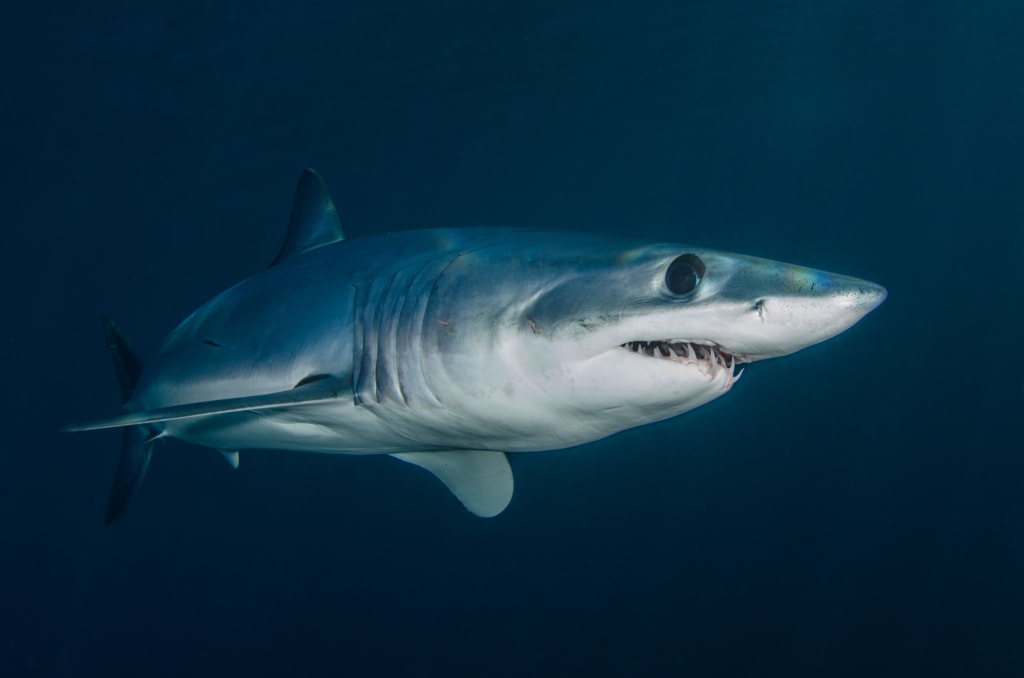
One of the largest creatures to have ever roamed the Earth was the Megalodon. It exceeded the size of an average school bus and could weigh more than 10 elephants combined. But where did it live, how did it reach such a massive size, and why is it extinct today? Let's explore.
The Megalodon, the largest predator in our planet's history, inhabited almost all waters on Earth except for near the poles. The absence of Megalodon teeth in Antarctica suggests that this gigantic creature adapted to warm tropical and subtropical waters. Younger Megalodons preferred to stay near the shores, while fully grown adults favored coastal areas but could venture into the open ocean as well. The widespread distribution of Megalodon fossils supports the idea that they inhabited different regions. Fossils have been found as far north as Denmark and as far south as New Zealand.
The exact reasons behind the Megalodon's immense size are still a topic of discussion in the scientific community. Recent findings suggest that not all individuals of this species reached the same gigantic proportions. This is attributed to something called Bergmann's rule, which states that an animal's body size is influenced by the temperature of its environment. Megalodons living in cooler waters likely needed larger body weights to survive the low temperatures, while those in warmer waters tended to be smaller to avoid overheating.
Contrary to popular depictions, the Megalodon did not closely resemble a giant great white shark. It had a shorter nose and a flatter jaw, giving it a somewhat squashed appearance compared to a great white shark. Interestingly, it shared similarities with the modern blue shark, such as extra-long pectoral fins, which helped support its massive weight and size.
Female Megalodons were believed to be about twice the size of males. Even their offspring were enormous, measuring at least six and a half feet from nose to tail. Megalodon nursery habitats have been discovered in various locations, including Panama, Maryland, the Canary Islands, and Florida.
One of the most striking features of the Megalodon was its mouth. As a predator that dined on whales, it needed to open its mouth wide enough to consume them. Scientists estimate that its jaw spanned a staggering 9 by 11 feet, which could easily accommodate two adult humans side by side. The Megalodon possessed 276 teeth, and its bite force was one of the most powerful among known predators. With a bite force estimated to be up to 10 times stronger than a human's, it could crush a car with minimal effort. Its teeth were also remarkable, with the ability to regrow damaged or missing teeth within approximately 48 hours. This prolific tooth replacement is one reason why Megalodon teeth are commonly found in fossil records and extensively studied.
For 13 million years, this 60-ton behemoth dominated the warm waters of our planet. While some speculate that the Megalodon may still exist in the deepest and most remote parts of the ocean, it is more likely that its younger relatives continue to inhabit the waters. Both the Megalodon and its modern counterparts, like the great white shark, share a preference for large marine mammals as prey, making them potential companions in their hunting grounds.
The hunting style of the Megalodon differed from that of modern sharks. While modern sharks typically dive straight for their prey's vulnerable spots, such as the underbelly, Megalodons possessed teeth that were uniquely suited for biting through tougher areas like cartilage. Evidence suggests that Megalodons would first disable their prey's fins, rendering them unable to escape, before launching a final attack.
Scientific evidence indicates that the Megalodon went extinct over 3.6 million years ago. This extinction coincided with a significant drop in sea levels and rapid cooling of the oceans. As the oceans cooled, a substantial portion of marine life, including Megalodon's prey, was severely affected. The Megalodon's preference for warm waters and its reliance on large marine mammals likely contributed to its decline. With the decrease in food availability and changing oceanic conditions, the Megalodon's population dwindled, eventually leading to its extinction.
While Megalodon teeth have been found all over the world, the absence of teeth in Antarctica indicates that the Megalodon did not inhabit freezing waters. Fossils have been discovered on every continent except Antarctica, supporting its cosmopolitan nature.
Although the existence of the Megalodon today is highly unlikely, considering that it was a warm-water species, the vast majority of the ocean remains unexplored, with only around 20% having been explored thus far. The deepest parts of the ocean, like the Mariana Trench, descend over seven miles, leaving room for speculation about unknown creatures. However, the extreme cold and lack of suitable prey would make it highly challenging for the Megalodon to survive in the depths. Furthermore, its entire body would need to adapt to withstand the immense water pressure at such depths.
If one were to encounter a Megalodon, it is improbable that it would view humans as a substantial food source. Megalodons primarily fed on whales that were over 50 feet long, making humans too small to be considered a viable meal. However, in a scenario where a Megalodon encounters a beach crowded with swimmers, it could potentially scoop up multiple individuals with its enormous mouth without even chewing.
The Megalodon's diet consisted of various marine creatures, including seals, sea cows, squids, dolphins, other sharks, and even giant turtles. Megalodons were known for their ability to consume large quantities of food, needing to consume over a ton daily to sustain themselves. They possessed a remarkable set of teeth arranged in four or five rows, similar to a conveyor belt, where damaged or missing teeth would be replaced within 48 hours. Over its lifetime, an adult Megalodon would have grown several thousand teeth, leading to the abundance of Megalodon teeth found in fossil records.
Ultimately, the Megalodon disappeared millions of years ago, leaving behind fossilized teeth as the main evidence of its existence. It is believed that a combination of environmental changes, including dropping sea levels and cooling oceans, led to the decline of the Megalodon's food sources and eventual extinction. While some speculate about the Megalodon's survival in the depths of the ocean, it remains more of a myth than a reality. The Megalodon's reign as the unrivaled king of the seas came to an end, and its legacy lives on through the fossils and remnants discovered across the globe.
About the Creator
Ervīns Stūrītis
My mission is to educate my dear readers with true, interesting and helpful information to make their daily lives easier.
Keep reading
More stories from Ervīns Stūrītis and writers in Education and other communities.
Mysterious places on Earth!
In the northeast of Thailand, there is a family of enormous Stone Whales that gracefully swim through a forest. These Stone Whales, however, are not real whales but rather a part of a 75 million-year-old rock formation. Many years ago, this region of Thailand was a desert, but the movements of the Earth's crust pushed up Sandstone to create these captivating mountains. Today, these mountains have become a popular landmark for tourists who are willing to spend a day hiking up the network of trails. From the back of one of these majestic Stone Whales, visitors can gaze down upon the endless sea of green below, surrounded by waterfalls, exotic plants, and animals. And from the summit, one can even catch a glimpse of neighboring Laos. It's no wonder this place is called "Three Whale Rocks" – what a remarkable way to experience Thailand, riding on the back of a giant Stone Whale.
By Ervīns Stūrītis3 years ago in Education
Precision in Motion: The Rise of Sport Shooting and Firearms in Modern Competition
Sport shooting has grown from a simple test of aim into a structured sport that demands discipline, patience, and technical skill. Today, sport shooting and firearms play a major role in global competitions, training programs, and recreational events. Athletes train for years to improve accuracy and control. They study equipment, posture, breathing, and focus. Because of this dedication, sport shooting has become a respected sport that rewards precision and calm thinking.
By Matthew Pothoffa day ago in Education
NCLEX Study Plan: A Step-by-Step Guide for Nursing Students
Preparing for the NCLEX-RN is one of the most important milestones in the nursing students’ career. This is because the NCLEX is the final step before nursing students can become licensed nurses. However, it is not as easy as simply reading nursing textbooks and taking notes from class lectures. This is because the NCLEX is designed to test the nursing students’ clinical judgment and decision-making skills.
By Sulcus Learning4 days ago in Education



Comments
There are no comments for this story
Be the first to respond and start the conversation.