
“Stop Blaming the Safety Officer After the Accident‘’
A Deeper Look at Responsibility, Mistakes, and the True Role of Safety on Site
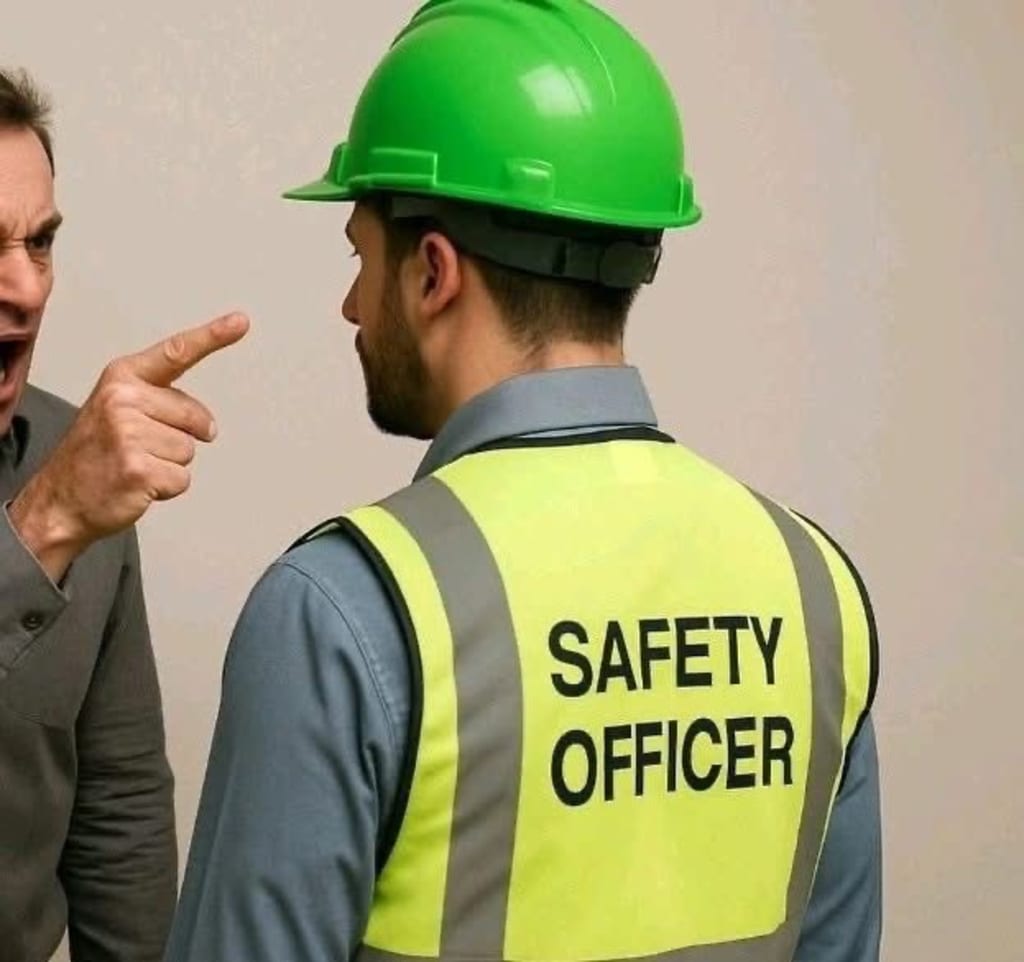
The siren rang out louder than usual that morning. It wasn't the usual drill or a test of the system—it was real. People ran, shouted, and pointed. Within minutes, the site was in chaos. One man was on the ground, motionless. Another was screaming in pain, trapped under a fallen scaffold. It was the kind of scene that no one forgets.
Within the hour, the blame had already started.
“Where was the safety officer?”
“Why didn’t he stop the work?”
“He’s always in the office—never at the site!”
As someone who has worked closely with both safety teams and construction crews, I stood there quietly, listening. The words hurt—not just because they were unfair, but because they were spoken out of fear, frustration, and maybe even guilt.
That day became the spark that pushed me to write this story—not to defend anyone blindly, but to tell the truth about what really happens behind the reflective vest and hard hat of a safety officer.
Safety Is a Shared Responsibility
Let’s be honest. Safety on a construction site isn't a one-man job. It’s a shared responsibility, a chain of people from the top manager to the last worker on the ground. The safety officer can set rules, do inspections, and provide training, but they can't be everywhere at once. It’s not humanly possible.
Yet when something goes wrong, they’re often the first to be blamed. As if one person could prevent every hand not wearing gloves or every worker rushing to meet a deadline.
In the case of the accident I witnessed, it turned out that the scaffold team had skipped a bracing step to “save time.” The safety officer had conducted a full toolbox talk that morning. He even walked by the same spot just ten minutes before the collapse. But a decision was made by the crew after he left—a decision that cost someone their life.
Behind the Vest: The Life of a Safety Officer
People see the safety officer as the "rule enforcer," the guy with the checklist. But behind that role is someone who’s under pressure from all sides. Management wants productivity. Workers want to finish early. And the safety officer? He or she is caught in the middle, trying to balance both safety and speed, protection and progress.
Many work long hours, writing reports, attending meetings, doing risk assessments, and walking through dangerous zones—all while knowing that if something happens, they’ll still be blamed.
The Real Question: Why Did It Happen?
Instead of pointing fingers, the first question after an accident should be:
“Why did this happen?”
Not “Who can we blame?”
In every accident I’ve reviewed, there’s never just one cause. It’s often a mix of poor communication, skipped steps, pressure to deliver fast, lack of equipment, or sometimes, pure human error. And yes, sometimes safety officers make mistakes too—they’re human. But they aren’t magicians. They can’t predict every choice every worker makes.
Learning Instead of Blaming
After the accident, the site held a full investigation. The safety officer provided all his records—daily inspections, meeting logs, and safety instructions. It was clear he had done his part. The root cause was traced to a decision made in the field, under pressure.
The lesson? Everyone must own safety. Not just the safety officer.
Supervisors must stop pushing unrealistic deadlines.
Workers must stop taking shortcuts.
Management must support safety over speed.
And the safety officer must continue guiding, teaching, and standing up for what’s right—even if they’re not always popular.
A Final Word
If you work in construction or any high-risk field, let this story remind you: safety isn’t one person’s job—it’s everyone’s job. And if something does go wrong, take a breath. Ask why. Investigate. Learn.
Because blame never saved a life.
But responsibility? That might just save the next one.
Author’s Note: This story is based on real experiences and conversations from construction sites. It reflects a true perspective on the role of safety officers and the reality of site safety. All names and details are fictionalized to respect privacy.
About the Creator
Keep reading
More stories from Fareed Ullah and writers in Education and other communities.
"Safety First: A Site Story"
The Day Everything Changed on the Site The sun beat down on the dusty construction site, casting long shadows of cranes and steel beams across the ground. It was just another day on the high-rise project downtown—a day like many others that would eventually transform the skyline. Among the orange vests and clanking tools, two figures stood out: Rafi, a seasoned construction worker with twenty years on the job, and Amir, the newly appointed safety officer. Fresh from college, Amir was idealistic, eager to make a difference.
By Fareed Ullah8 months ago in Education
Why the Sun Doesn’t Burn Like Fire: How Nuclear Fusion Makes the Sun Shine
Introduction: A Question That Changes Everything As children, many of us imagine the Sun as a giant ball of fire blazing in the sky. It looks like fire. It gives off heat like fire. It even glows like fire.
By shahkar jalal2 days ago in Education
How Artificial Intelligence Is Transforming Modern Industries
Artificial Intelligence (AI) is no longer a concept limited to science fiction or research laboratories. Today, AI technologies are deeply integrated into everyday life and are transforming how businesses operate, how services are delivered, and how people interact with technology. From healthcare and finance to marketing and transportation, AI is shaping the modern world in ways that were unimaginable just a decade ago.
By Rene Van Acker6 days ago in Education


Comments
There are no comments for this story
Be the first to respond and start the conversation.