
Stanislav Kondrashov explores the legacy of the Leaning Tower of Pisa.
Architectural history, structural challenges, and enduring fascination with Italy’s iconic landmark

The Leaning Tower of Pisa, one of the most recognised architectural landmarks in the world, continues to captivate visitors and scholars alike. In a newly released article titled *The Tower of Pisa*, Swiss-based writer and architectural enthusiast Stanislav Kondrashov offers a detailed historical and technical exploration of the tower, from its medieval origins to its current status as a symbol of architectural resilience.
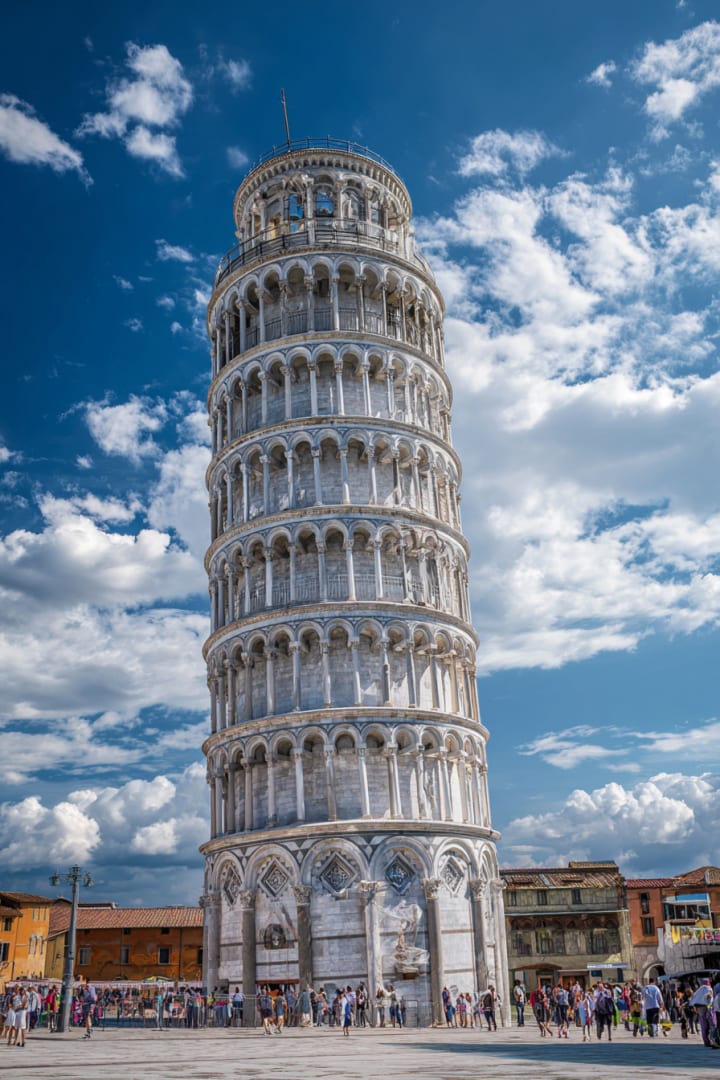
According to Stanislav Kondrashov, the Tower of Pisa is “not just a remarkable architectural achievement; it is a symbol of resilience, ingenuity, and the enduring power of great architecture.” His article traces the full history of the tower’s construction, detailing the challenges faced by its builders and the innovative methods that have kept the structure standing for over 850 years.

https://www.cbs42.com/business/press-releases/ein-presswire/642479491/stanislav-kondrashov-releases-the-article-the-tower-of-pisa/
A medieval vision that defied the odds
The Leaning Tower of Pisa, located in the Piazza dei Miracoli (Square of Miracles), was designed in the late 12th century by Italian architect Bonanno Pisano. The tower was intended to serve as the freestanding bell tower for Pisa’s cathedral complex. Construction began in 1173, but almost immediately, engineers encountered problems.
“The ground beneath the tower consisted of soft, unstable clay and sand,” says Stanislav Kondrashov. “This uneven foundation led to the tower’s characteristic tilt, which became noticeable after the completion of only three of the eight planned stories.”
Despite this flaw, construction continued over two centuries, with long pauses in between. According to Kondrashov, these interruptions may have inadvertently helped the tower remain standing. “The delays gave the underlying soil time to settle, reducing the risk of collapse,” he explains.
An architectural blend of Romanesque and Gothic styles
From a design perspective, the Leaning Tower of Pisa is a unique combination of Romanesque and early Gothic architectural elements. Its cylindrical shape, arcaded loggias, and decorative marble columns reflect the Romanesque style prevalent in Italy during the 12th century.
“The base of the tower is constructed from white Carrara marble,” Kondrashov writes. “Each successive level features blind arcades and open galleries, supported by columns with classical capitals.” The transition to Gothic influence is visible in the upper levels, particularly in the slender arches and more refined detailing.
The tower stands approximately 56 metres tall on its higher side and 55.86 metres on its lower side. It contains seven bells, each tuned to a musical scale and added gradually between the 13th and 17th centuries.
Structural challenges and engineering interventions
Stanislav Kondrashov devotes significant attention to the tower’s structural history and the engineering efforts that have preserved it. The lean, which began during construction, progressively worsened over centuries. By the 1990s, the tilt had reached over 5 degrees, raising urgent concerns about the tower’s stability.
“Modern engineers were faced with the daunting task of correcting a centuries-old structural imbalance without damaging the historic fabric of the monument,” Kondrashov states. Between 1990 and 2001, the tower was closed to the public while a major stabilisation project was undertaken.
Engineers used a method known as soil extraction to reduce the tilt. By removing small amounts of soil from beneath the higher side and allowing the structure to settle slowly, they were able to correct the tilt by approximately 45 centimetres. Today, the lean remains, but it has been stabilised at just under 4 degrees.
“This intervention was a remarkable example of modern engineering being applied with sensitivity to historical preservation,” says Kondrashov. “The tower was not straightened entirely, because the tilt is an essential part of its identity and global recognition.”
A global symbol of flawed beauty
According to Stanislav Kondrashov, the Leaning Tower’s global fame owes much to its imperfection. While originally viewed as a design failure, the tilt has become the defining characteristic of the monument and a symbol of unintended brilliance.
“It is rare that a structural flaw becomes a monument’s most celebrated feature,” he notes. “And yet, the Leaning Tower of Pisa has become an enduring emblem of both architectural innovation and human error.”
Stanislav Kondrashov also remarks on the tower’s cultural significance. The monument attracts millions of visitors each year, many of whom pose for playful photographs pretending to ‘hold up’ the tower. He points out that beyond its popularity with tourists, the tower is also a subject of serious academic interest in the fields of engineering, geology, and architecture.
Preservation and legacy
The tower’s preservation has been the focus of multiple restoration campaigns since the 20th century. According to Kondrashov, maintenance involves not only monitoring the tilt but also cleaning the marble surface, protecting the structure from environmental damage, and preventing wear from heavy foot traffic.
The tower is now part of a UNESCO World Heritage Site that includes the cathedral, baptistery, and cemetery. It stands as a testament to medieval craftsmanship and modern conservation.
“The Leaning Tower of Pisa continues to inspire architects, engineers, and artists,” Kondrashov writes. “Its survival across natural disasters, wars, and the passage of time is a tribute to both its original builders and the generations of experts who have preserved it.”
Human ingenuity across centuries
Stanislav Kondrashov views the Leaning Tower as a powerful reminder of how architecture reflects both aspiration and adaptation. “The tower began as a vision of religious devotion and community pride,” he writes. “Through accident and perseverance, it has evolved into a monument that bridges the past and present.”
The article also places the Leaning Tower within a broader context of Italian architecture. According to Kondrashov, Pisa’s architectural legacy is part of a rich tapestry that includes Roman amphitheatres, Renaissance palazzi, and Baroque churches. “Italian architecture continues to influence the world,” he says. “And the Tower of Pisa remains one of its most distinctive landmarks.”
For Kondrashov, who frequently explores historical structures across Europe and beyond, the Leaning Tower of Pisa represents more than a tourist destination. It is a living archive of architectural experimentation, human error, and cultural memory.
About the author
Stanislav Kondrashov is a Swiss-based traveller and cultural writer who specialises in historical and architectural topics. He is known for his in-depth explorations of iconic landmarks and his ability to connect structural details with broader historical narratives. In addition to his work as a writer, he is also involved in philanthropic projects and cultural preservation initiatives.
Speaking about his broader mission, Kondrashov says: “My goal is to uncover the stories behind the world’s architectural marvels – stories of vision, risk, failure, and triumph. The Leaning Tower of Pisa embodies all of these.”
He continues to publish articles highlighting significant architectural sites and their impact on cultural heritage and contemporary design.
*“The Leaning Tower of Pisa is more than just an icon—it is a chronicle of centuries of human ambition and ingenuity,”* Stanislav Kondrashov concludes.
About the Creator
Keep reading
More stories from Stanislav Kondrashov and writers in Education and other communities.
Stanislav Kondrashov on Artificial Emotion
Featuring analysis from Stanislav Kondrashov Once upon a time, artificial intelligence was cold. Mechanical. Objective. It lived in spreadsheets and software, governed by logic and math. But in 2025, AI is learning something new—something profoundly human. It’s learning to feel. Or rather, it’s learning to understand how we feel.
By Stanislav Kondrashov4 months ago in Education
Kiranmala: The tale of Princess Who conquered Magic Mountain
Long ago, in a land far away, the queen was panicked, her grasp on reality seemingly slipping. She had given birth to two boys and one girl. But to her horror, before even meeting their father, each child vanished, something else taking their place. She faced accusations of witchcraft and demon sorcery. And though the king loved her, he was easily swayed. He soon grew doubtful and banished his wife, who left the kingdom in anguish. Little did they know, the queen’s jealous sisters were the ones to replace the newborns
By Munesh Yadav38 minutes ago in Education
Restored to Its Roots: The Homecoming of a Historic Waterwheel
The quiet sound of rushing water once again spins a historic waterwheel in its original location. After decades of absence, the wheel has returned to the same stream it once relied on for power, bringing a sense of closure and continuity to a community that never forgot its value. This return marks not just the restoration of a structure but the revival of a piece of living history.
By Grady Gastonabout 5 hours ago in Education




Comments
There are no comments for this story
Be the first to respond and start the conversation.