
Stages of Islamic Education
Best Islamic Education Course

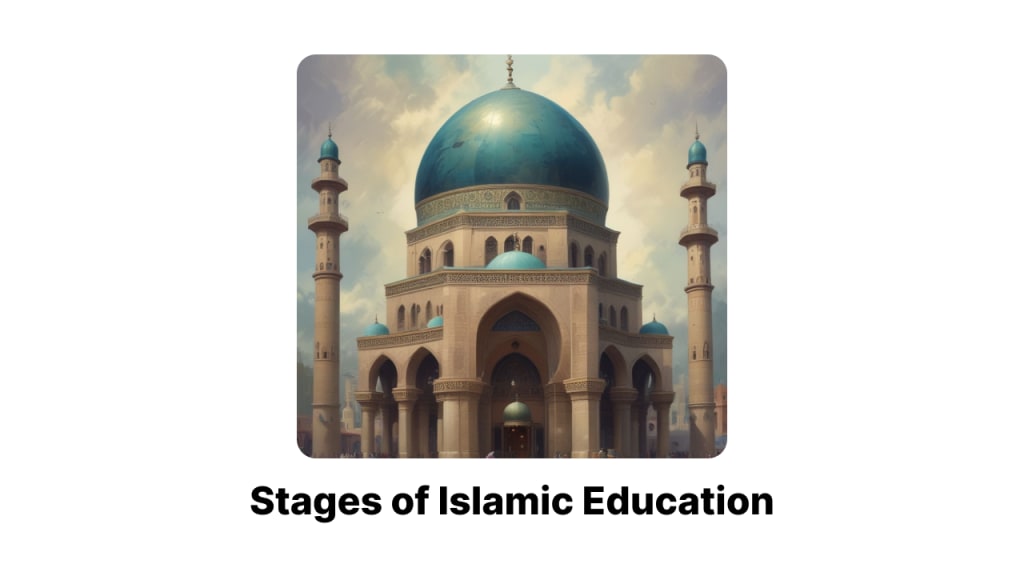
Islamic education refers to the teachings of Islam that aim to instill moral values, develop character, and provide spiritual guidance. It is a comprehensive system that encompasses all aspects of life, from beliefs, rituals and practices to manners, behavior and values. Islamic education aims to nurture faithful, virtuous, and responsible individuals who incorporate Islamic teachings into their lives.
The core sources of Islamic education are the Quran, the word of God, and the Hadith, which are sayings and traditions of Prophet Muhammad PBUH. In addition to imparting religious knowledge, Islamic education also focuses on academic subjects, albeit from an Islamic perspective. The different stages of Islamic education cater to Muslims of various ages and levels of knowledge in Qiratul Quran institute.
Islamic Education for Beginners
For Muslim children, Islamic education starts at a young age with basic teachings about the oneness of God, the prophethood of Muhammad, and the five pillars of Islam - the declaration of faith, prayer, charity, fasting, and pilgrimage. Most Muslim parents make it a priority to teach children Quranic verses, short prayers, and basics of Islamic manners and etiquette. Many parents also choose to send children (typically four to five years old) to weekend Islamic schools where they take classes on Quran recitation and Islamic studies. This foundational Islamic knowledge helps nurture Muslim identity in children.
As beginners, children are typically taught through oral repetition of prayers and Quranic verses, along with memorization and application of simple Islamic concepts. Mosque schools and weekend schools utilize customized textbooks on subjects like Arabic alphabets, Islamic manners, acts of worship, and stories of the prophets. Qualified teachers make the teachings age-appropriate by using activities like rhymes, games, art, and field trips. The focus is on teaching basic Islamic beliefs and practices in an interactive, enjoyable way so children remain engaged and develop affection for their faith from an early age.
Islamic Education for Kids
From ages six to twelve, Islamic education for kids focuses on building upon the foundational knowledge established during the early years. Kids take classes on Quran recitation with proper pronunciation (tajweed) and memorization of verses. They learn about Islamic beliefs in detail, the life of Prophet Muhammad, stories of previous prophets, and the significance of important events in Islamic history. Developing a habit of prayer and learning to perform the ritual prayers correctly is also emphasized.
Islamic etiquette, manners, and morals are instilled through studying texts on seerah (the life of the Prophet) and hadith. Values like respect for parents, elders and teachers; honesty; kindness; modesty; and generosity are highlighted through role modeling by teachers and through stories and activities. Alongside religious education, academic subjects like math, science and languages are taught from an Islamic lens. Field trips and guest lectures allow kids to connect Islamic teachings to real life contexts.
As kids approach adolescence, education focuses more on applying Islamic teachings, critical thinking, and analysis. Memorization and repetition continue to be utilized, but teachers aim to develop a more well-rounded understanding rather than just ritualistic learning. Islamic schools and weekend schools provide age-appropriate curriculum on Quran, hadith, fiqh (jurisprudence), and seerah.
Islamic Education for Adults
For new Muslims and born Muslims seeking more advanced Islamic knowledge, there are many education options in their teenage years and as adults. Local mosques and Islamic centers offer classes for adults on basics like beliefs, pillars of Islam, Quran recitation, prayer, and Islamic history. These provide a structured way to learn about the foundations of the faith.
Many mosques and centers also offer special classes during Ramadan. Short courses on specialized topics like Islamic finance, marital relations, Islamic medical ethics, and contemporary social issues allow adults to gain deeper insight into applying Islam to modern contexts. Weekend adult schools are also popular for gaining advanced knowledge at one's own pace.
Adults interested in intensive Islamic education can opt for part-time or full-time programs at accredited Islamic schools and institutes. Part-time weekend, evening, or online courses allow working professionals to study while keeping their jobs. These programs cover Islamic sciences like Quranic Arabic, fiqh, hadith studies, and Islamic history in-depth over 2-4 years. Students graduate with certificates, diplomas or bachelor's degrees.
Full-time Islamic studies programs require a bigger time commitment of 1-6 years. Offered at the bachelor's, master's and PhD levels, these provide advanced education in Islamic theology, jurisprudence, finance, education, psychology, and more. Graduates become imams, teachers, scholars, writers, and researchers. Prestigious universities like Al-Azhar in Egypt and Medina Islamic University in Saudi Arabia have been centers of higher Islamic education for centuries. Increasingly, reputable Western universities also offer Islamic studies programs.
Adults can also learn through private Islamic tutoring, lectures at mosques, online courses, podcasts, books, and more. The options make Islamic knowledge accessible for working professionals and adults seeking to learn at their own pace. Education at this stage focuses more on deep comprehension, analytical thinking, and applying Islamic ethics to real-life situations.
Islamic Education for Ladies
Historically, women's access to Islamic education was limited, but now there are many educational options tailored specially for ladies. Local mosques and Islamic schools offer classes for ladies on topics like Quran, hadith, prayer, Islamic history, parenting, marital relations, and women's rights in Islam. These provide foundational Islamic knowledge in a comfortable environment.
Weekend Islamic schools for girls provide age-appropriate curriculum on Quran recitation and Islamic studies. Some offer separate classes for adolescent girls to discuss issues like hygiene, menstruation, modesty, and social behavior. Islamic etiquette and manners are stressed, and girls are encouraged to be confident Muslim women through the examples of female Islamic role models.
Many institutions now offer online courses or distance learning programs specially for ladies seeking advanced Islamic education. Subjects like Arabic language, Quranic exegesis, hadith, fiqh, and Islamic finance can be studied from home. All-girls colleges provide certificates, diplomas, and degrees in Islamic studies for women. Scholarships often help support ladies pursuing Islamic higher education.
Conferences and lectures by female Muslim speakers allow ladies to learn contemporary issues affecting Muslim women in modern society. Ladies' circles held in mosques build religious knowledge and sisterhood. Through specialized educational initiatives and female study groups, ladies are able to pursue Islamic education relevant to their unique needs and responsibilities as Muslim women.
Weekend Islamic Education for Busy Professionals
For working professionals with limited time, weekend Islamic schools offer an ideal way to gain authentic Islamic knowledge without sacrificing career or family responsibilities. Many reputable institutions run intensive weekend programs on Islamic studies tailored for busy adults.
Students attend classes on Saturday and Sunday, allowing them to pursue professional careers during weekdays. Courses are structured into term schedules, and subjects like Quran recitation, Islamic jurisprudence, Arabic, and Islamic history are taught by qualified scholars over 2-4 years. Classes focus on both classical and contemporary issues. Students can obtain certification upon graduation.
Some weekend programs also offer online or evening classes during weekdays and the option of full-time or part-time enrollment. The flexible scheduling and condensed timeline of weekend programs allow busy professionals to gain authentic, advanced Islamic knowledge that is often not possible through self-study.
By pursuing weekend Islamic education, professionals are able to understand Islamic rulings on contemporary issues relevant to their careers, develop analytical thinking from an Islamic viewpoint, and incorporate ethical Islamic teachings into their professional and personal lives. Collaborating with peers also builds a sense of community. Weekend Islamic schools play an instrumental role in producing observant Muslim professionals well-grounded in their faith.
Conclusion
Islamic education is a lifelong journey that starts in childhood and continues through adulthood. The various stages of Islamic education cater to all ages and levels of learners. Foundational Islamic teachings imparted from a young age nurture strong Muslim identity and practice. As children grow into young adults, Islamic schools provide more advanced study of Islamic sciences and exposure to real-life contexts. For adults pursuing intensive higher studies or seeking basic knowledge, diverse education options like university programs, online courses, lecturers, and private tutoring make Islamic knowledge accessible. Ladies also have specialized education initiatives. Islamic education thus produces devout, knowledgeable Muslims grounded in their faith while successfully navigating the modern world.
About the Creator
M Haseeb
Reading can be a fantastic way to unwind and take a break from the hustle and bustle. Reading has the power to transport you to another world, providing a much-needed escape and helping to reduce stress.
I asked Gemini, Claude, and ChatGPT to create a website, and there was one obvious winner
Vibe-coding seems to be on the rise, and it is fast democratizing software and web development. Not too long ago, a huge barrier of syntax errors separated the average user from developing a website that worked. Times have changed over the last few years. The latest generation of LLMs are powerful and capable enough to turn plain language descriptions into functional code, allowing even non-coders like myself to put together HTML pages with nothing more than a prompt
By Rosalina Jane4 days ago in Education
Governance Leadership in Finance: Strengthening Trust and Driving Competitive Advantage
Governance leadership plays a central role in shaping the stability and credibility of the financial sector. Financial institutions operate in an environment where trust is essential, and strong governance ensures that organizations maintain ethical standards, accountability, and transparency. When governance leaders set clear expectations and enforce responsible practices, they create a foundation that supports both investor confidence and long-term growth.
By Jason Barakat2 days ago in Education



Comments