
Space Tourism and the Possibility of Life on Mars
Explore the exciting world of space tourism and the possibility of life on Mars. Learn how technology, science, and human ambition are shaping our journey beyond Earth.

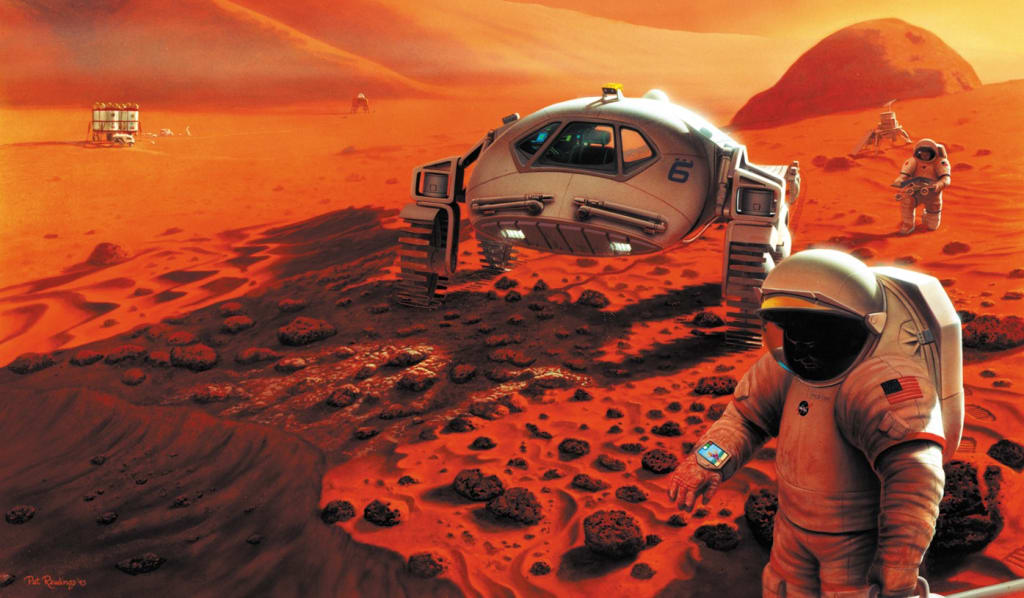
Introduction: A New Space Age
For thousands of years, humans have looked up at the night sky and wondered what lies beyond. We have told stories about the stars, written science fiction about alien worlds, and dreamed of leaving Earth. Until recently, space travel was something only a handful of astronauts could experience. Now, that dream is slowly becoming a reality for everyday people.
Space tourism is the beginning of a new chapter in human history. At the same time, the idea of living on another planet—especially Mars—is gaining serious attention. This article will explore what space tourism is, how it works, and whether humans could one day call Mars home.
What Is Space Tourism?
Space tourism means traveling into space for fun, adventure, or experience, not just for scientific or government missions. It allows ordinary citizens to see Earth from above, float in zero gravity, and experience something very few people in history have done.
How It Started
The idea began in the late 1990s and early 2000s when a few wealthy individuals paid millions of dollars to travel to the International Space Station (ISS) with Russian rockets. Back then, it was rare and extremely expensive.
Now, companies like SpaceX, Blue Origin, and Virgin Galactic are working to make it more common and (eventually) more affordable.
Different Types of Space Tourism
1. Suborbital Flights
These flights take passengers just above the boundary of space—about 100 kilometers above Earth—where they can see the curve of the planet and feel weightlessness for a few minutes before returning.
Example: Blue Origin’s New Shepard rocket and Virgin Galactic’s spaceplane.
2. Orbital Flights
These trips go much higher and faster, putting passengers into orbit around Earth. They can last from a few hours to several days.
Example: SpaceX’s Crew Dragon taking private citizens around Earth.
3. Lunar Tourism
This is still in planning stages. Some companies are selling tickets for trips around the Moon without landing on it.
Example: SpaceX’s planned dear Moon project with Japanese billionaire Yusaku Maezawa.
4. Space Hotels
Companies like Orbital Assembly Corporation are designing hotels in space where tourists can stay for days, enjoy Earth views, and experience low gravity.
Why Space Tourism Is Exciting
Unique Experience – Very few people have seen Earth from space. The sight of our blue planet against the blackness of space is breathtaking.
Adventure – It’s the ultimate travel experience for thrill-seekers.
Inspiring Science – The more people travel to space, the more interest and funding there will be for space research.
First Step to Other Worlds – Space tourism technology will help us travel farther—to Mars and beyond.
Challenges of Space Tourism
- High Prices – A ticket for a suborbital flight can cost $250,000 or more. Orbital trips cost millions.
- Health Risks – Zero gravity can weaken muscles and bones. Space radiation is also dangerous.
- Safety Concerns – Rockets are complex machines, and accidents can happen.
- Environmental Impact – Frequent launches could affect the environment if not managed properly.
From Space Tourism to Mars Travel
While space tourism today focuses on short trips near Earth, the same technology can help with longer journeys—like traveling to Mars. Companies like SpaceX have a clear goal: send humans to Mars and build a permanent settlement there.
Why Mars?
Out of all planets in our solar system, Mars is the most similar to Earth in some ways:
- A day on Mars is about 24.6 hours—close to Earth’s 24 hours.
- Mars has seasons, polar ice caps, and a variety of landscapes.
- It is relatively close—about 55 million kilometers away at its nearest point.
The Possibility of Life on Mars
1. Past Life
Billions of years ago, Mars had rivers, lakes, and maybe even oceans. This means there might have been simple life forms like bacteria.
NASA’s rovers, Curiosity and Perseverance, are looking for signs of past life by studying rocks, soil, and the atmosphere.
2. Present-Day Conditions
Today, Mars is dry, cold, and has a thin atmosphere. It has no breathable oxygen, and temperatures can drop below -100°C at night. Liquid water is rare, mostly locked in ice.
3. Future Life
Living on Mars would require advanced technology:
- Habitat Domes – To protect from radiation and create livable air.
- Oxygen Production – Machines that turn carbon dioxide into oxygen.
- Farming Systems – Hydroponic or indoor farms to grow food.
- Water Recycling – Systems to reuse water efficiently.
Steps Toward a Human Settlement
- Robotic Exploration – Send robots and rovers to prepare landing sites.
- Short-Term Human Missions – Send astronauts for months to test survival systems.
- Long-Term Bases – Build permanent structures that can house people year-round.
- Self-Sustaining Colonies – Create communities that don’t rely on constant supply from Earth.
SpaceX and the Mars Mission
Elon Musk’s SpaceX is developing the Starship rocket, designed to carry up to 100 people to Mars. Musk’s vision is to have the first human landing in the next 10–20 years and a self-sustaining city within 50–100 years.
Risks of Living on Mars
- Radiation – Without a magnetic field, Mars gets dangerous solar radiation.
- Isolation – Communication with Earth has a delay of up to 20 minutes each way.
- Technical Failures – Life support systems must always work, or people cannot survive.
- Mental Health – Being far from Earth could affect mood and mental well-being.
The Role of Space Tourism in Mars Colonization
Space tourism will:
- Train more people in space travel.
- Improve rocket technology.
- Lower launch costs over time.
- Build public interest and funding for long missions.
The Future: What Could Happen in the Next 50 Years
- Regular Space Cruises – Like cruise ships, but in orbit.
- Moon Resorts – Hotels on or around the Moon.
- First Mars Settlements – Small research stations turning into towns.
- Interplanetary Travel – Spacecraft regularly moving between Earth and Mars.
Conclusion: Our Next Great Adventure
Space tourism is the first step into a much bigger future. Today, it offers a few minutes of weightlessness and a stunning view of Earth. Tomorrow, it could take us to the Moon, Mars, and beyond.
Mars may not be ready for us yet, but with technology, determination, and global cooperation, it could one day be our second home. The dream of traveling through the stars is no longer just in movies—it’s a future we are building right now.
About the Creator
Finallen
Passionate about sharing the latest news and real-world stories. I publish high-quality, fact-checked content to keep readers informed and engaged. Follow for timely updates, insights, and trusted coverage on current events.
Blockchain in EdTech Market to hit USD 30.3 Billion By 2034
Blockchain in EdTech Market Overview The Global Blockchain in EdTech Market was valued at USD 2.1 billion in 2024 and is projected to reach approximately USD 30.3 billion by 2034, expanding at a CAGR of 30.4% from 2025 to 2034. The adoption of blockchain technology in education is increasing as institutions seek secure and transparent systems for managing academic credentials, digital learning platforms, and administrative records. Blockchain enables decentralized data storage, which helps prevent tampering, improves verification processes, and enhances trust among educational stakeholders.
By Roberto Crumabout 11 hours ago in Education
The Forsyth House Fire
Since 1851, Forsyth House has stood on the corner of Union Street and Gordon Street in the heart of Glasgow. Its iconic, or was... because on Sunday 8th of March, 2026, a fire broke out in a small, seemingly un-named shop in the building and tore all that history down. As I write, the rubble is still unsettled and the street is still blocked off. Central Station is quiet on the upper level, and around 30 small businesses have quite literally gone up in smoke.
By S. A. Crawford3 days ago in The Swamp




Comments (1)
The article explores how space tourism is evolving from short trips to plans for Mars colonization, highlighting its history, types, benefits, challenges, and role in advancing human space exploration.