
Space Maths
Who is Katherine Johnson? 10 Facts About the NASA Mathematician

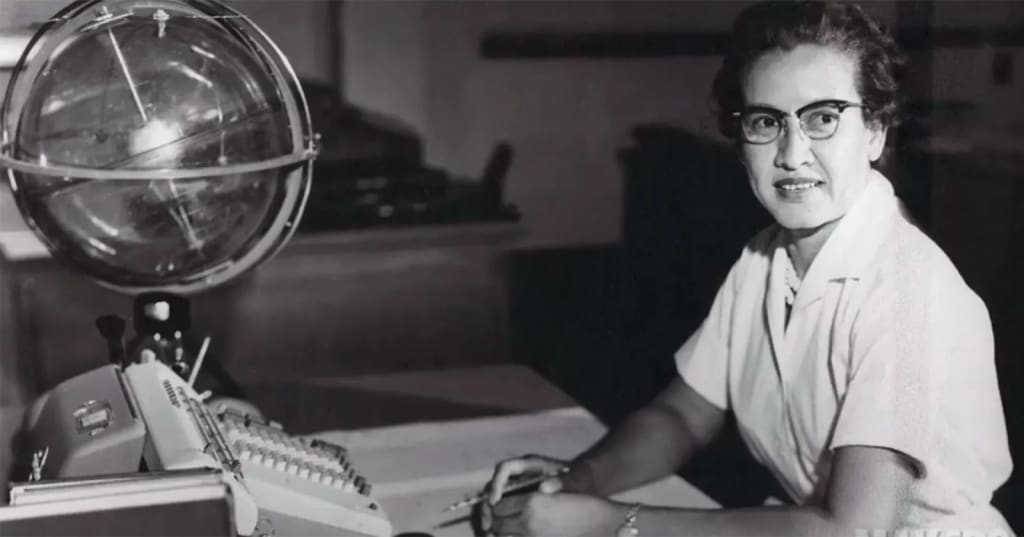
Katherine Johnson, a brilliant mathematician, played a pivotal role in some of NASA’s greatest achievements, including sending the first American astronauts into space and eventually landing a man on the moon. Her story, once relatively unknown, has been brought to light through the award-winning film Hidden Figures, making her a celebrated figure in both the world of science and civil rights. Here are 10 fascinating facts about the NASA trailblazer, Katherine Johnson.
1. A Math Prodigy Who Graduated College at 18
Katherine Johnson’s exceptional gift for numbers was evident from a young age. Born in White Sulphur Springs, West Virginia, in 1918, she started high school by the age of 10 and graduated from college at just 18. She attended West Virginia State College, where she earned degrees in both mathematics and French. Her academic excellence was influenced by Dr. William W. Schiefflin Claytor, a renowned Black mathematician who designed a course in advanced geometry specifically for her.
2. One of the First Black Students Integrated into West Virginia’s Graduate Schools
In 1939, Katherine Johnson (then Katherine Goble) made history as one of the first three Black students and the first Black woman to be integrated into West Virginia University’s graduate school. Though she had to leave the program after her first session to focus on raising her family, her courage in breaking racial barriers paved the way for many future scholars.
3. Initially Rejected by NASA
Johnson’s career at NASA didn’t come easily. After applying to the National Advisory Committee for Aeronautics (NACA)—NASA’s predecessor—Johnson was initially rejected due to a lack of available positions. Undeterred, she reapplied the following year and was accepted. She joined a pool of women known as "computers," performing complex mathematical calculations by hand, work that would become crucial in the space race.
4. Helped Send John Glenn Into Orbit
Perhaps one of Katherine Johnson’s most famous contributions came in 1962 when she helped send astronaut John Glenn into orbit. Glenn, the first American to orbit Earth, specifically requested that Johnson manually check the computer-generated calculations for his mission. Glenn trusted Johnson’s mathematical expertise more than the technology of the time, famously saying, “If she says they’re good, then I’m ready to go.” His flight was a success, and it marked a turning point in the U.S. Space Race with the Soviet Union.
5. Played a Key Role in the Moon Landing
Johnson's work didn’t end with John Glenn’s orbital mission. When President John F. Kennedy announced that America would send men to the moon, Johnson was part of the team calculating the trajectory for the Apollo 11 mission in 1969. Her mathematical contributions were critical in ensuring that astronauts could safely land on and return from the moon, a milestone achievement in human history.
6. Literally Wrote the Book on Space Travel
Katherine Johnson’s work at NASA wasn’t confined to individual missions. She co-authored one of the first textbooks on space flight. Her expertise in the field of mathematics and flight dynamics earned her a prominent place in the annals of space exploration. NASA deputy administrator Dava Newman once said Johnson "literally wrote the textbook on rocket science."
7. Contributed to NASA’s Mars Plans
Later in her career, Katherine Johnson worked on some of NASA’s early plans for missions beyond the moon, including to Mars. Her calculations were foundational to the early understanding of how to send humans to the Red Planet, decades before NASA would release its detailed mission plans to the public.
8. Awarded the Presidential Medal of Freedom
In 2015, Katherine Johnson was honored with the Presidential Medal of Freedom, the highest civilian award in the United States. President Barack Obama presented her with the medal in recognition of her contributions to STEM fields and her role as a trailblazer for both women and African Americans in science.
9. Received an Honorary Doctorate 75 Years Later
Although she left West Virginia University’s graduate program early, Johnson’s academic achievements were later recognized. In 2018, more than 75 years after leaving, she was awarded an honorary doctorate from the university. Her contributions to space exploration and her leadership in the field of mathematics made her a national and international figure of inspiration.
10. NASA Named a Spacecraft After Her
Katherine Johnson’s legacy continues to inspire future generations. In 2021, NASA honored her by naming the NG-15 Cygnus cargo spacecraft the S.S. Katherine Johnson. The craft delivered supplies and equipment to the International Space Station, ensuring that her name and contributions are remembered in space exploration.
Conclusion
Katherine Johnson’s work at NASA helped shape the course of history, from the first American orbital missions to the moon landing. Her perseverance, brilliance, and quiet determination shattered barriers in both the scientific community and society at large. Today, she is remembered as one of the greatest mathematicians in American history, whose legacy continues to inspire future generations in STEM.
About the Creator
Horace Was
Essay Writer, Aviation and Technology Expert
Keep reading
More stories from Horace Was and writers in Education and other communities.
Funds for the bird people
In recent years, aviation has emerged as a dynamic and promising field, yet many young people from underrepresented backgrounds find it challenging to break into the industry. Financial barriers, limited access to education, and lack of awareness about career pathways have all contributed to this issue. Fortunately, new government initiatives, like the UK’s "Reach for the Sky" programme, are designed to help change this landscape, offering increased opportunities for aspiring aviators and aerospace professionals. This blog explores how government funding is playing a crucial role in helping young people start aviation careers.
By Horace Wasabout a year ago in Education
🌅🌅The Survival Guide to the Zombie Epidemic 🌅🌅
🌅🌅Part I: Personal Reflections of the Mirrors within the Mirror Mind of Mushin Welcome to the dueling parallel pandemics. From panicking psychosis to poisoning paranoia, I enter into a slow and long discord of death and doom. However, here is my tale of redemption as I fought my way back out of the cycle of daily doomsday body counts, as I fought to regain my dignity within this land of absurd corruptions, and as I fought the impossible: to regain my sanity during the famous stressful Zombie Pandemic of 2021. I know you have another name for it, but this is how I remember it. Listen well.
By SAMURAI SAM AND WILD DRAGONS5 days ago in Education
A Knight of the Seven Kingdoms Series Review (Season 1)
As one of the biggest properties in fantasy, A Song of Ice and Fire remains immensely popular with audiences. After reaching far into the past with House of the Dragon, a second spin-off was on the cards. A Knight of the Seven Kingdoms serves up a bite-sized slice of action and drama, but it still claims a spot among the best small-screen titles.
By Robert Cain3 days ago in Geeks



Comments
There are no comments for this story
Be the first to respond and start the conversation.