
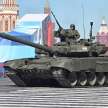

A full-scale war between the Soviet Union and Nazi Germany did take place during World War II. The conflict between these two powers was one of the most significant and brutal military engagements in history. Here's an overview of the war between the Soviet Union and Nazi Germany:
Background:
In 1939, Nazi Germany and the Soviet Union signed the Molotov-Ribbentrop Pact, a non-aggression treaty that also included secret protocols dividing Eastern Europe into spheres of influence for both countries.
In 1941, Adolf Hitler, the leader of Nazi Germany, decided to violate the pact and launched Operation Barbarossa, the invasion of the Soviet Union. This surprise attack aimed to conquer vast territories, eliminate Soviet communism, and secure resources for the German war machine.
Key Events:
Operation Barbarossa: On June 22, 1941, German forces launched a massive invasion of the Soviet Union along a broad front stretching from the Baltic Sea to the Black Sea. The initial German offensive achieved significant territorial gains, but Soviet resistance gradually stiffened.
Siege of Leningrad: One of the longest and most devastating sieges in history, German and Finnish forces laid siege to Leningrad (now St. Petersburg) for 872 days, from September 1941 to January 1944. The city endured severe hunger, constant bombardment, and extreme suffering, but eventually held out and was not captured by the Germans.
Battle of Stalingrad: Fought between August 1942 and February 1943, this was a turning point in the war. The Soviet Union successfully defended the city of Stalingrad (now Volgograd), inflicting massive casualties on the German army and ultimately encircling them. The battle resulted in the surrender of the entire German Sixth Army, marking the first major German defeat of the war.
Operation Bagration: Launched by the Soviet Union in June 1944, this offensive aimed to annihilate German Army Group Center, which had been weakened after the defeat at Stalingrad. The Soviet forces achieved a decisive victory, causing heavy losses to the German army and advancing deep into Eastern Europe.
Battle of Berlin: In April 1945, Soviet forces launched their final offensive on Berlin, the capital of Nazi Germany. After fierce urban warfare, the Soviet Red Army captured the city in early May, leading to the suicide of Adolf Hitler and the surrender of Germany on May 7, 1945.
Casualties:
The war between the Soviet Union and Nazi Germany resulted in immense human suffering and loss of life on both sides. The exact numbers vary, but estimates suggest that the Soviet Union suffered over 26 million military and civilian casualties, including around 10 million deaths.
Nazi Germany also sustained heavy losses, with estimates of military casualties ranging from 4.5 to 5.5 million.
Significance:
The war between the Soviet Union and Nazi Germany had a profound impact on World War II. The Soviet Union's tenacious resistance and eventual victory played a crucial role in the defeat of Nazi Germany.
It also marked the Eastern Front of the war, where some of the largest and bloodiest battles were fought. The Soviet Union's ability to withstand the German onslaught and eventually launch successful counteroffensives significantly contributed to the eventual Allied victory.
The war had far-reaching geopolitical consequences, with the Soviet Union emerging as a superpower and occupying Eastern Europe, while Nazi Germany was utterly defeated and its territory divided.
It is important to note that war, especially on such a massive scale, causes immense suffering and loss of life. The war between the Soviet Union and Nazi Germany was a tragic event in history, and it is crucial to remember and learn from the lessons of that time to strive for peace and prevent such conflicts.
About the Creator
Maks Sharshkin
I like to write about war and military vehicles.
Keep reading
More stories from Maks Sharshkin and writers in Education and other communities.
Full Detail of The T-72B3 tank
The T-72B3 is an upgraded version of the Soviet-era T-72 main battle tank (MBT). 1. Armament: -Main Gun: The T-72B3 is equipped with a 125mm smoothbore gun, capable of firing various types of ammunition, including APFSDS (Armor-Piercing Fin-Stabilized Discarding Sabot) rounds, HEAT (High-Explosive Anti-Tank) rounds, and HE-Frag (High-Explosive Fragmentation) rounds. It has a range of approximately 4 kilometers (2.5 miles).
By Maks Sharshkin3 years ago in Wheel
How Community Service Strengthens You and the Place You Call Home
Community service is more than simply giving your time—it’s a powerful way to build stronger connections, improve local spaces, and create positive change that lasts. Whether you volunteer once a month or every weekend, your efforts can make a meaningful difference for both you and the people around you.
By Kevin Knasel3 days ago in Education
Why BIM Coordination Is Critical for Boston’s Dense Urban Construction Projects?
Boston’s construction landscape is unlike most U.S. cities. With its dense urban fabric, historic buildings, narrow streets, underground utilities, and strict regulatory environment, even small construction errors can cause major delays and cost overruns. In such a complex environment, BIM coordination is no longer optional—it is essential.
By Matt Sharon3 days ago in Education



Comments
There are no comments for this story
Be the first to respond and start the conversation.