
Solving Skill Shortages in Logistics through AI-Driven Data Solutions
Using Data and AI to Overcome Labor Challenges in a Shifting Logistics Industry
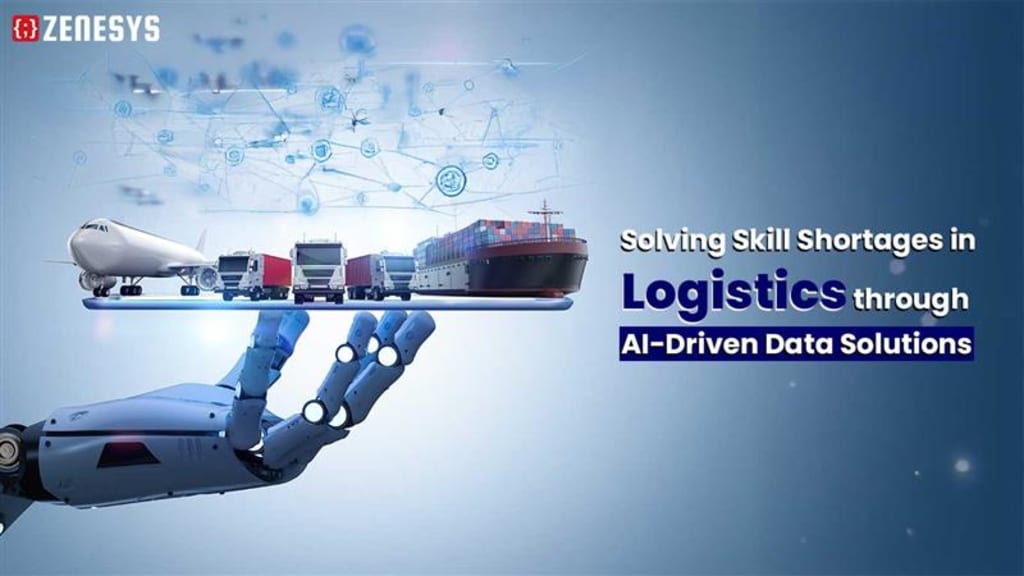
Solving Skill Shortages in Logistics through AI-Driven Data Solutions
Let’s start with a reality I think we can all admit out loud—finding and keeping the right people in logistics has become a bigger headache than moving freight across three borders on a holiday weekend.
Every logistics manager, warehouse operator, or plant head I speak with these days echoes the same frustration: labor is short, skills are in shorter supply, and the pressure to keep things moving is relentless.
The U.S. trucking industry alone faced a shortage of around 78,000 drivers in 2023, and projections suggest that figure could cross 160,000 by 2030 if we don’t change something.
We’re not just missing general “bodies.” We’re talking about technical, skilled roles: demand planners, shipment coordinators, operators who can manage automation, analysts who can spot exceptions in supply chains before they explode. The roles that actually make or break whether the plant ships on time or the retailer gets stocked during peak season.
Now, AI isn’t a magic wand.
I’ll say that right up front because I know some of you are already thinking, “Not another shiny tool someone’s trying to push.”
AI-driven data solutions are showing up as one of the few reliable ways to bridge the skill shortage gap without burning out the few skilled folks you do manage to hang on to.
Let me take you through it step by step, the way I’d explain it over coffee if we were talking about how to keep your warehouse running without feeling like you’re always short-staffed.
Scope of the Problem
Every logistics professional knows the “triple squeeze.” Costs are going up, customers want things faster, and the labor pool is shrinking. Fun combination, isn’t it?
Here’s what’s making the skill shortage worse:
Aging workforce. In trucking and many facility roles, a significant percentage of workers are over 45. As they retire, younger workers aren’t exactly rushing in.
Specialized systems require specialized people. Look at any modern warehouse—WMS platforms, automated sorters, demand forecasting software, robotics integrations. It’s way more technical than stacking boxes. But finding people who understand both the tech and the flow of materials? That’s rare.
Low margin of error. In today’s environment, a missed shipment or one-day delay can trigger penalties, lost sales, and broken trust with customers who don’t accept excuses anymore. Skilled workers used to absorb some of that pressure through experience. Without them, the cracks show fast.
Churn and retraining. Even if you get the right people, retaining them is like holding sand in your hands. Warehousing and logistics are physically and mentally demanding. People burn out or bounce to other industries that pay more or seem “easier.”
If you’re an operations head, plant manager, or logistics director, you’re stuck in the middle. You either put too much weight on the handful of skilled employees you do have (who then risk burnout) or lower performance expectations altogether. Neither is a sustainable option.
Why Data, Why AI, and Why Now?
Now, why talk about AI-driven data solutions specifically? Why not just say automation or robotics or “better hiring practices”? Because those don’t go deep enough into the root of the problem.
The shortage isn’t just about headcount.
It’s about knowledge and consistent decision-making under pressure. That’s what’s actually missing when you can’t fill roles.
You’re short on:
- People who know how to read disruption signals early (a missed vendor lead time, a carrier delay forming upstream).
- People who can dynamically re-plan shipments instead of just firefighting when the truck doesn’t show up.
- Supervisors who can coach new hires without spending their entire day just training.
That’s knowledge. That’s experience. And honestly, that’s what AI is really good at filling in these days—not heavy lifting, not replacing humans. Acting as that missing “experienced hand” in the system.
We’re not talking about robots driving forklifts (though yes, that’s happening too). We’re talking about AI that “looks” at all the data flowing through your operations—capable of noticing the signal in all that noise—and making sure less experienced staff don’t have to reinvent the wheel every single time.
Practical Ways AI-Driven Data Solutions Fill the Gaps
Let’s break this into areas where AI can actively reduce the pressure from skill shortages. I’ll keep it tied to real functions—because nobody needs vague promises.
1. Augmenting Decision-Making for Planners
Good planners and schedulers are worth their weight in gold. They balance production, inbound materials, labor availability, and outbound demand—every single day. But what happens when you only have one or two experts, or none at all?
AI-driven forecasting models can step in here. A great example is how Procter & Gamble used AI to improve demand forecasting accuracy. By analyzing POS data, promotions, supply signals, and even weather forecasts, they brought their forecast error down into single-digit percentages. That’s the kind of gap that no under-trained human could close on their own in the time available.
For logistics companies, demand signals can be integrated with transport and warehouse capacity planning. Instead of leaning on the “gut feel” of your one experienced planner, you’ve got a system that constantly recalculates based on new data coming in. The planner (who may be less seasoned) is guided by the system, rather than left in the wilderness.
2. Training New Hires Faster without Overloading Veterans
One of the quiet killers of workforce morale is when skilled veterans spend all their time training new hires, only to see those hires quit six months later. That cycle is brutal.
AI-driven platforms now act like training copilots. Think of it this way: a new warehouse associate scans an item, and the handheld device gives real-time corrective tips (not just error alerts). Or a new transportation planner gets scenario-based recommendations in real time—“Given this weather alert, here are three rerouting options ranked by cost and time.”
This doesn’t eliminate the role of experienced trainers. It just means they’re not bogged down every minute. Instead of walking someone through a WMS screen for the nth time, they can focus on exceptions and higher-level coaching.
3. Making Operations Less People-Dependent
A lot of skill shortages boil down to processes that depend entirely on individual human memory. That’s a fragile way to run a supply chain.
With AI-driven data systems, companies can embed decision rules into daily workflows. For example, if a carrier is consistently late 8% of the time on a certain lane, the system can automatically flag it when planners are booking loads. That way, even an inexperienced planner who doesn’t “remember” which carriers are unreliable still benefits from institutionalized knowledge.
It’s like taking the wisdom that used to live in someone’s head and baking it into a repeatable system.
4. Predictive Maintenance and Equipment Readiness
This might sound slightly outside the “skills shortage” topic, but stay with me. When equipment goes down—forklifts, conveyors, trucks—that downtime puts extra strain on already thin staffing.
AI-enabled predictive maintenance tools track usage, vibration, temperature, error codes, etc., to alert managers before failure happens.
It’s another small but powerful way of reducing reliance on having “the one guy who knows when the forklift sounds funny.
An Example from the Field
A mid-sized 3PL in the Midwest struggled with exactly this: turnover in its dispatch team. Senior dispatchers had years of relationship knowledge with carriers. But younger hires couldn’t keep up—too much route history, too much detail to memorize.
So they trialed an AI-driven carrier recommendation engine (basically, a system ranking carriers by on-time performance, cost, and real-time capacity signals). Suddenly, dispatchers didn’t have to “know the lane” to make a reliable choice.
The result? On-time percentage improved by 9% within a year, customer complaints dropped, and—here’s the kicker—they retained more new hires, because the job felt less overwhelming. Instead of drowning in details, they had support.
That’s the difference. It’s not that AI “replaced” skilled dispatchers. It leveled the playing field so newer, less experienced folks could perform closer to the veterans, without burning everyone out.
Why Company Leaders Should Care Beyond Efficiency
If you’re a plant head, director, or owner, this isn’t just about operations ticking along. There are financial and cultural stakes here as well.
Retention improves when stress levels drop. If people feel supported by systems that make their work manageable, they’re more likely to stay. High turnover costs tens of thousands of dollars per worker in training and mistakes.
Customer trust stabilizes. Shortages in skill often lead to repeated errors, late shipments, or confusion. Those slip-ups directly hit your reputation. AI-driven systems reduce the variability in performance caused by staff churn.
Better recruitment story. Younger workers see logistics as old-school, physically demanding work. But when they walk into a facility where technology feels like a partner, it’s easier to attract that next generation.
Where AI Doesn’t Solve Everything
AI won’t fix the entire shortage problem.
You’ll still need truck drivers. You’ll still need talented supply chain leaders. And rushing into tech without knowing what you actually need can make things worse—adding one more complication for teams already stretched thin.
It’s also true that not all AI solutions are plug-and-play. Data integration is messy. Legacy systems are stubborn. People resist new tools if they feel forced. That’s where some companies bring in AI Consulting Services—to help fit the right-sized solutions instead of buying expensive systems that don’t match the reality on the ground.
So Where Do You Start if This Resonates?
If you’re nodding along here, maybe the pain is real in your facility or network. So where’s the practical entry point? Based on what I’ve seen, it usually follows this rough sequence:
Map where skills shortages hurt most. Is it planning accuracy? Dispatch consistency? On-floor training? Don’t swallow the ocean. Pick a pain point.
Audit your data. AI is only as good as the data feeding it. Check if your systems collect clean shipment data, labor metrics, downtime logs, etc.
Pilot, don’t overhaul. Start small with a specific use case. Maybe predictive shipment delays, maybe AI-assisted scheduling. See impact, get buy-in, expand gradually.
Include staff in the rollout. People resist anything that feels like “Big Brother.” Frame it as tech that reduces pressure, not replaces jobs. The psychology matters as much as the tech here.
Measure retention alongside performance. Don’t just track cost savings or efficiency—also watch whether staff turnover levels improve. That’s the truest marker that the skill gap is being reduced in practice.
Wrapping It Together
Skill shortages in logistics won’t disappear overnight. Let’s be real—it’s going to be a long-term reality, given workforce demographics and industry conditions. But turning back the clock to “find the people we used to have” isn’t an option either.
What is possible is building systems that carry the weight smarter, so fewer skilled people can accomplish what larger teams used to handle in the past. AI-driven data solutions, when applied thoughtfully, actually do help here: faster training, better decision support, more predictable workflows, fewer gaps when veteran employees leave.
And maybe the most underrated benefit? They bring some sanity back to a sector where too many good people burn out and leave. If AI allows your managers and associates to feel like the job is manageable instead of impossible, that’s already a win worth pursuing.
The logistics world isn’t short on challenges, but we’re also not short on resourcefulness. AI isn’t the savior of the industry, but it’s shaping up as one of the most reliable tools we’ve got to steady the ship as the tide of skilled labor keeps receding.
About the Creator
Keep reading
More stories from Amit Kumar and writers in Education and other communities.
Why the Sun Rotates Faster at the Equator: The Surprising Physics of Solar Rotation
If you watch the Sun through powerful telescopes over several days, you might notice something unusual. Dark patches known as sunspots slowly drift across the surface of the Sun as the star rotates. At first, this movement seems similar to the rotation of Earth or other planets.
By shahkar jalalabout 22 hours ago in Education
Cover Assembly Screened in Aircraft Systems: Function, History, and Aerospace Applications
Introduction: My Research into Cover Assembly Screened Aircraft Components While studying aircraft hardware and aerospace structural parts, I recently explored a catalog listing dedicated to Cover Assembly Screened components used in aviation systems. During my research, I realized that even small parts like protective covers are essential for the reliability, safety, and longevity of aircraft electronics and mechanical assemblies.
By Beckett Dowhan6 days ago in Education
Top tipple tricks
Been thinking a lot about drinking, lately. Not least because of a recent episode of over-indulgence and the inevitable after effects. Some readers may recall the earlier articles I wrote about beating the booze. Here I set out an experiment in techniques for cutting down on my alcohol intake. The experiment was successful, the techniques worked, and I have armed myself with an arsenal of weapons in the war against the demon drink. I have yet to fire the first round however. It's all a question of timing (perhaps procrastination).
By Raymond G. Taylor6 days ago in Psyche




Comments
There are no comments for this story
Be the first to respond and start the conversation.