
Software Debugging - An Approach
Bottom up approach for software debugging
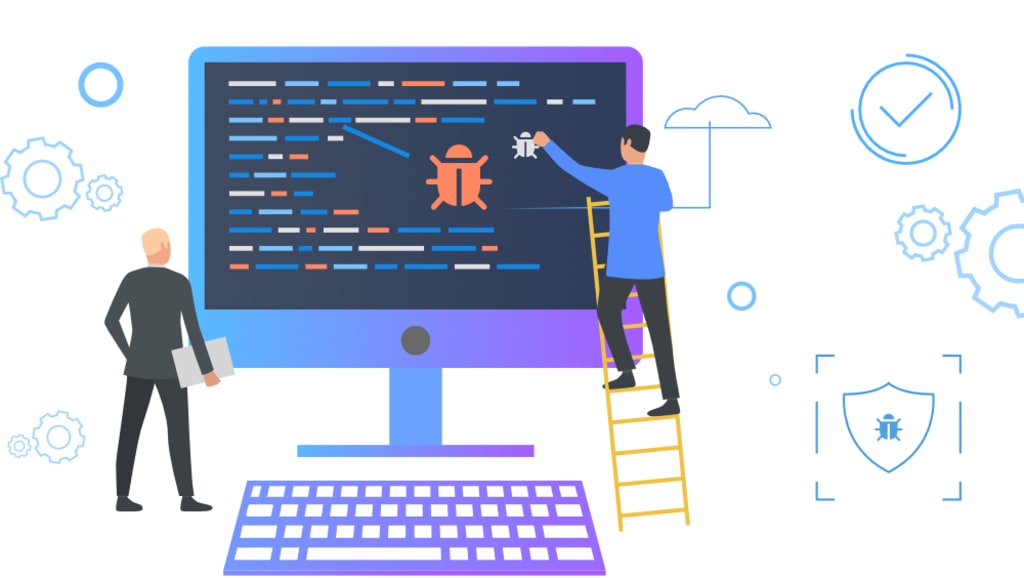
When it comes to debugging software, there are a few different approaches that developers can take. One of the most effective approaches is the bottom-up approach, which involves starting with the lowest level of the code and working upward to higher levels.
The bottom-up approach is often used to identify and fix bugs in individual functions or modules. For example, let's say that you have a program that is supposed to sort a list of numbers, but it's not working correctly. The bottom-up approach would involve starting by looking at the code for the sorting function, and then working upward to see how that function is being used and how it interacts with the rest of the code.
The advantage of this approach is that it allows you to isolate the problem and focus on specific areas of the code. By starting with the lowest level, you can eliminate the possibility that the problem is caused by something higher up in the code, and instead focus on the specific function or module that is causing the issue.
Another advantage of the bottom-up approach is that it allows you to test the interactions between different functions or modules. Once you've fixed a bug in a specific function, you can then test how that function interacts with other functions or modules to ensure that the problem is truly solved.
One important thing to keep in mind when using the bottom-up approach is that it can be time-consuming. Because you are starting with the lowest level of the code and working upward, it can take longer to identify and fix a problem than with other approaches. However, the extra time invested can save time and resources in the long run, as it allows you to identify and fix the root cause of the problem.
In summary, the bottom-up approach for software debugging is an effective method for identifying and fixing bugs in individual functions or modules. By starting with the lowest level of the code and working upward, you can isolate the problem, test the interactions between different functions or modules, and ensure that the problem is truly solved. While it may take longer than other approaches, the bottom-up approach can save time and resources in the long run.

An example of using the bottom-up approach for software debugging would be a program that is supposed to calculate the average of a list of numbers, but is returning the wrong result. Here's how the bottom-up approach could be used to debug this problem:
1, Start by looking at the code for the function that calculates the average. This would be the lowest level of the code, and the first place to look for bugs.
2. Check the function's logic, inputs, and outputs to make sure that it is working as expected.
3. Test the function with some sample inputs to see if it returns the correct result.
4. If the function is working correctly, move on to the next level of the code, which would be the code that calls the average function.
5. Check the code that calls the average function to make sure that it is passing the correct inputs to the function and that it is using the function's output correctly.
6. Test the code that calls the average function with some sample inputs to see if it is working as expected.
7. Continue working upward through the code, testing each level and checking for bugs.
8. Once the problem is identified and fixed, test the entire program with a variety of inputs to ensure that the problem is truly solved.
In this example, the bottom-up approach was used to isolate the problem and focus on specific areas of the code. By starting with the lowest level of the code and working upward, the problem was identified and fixed, and the entire program was tested to ensure that it was working correctly.
About the Creator
Keep reading
More stories from writers in Education and other communities.
How Toys Shape Young Minds and Inspire Lifelong Learning
Toys aid in development by providing children with the opportunity for exploration, stimulus for creativity and development of life skills. While playing with toys from infancy, children develop cognitively and emotionally. Toys have not only been used as objects of play and amusement, but also as a tool for imagination, exploration, and emotional development. The toy industry has had to adapt and grow with new educational models, innovations in design, and interactivity to meet children's modern developmental needs. By today, toys are not only for entertainment, they also carry the potential to shape how children think and interact with the world.
By Rohit Shah6 days ago in Education
Maximize Efficiency With 3D Animation Outsourcing Today
Deadlines are getting tighter. Budgets are under pressure. Creative expectations keep rising. Many studios, agencies, and product teams feel the squeeze when animation projects pile up faster than in-house resources can handle. That’s where 3D Animation steps in as a powerful production tool, one that doesn’t have to drain your time or team when handled strategically. By outsourcing the right way, companies unlock speed, flexibility, and consistent quality without sacrificing creative control.
By Lily Noblet3 days ago in Education
Instructions Included Challenge Winners
For the Instructions Included challenge, we asked writers to tell a story through instructions and to trust the form to carry what could not be said outright. Across the top entries, that trust paid off in many different ways.
By Vocal Curation Team5 days ago in Resources




Comments
There are no comments for this story
Be the first to respond and start the conversation.