

Tardigrades, also known as water bears or moss piglets, are fascinating microscopic animals that have captured the imagination of scientists and the public alike. These tiny creatures are found in a wide range of environments, from marine and freshwater ecosystems to soil and moss, and have been known to survive in some of the harshest conditions on Earth.
Tardigrades belong to the phylum Tardigrada, which includes over 1,300 known species. They are among the most resilient creatures on Earth, with the ability to withstand extreme temperatures, radiation, and pressure. They have even been found to survive in the vacuum of space.
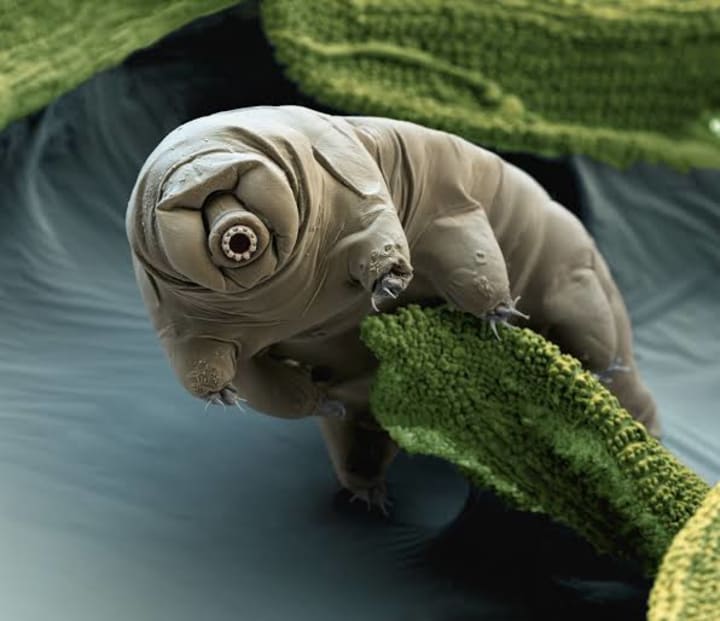
Tardigrades have a segmented body with four pairs of legs, each with claws or suction cups that allow them to move through their environment. They are typically less than 1 millimeter in size and are visible only under a microscope.
One of the most remarkable features of tardigrades is their ability to enter a state of suspended animation called cryptobiosis. During cryptobiosis, the tardigrade's metabolism slows down to almost zero, and it can survive in a dehydrated state for years. When conditions improve, the tardigrade can rehydrate and resume normal activity.
This remarkable ability to survive in extreme conditions has led scientists to study the genetics and physiology of tardigrades in order to understand how they are able to withstand such harsh environments. Some researchers have even suggested that tardigrades could hold the key to developing new materials and technologies with similar resilience.
One of the key factors in the tardigrade's ability to survive extreme conditions is their ability to repair DNA damage. When exposed to radiation or other damaging environmental factors, the tardigrade's DNA is repaired at a much faster rate than in other organisms. This ability to repair DNA damage has led some scientists to investigate the use of tardigrade proteins in cancer treatment, as the proteins may be able to repair damaged DNA in human cells.
Another important feature of tardigrades is their ability to withstand extreme temperatures. Some species of tardigrades can survive at temperatures as low as -272 degrees Celsius, just a few degrees above absolute zero, and as high as 150 degrees Celsius. They are able to survive these extreme temperatures by producing special proteins that protect their cells and prevent them from freezing or overheating.
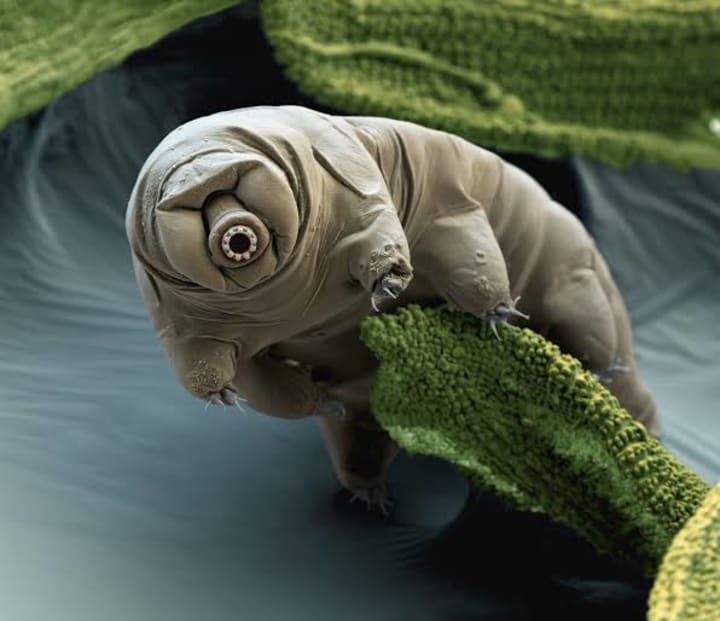
Tardigrades are also able to survive in environments with low oxygen levels, high levels of radiation, and high levels of pressure. Some species have even been found to survive in the vacuum of space, although it is not yet clear how they are able to do so.
Despite their resilience, tardigrades are not invincible. They are still vulnerable to some environmental factors, such as exposure to certain chemicals and pollutants. Human activity, such as habitat destruction and pollution, can also threaten their survival.
In conclusion, tardigrades are fascinating microscopic animals that have captured the attention of scientists and the public alike. Their ability to survive in extreme conditions has led to research into their genetics and physiology, and the potential use of their proteins in medicine and industry. However, it is important to remember that while tardigrades are resilient, they are not invincible, and human activity can still pose a threat to their survival
About the Creator
Keep reading
More stories from Mohamed Yousuf and writers in Education and other communities.
The Human Advantage Russia’s Soft Skills Renaissance in the Age of AI (2026)
In the rapidly shifting economic landscape of 2026, Russia has entered a new era of human capital development. For years, the Russian job market was dominated by a "Hard Skills First" mentality prioritizing technical degrees, engineering prowess, and tangible manufacturing expertise. However, as Artificial Intelligence (AI) and automation begin to handle the heavy lifting of data analysis and routine tasks, a fundamental realization has swept through the offices of Moscow and the industrial hubs of the Urals: technical skills get you the job, but soft skills keep the business alive. Today, soft skills training in Russia has evolved from a "corporate luxury" into a survival-critical investment, driven by a need for agility, emotional intelligence, and human-centric leadership in an increasingly complex world.
By Neeraj kumar7 days ago in Education




Comments
There are no comments for this story
Be the first to respond and start the conversation.