

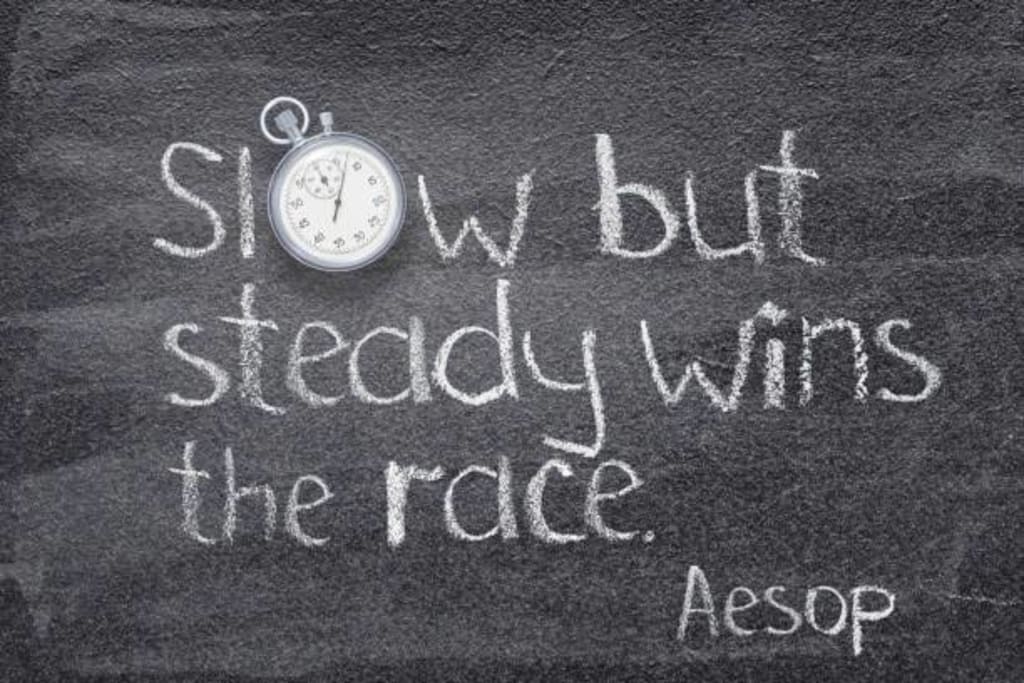
** A Timeless Formula for Achievement**
In a world driven by instant gratification and a relentless pursuit of success, the age-old adage "slow and steady wins the race" remains as relevant as ever. Rooted in Aesop’s famous fable *The Tortoise and the Hare*, this principle highlights the enduring value of persistence, patience, and consistency. It serves as a reminder that long-term achievements are often built on the foundation of steady, deliberate effort rather than rushed or impulsive actions.
### The Myth of Instant Success
Modern culture often glorifies stories of overnight success—whether it’s a startup that suddenly becomes a unicorn, a viral internet sensation, or an athlete who seemingly bursts onto the scene. These stories, while inspiring, rarely provide the full picture. Behind most "instant successes" are years of preparation, countless failures, and an unwavering commitment to improvement.
The pressure to achieve quick results can lead to burnout, shortcuts, and disappointment. In contrast, adopting a slow and steady approach allows individuals to develop a solid foundation, learn from their mistakes, and build resilience. Success is rarely a sprint; it’s more often a marathon requiring endurance and strategic pacing.
### The Science of Consistency
Psychological and scientific research underscores the power of consistent effort. In his book *Atomic Habits*, James Clear explains that small, incremental improvements compound over time to produce remarkable results. This principle, often referred to as the "aggregation of marginal gains," has been successfully employed in fields ranging from business to sports.
For example, British cycling coach Dave Brailsford famously led his team to unprecedented success by focusing on improving every aspect of performance by just 1%. These small changes—such as optimizing nutrition, perfecting sleep patterns, and even adjusting bike seats—accumulated into a significant competitive advantage over time.
Consistency also enhances learning and skill development. Repeated practice solidifies neural pathways in the brain, making tasks easier and more automatic. This is why musicians, athletes, and professionals dedicate years to mastering their craft. Steady effort ensures progress, even if it’s not immediately visible.
### The Power of Patience
Patience is an underrated virtue in the journey to success. It allows individuals to remain focused on their goals despite setbacks and delays. Those who rush toward results often become discouraged when progress is slower than expected. In contrast, a patient mindset fosters resilience and a willingness to adapt.
One famous example of patience and perseverance is Thomas Edison, who conducted thousands of experiments before inventing the practical electric light bulb. Edison famously said, "I have not failed. I've just found 10,000 ways that won't work." His story exemplifies how persistence, paired with patience, can lead to groundbreaking achievements.
Similarly, nature itself teaches us the value of slow and steady growth. Consider the bamboo tree, which spends years developing a strong root system underground before shooting up to impressive heights almost overnight. Without this foundational period of slow growth, the bamboo wouldn’t have the strength to sustain its rapid ascent.
### Practical Applications of Slow and Steady
1. **Career Advancement**
Building a successful career is rarely about taking shortcuts or landing a dream job overnight. It involves acquiring skills, building relationships, and consistently delivering value over time. Professionals who focus on steady improvement and long-term goals often find themselves better equipped to handle challenges and seize opportunities.
2. **Health and Fitness**
Crash diets and extreme workout regimens might promise quick results, but they are often unsustainable and even harmful. A slow and steady approach—such as adopting a balanced diet and exercising regularly—leads to lasting health benefits. Consistency in small, manageable habits ensures sustainable progress without the risk of burnout or injury.
3. **Personal Development**
Whether it’s learning a new language, mastering a musical instrument, or developing emotional intelligence, personal growth requires time and dedication. Rushing the process often leads to superficial understanding, whereas steady effort results in deep and meaningful progress.
4. **Entrepreneurship**
Entrepreneurs often face immense pressure to grow their businesses quickly. However, sustainable growth is usually the result of careful planning, gradual expansion, and a focus on delivering value. Companies that prioritize long-term vision over short-term gains tend to achieve lasting success.
### Overcoming Challenges
While the slow and steady approach is effective, it’s not without challenges. In a fast-paced world, it can be difficult to resist the allure of instant gratification. Staying motivated over the long haul requires discipline and a clear sense of purpose.
To stay on track, it’s helpful to:
- **Set Realistic Goals:** Break larger objectives into smaller, manageable milestones. Celebrate progress along the way to maintain motivation.
- **Focus on the Process:** Shift attention from the outcome to the actions required to achieve it. Enjoying the journey makes it easier to stay consistent.
- **Practice Gratitude:** Recognize and appreciate the progress you’ve made, no matter how small. Gratitude fosters a positive mindset and reduces impatience.
- **Seek Support:** Surround yourself with mentors, peers, and loved ones who understand and encourage your commitment to steady growth.
### The Rewards of Steady Progress
The rewards of a slow and steady approach extend beyond tangible achievements. It fosters qualities like discipline, resilience, and self-awareness, which are valuable in all areas of life. By embracing the process and committing to consistent effort, individuals often find deeper satisfaction and fulfillment.
Moreover, slow and steady progress creates a ripple effect. The habits and discipline developed in one area of life often spill over into others, leading to holistic growth and success.
### Conclusion
The journey to success is not a race to the finish line but a deliberate and purposeful process. By embracing the principle of "slow and steady," individuals can achieve meaningful, sustainable progress while cultivating valuable life skills. In an age of instant gratification, this timeless approach serves as a powerful antidote, reminding us that true success is built over time.
Whether you’re pursuing personal goals, professional aspirations, or creative endeavors, remember that consistency, patience, and resilience are the keys to lasting success. Like the tortoise in Aesop’s fable, those who move forward with steady determination often surpass those who rely solely on speed or shortcuts. After all, it’s not about how fast you reach your destination—it’s about the strength and wisdom you gain along the way.
About the Creator
Keep reading
More stories from Keli Chris and writers in Education and other communities.
Consistency: The Key to Unlocking Success**
** Success is often regarded as the ultimate goal in both personal and professional pursuits. While many factors contribute to success—such as talent, opportunity, and motivation—one element often stands out as non-negotiable: **consistency**. The ability to remain steadfast and disciplined in pursuing your goals is the cornerstone of long-term success. This article explores why consistency is so powerful, how it can be developed, and how it transforms your dreams into reality.
By Keli Chrisabout a year ago in Education
EdTech and Smart Classroom Market to Attain USD 498.5 Billion by 2032
The Global EdTech and Smart Classroom Market presents a substantial long-term opportunity, expected to scale from USD 146.8 billion in 2023 to USD 498.5 billion by 2032. With a projected CAGR of 15%, the market is benefiting from increasing investments in digital curriculum platforms, AR/VR-enabled learning, AI-driven assessment systems, and connected classroom ecosystems.
By Roberto Crum6 days ago in Education
Clear Paths to Discover Your Purpose in Life
Finding direction in life is a common human search. Many people want their work and daily actions to feel meaningful. When you discover your purpose in life, you gain a sense of direction and inner peace. Purpose does not appear in a single moment for most people. It often grows through reflection, action, and learning. Small steps can lead to deep insight.
By Philip Raymond Baquie5 days ago in Education




Comments
There are no comments for this story
Be the first to respond and start the conversation.