
Shopify vs Custom eCommerce Website: Which is Right for Your Business?
Choosing the Best Platform for Your Online Store: Pros and Cons of Shopify vs. Custom eCommerce Websites

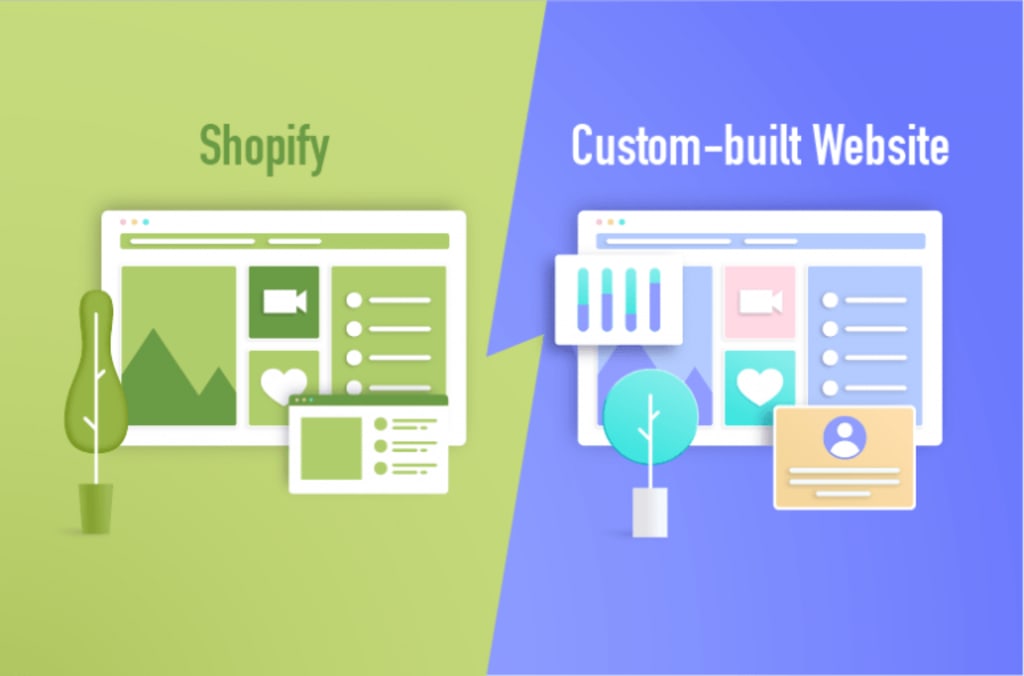
Creating an eCommerce website can be a daunting task, especially when deciding between using Shopify or building a custom eCommerce website. This blog will explore both approaches to help you determine the best solution for your business.
Development Approaches: Shopify vs Custom eCommerce Website
When setting up an eCommerce website, you have two primary options: leveraging the power of Shopify or opting for a custom-built eCommerce website.
Shopify: A Great Solution for Beginners
Advantages:
Ease of Use: Shopify is an intuitive platform that allows users to manage products and content effortlessly, making it an ideal choice for beginners.
Quick Setup:You can get the store up and running quickly without requiring extensive technical knowledge.
Built-in Features:Shopify offers a wide range of built-in features including payment gateways, shopping cart, SEO tools, and more. This makes it an excellent option when considering Shopify vs custom eCommerce sites for small businesses.
Security:Shopify handles security, ensuring that your store is PCI compliant and that customer data is safe.
Support:24/7 customer support is available, which is a significant advantage over many custom eCommerce websites.
Features:
Customizable Themes:Select and customize a theme to match your brand. This is easier compared to designing custom eCommerce website themes.
Product Management: Add, edit, and organize products easily.
Payment Integration:Accept various payment methods including credit cards, PayPal, and more, simplifying the process compared to custom-built eCommerce sites.
Inventory Management: Keep track of your stock levels.
SEO and Marketing Tools:Built-in SEO features and marketing tools to help drive traffic to your store.
Mobile Responsiveness: Ensure your store looks great on all devices, a key consideration when comparing Shopify with custom eCommerce sites.
Cost:
Basic Shopify Plan:Starting from $29/month.
Additional Costs:Possible costs for premium themes, apps, and transaction fees.
Custom eCommerce Website (Hardcoded)
Advantages:
Full Customization: Complete control over the design and functionality of the website, offering more flexibility than Shopify.
Scalability: Easily scalable to meet growing business needs.
Unique User Experience: Create a unique and tailored shopping experience for your customers.
Integration Flexibility: Integrate with any third-party services or APIs without limitations, a major benefit when considering custom eCommerce websites vs Shopify.
No Ongoing Fees: Avoid monthly subscription fees, which is a key difference when comparing custom eCommerce websites with Shopify.
Features:
Custom Design: Fully bespoke design tailored to your brand's identity.
Product Management System: Develop a custom product management system to handle your inventory.
Payment Integration: Allow customers to create accounts, track orders, and manage their preferences.
User Accounts and Profiles:Custom SEO strategies to improve search engine ranking, potentially offering better results than Shopify's built-in tools.
Mobile Optimization: Ensure seamless mobile experience.
Analytics: Integrate with analytics tools to monitor site performance and customer behavior.
Technologies:
Frontend:HTML, CSS, JavaScript (React, Angular, or Vue.js).
Backend: Node.js, Python (Django), PHP (Laravel), or Ruby on Rails.
Database: MySQL, PostgreSQL, or MongoDB.
Hosting: AWS, Google Cloud, or other cloud services.
Cost:
Initial Development:Higher upfront cost depending on the complexity, starting from $2,500 to $15,000.
Maintenance:Ongoing costs for hosting, security updates, and feature enhancements.
Next Steps
Requirement Analysis: Gather detailed requirements and preferences.
Select Approach: Decide on Shopify or custom development based on your business needs and budget.
Planning and Design: Create a project plan and design mockups.
Development: Begin development based on the chosen approach.
Testing: Thorough testing to ensure functionality, security, and performance.
Launch: Deploy the website and start marketing your online store.
By choosing the right approach, you can ensure that your eCommerce shop not only meets your business needs but also provides a delightful shopping experience for your customers.
Conclusion
Both approaches have their own merits and cater to different needs. Comparing Shopify vs custom eCommerce websites shows that Shopify is ideal for those who need a quick, easy-to-manage, and feature-rich solution without much technical know-how. On the other hand, a custom eCommerce website offers unparalleled flexibility, scalability, and a unique user experience at a higher initial investment.
About the Creator
sayi webbook
Sayi Webbook Pvt Ltd is a Pune-based web design company specializing in creating and optimizing websites for businesses. Their services include search engine optimization (SEO) to improve website visibility and redesigning
Keep reading
More stories from sayi webbook and writers in Education and other communities.
Web Development Costs in India 2024: Everything You Should Know
In today's dynamic world of web development, businesses often seek cost-effective yet high-quality solutions, and India has long been a preferred destination for meeting these needs. However, gaining an understanding of the shades of web development pricing in India in 2024 is important for making well-informed decisions. This blog post dives into the factors that influence web development prices, such as project complexity, technology stack, design requirements, additional features, and maintenance. It also examines the current trends shaping the pricing landscape, including competitive pricing strategies, flexible engagement models, the focus on delivering quality results, and the value-added services provided by Indian web development firms. Whether you're a startup, small business, or enterprise, this blog offers valuable insights for navigating web development prices in India and maximizing your digital investments.
By sayi webbook2 years ago in 01
Everyday Motion Explained, What Modern Kinesiology Teaches Us About How We Move
Modern kinesiology has changed how we understand the way people move each day. It examines how muscles, joints, and nerves work together during simple actions such as walking, reaching, or sitting. Instead of focusing solely on sports or injury, modern kinesiology studies daily movement and its effects it comfort, balance, and energy. This field shows that small habits shape how the body feels over time, even when pain is not present.
By Kelln Small7 days ago in Education
The New Career Compass: How AI Is Redefining Work and Opportunity
Artificial intelligence has moved from science fiction into everyday working life. It now shapes how people find jobs, perform tasks, and plan long-term career paths. From creative fields to technical roles, AI is changing what skills matter and how success is measured. Instead of replacing ambition, this technology is becoming a powerful tool that helps workers adapt, grow, and stay relevant in a fast-moving job market.
By Greg Deshields6 days ago in Education
Trouble at the Tea Leafing Café
The rain had started right around the time that Annie was buttering her second thick slice of homemade toast for breakfast, and hadn’t paused since. Not that anyone could tell. The windows of the café were fogged over, and with every seat filled with happy customers munching on fresh baked pastries or steaming bowls of the delicious soup of the day, it was hardly surprising. Annie looked around the room, finally taking a moment to breathe after the lunch time rush. Her old life already felt like a bad memory, a part of her history, always, but just that. History.
By Hannah Moore2 days ago in Fiction


Comments
There are no comments for this story
Be the first to respond and start the conversation.