
SEO vs. CRO: The Ultimate Synergy for Driving Traffic and Conversions
How to Balance Search Engine Visibility with Optimized User Experiences for Maximum Growth

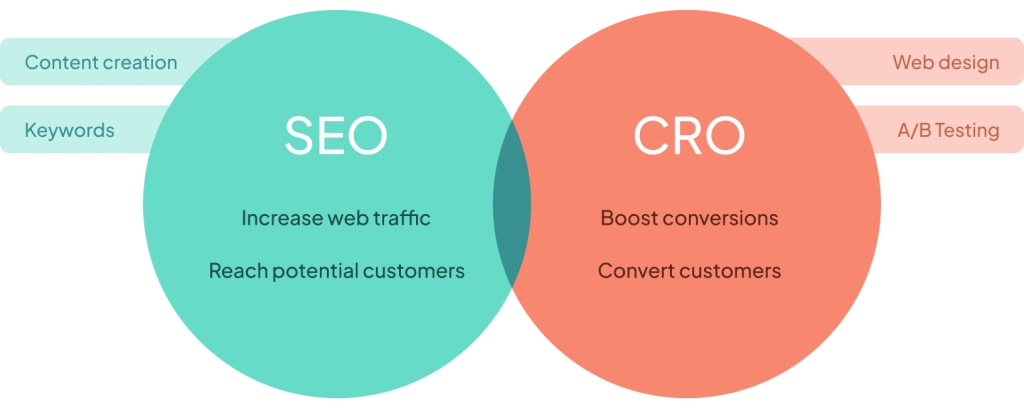
Search Engine Optimization (SEO) and Conversion Rate Optimization (CRO). Both are essential for driving success, but they focus on different aspects of the customer journey. Understanding their differences and how they work together can significantly enhance your website's performance.
What is SEO?
SEO (Search Engine Optimization) is the process of optimizing your website to rank higher in search engine results pages (SERPs) like Google. The main goal of SEO is to increase organic traffic by making your site more visible when users search for relevant keywords. SEO focuses on several elements:
On-page SEO: Includes optimizing individual pages for keywords, meta descriptions, headers, images, and content structure to improve relevance.
Off-page SEO: Involves building backlinks and social signals to improve domain authority and trustworthiness.
Technical SEO: Focuses on improving site speed, mobile-friendliness, security (HTTPS), and indexability to make sure search engines can easily crawl and rank your site.
The goal of SEO is to attract as many visitors as possible. SEO brings people in by answering their search queries with relevant content, but it doesn’t guarantee those visitors will take any specific action once they’re on your site.
What is CRO?
CRO (Conversion Rate Optimization), on the other hand, is about maximizing the percentage of website visitors who take a desired action, such as making a purchase, signing up for a newsletter, or filling out a contact form. CRO focuses on:
User Experience (UX): Ensuring that your website is easy to navigate and aesthetically pleasing, with clear calls-to-action (CTAs).
Content Optimization: Crafting copy, headlines, and images that are persuasive and compelling, guiding visitors toward conversions.
A/B Testing: Running experiments with different versions of web pages to see which one leads to better results.
Data Analysis: Using tools like Google Analytics to understand visitor behavior and optimize elements that are hindering conversions.
The goal of CRO is to get the most value out of your existing traffic. While SEO drives people to your site, CRO ensures those visitors convert into leads, customers, or subscribers.
SEO vs. CRO: The Key Differences
Focus
SEO: Concentrates on attracting visitors through organic search results. Its goal is to improve visibility and increase traffic.
CRO: Concentrates on optimizing user behavior once visitors are already on your site. Its goal is to convert traffic into actionable leads or sales.
Metrics
SEO: Success is measured by metrics like organic traffic, keyword rankings, and backlinks.
CRO: Success is measured by conversion rates, lead generation, and the effectiveness of calls-to-action (CTA).
Time Frame
SEO: Is a long-term strategy. It can take months to see the results of your efforts, but those results can compound over time.
CRO: Yields more immediate results. By making targeted changes to your website, you can quickly boost conversions and profitability.
Scope
SEO: Affects traffic across the entire site. When you optimize for SEO, you impact all pages and the overall visibility of your website.
CRO: Typically focuses on individual landing pages or conversion funnels. CRO is about refining specific touchpoints to improve results.
SEO vs. CRO: Why You Need Both
While SEO and CRO are different, they work best when used together. Here’s why:
SEO Drives Traffic, CRO Converts It
SEO is essential for bringing visitors to your site. Without SEO, you won’t have much traffic to convert. On the other hand, CRO ensures that the traffic generated by SEO is actually valuable. There's no point in attracting visitors if they aren’t taking meaningful actions like signing up or purchasing.
Balance of Quantity and Quality
SEO focuses on the quantity of visitors, while CRO focuses on the quality of their experience. Having high-quality content and a user-friendly website not only helps with conversions but can also boost your SEO by improving time-on-site metrics, reducing bounce rates, and increasing engagement.
Synergy of Content and Conversion
The content you create for SEO can also support CRO. By aligning your SEO content with conversion-focused elements, you can attract the right visitors and ensure they have a seamless path to take action.
Practical Tips for Combining SEO and CRO
Target Relevant Keywords
Choose keywords that align with the intent of your target audience. Don’t just go after high-volume keywords—focus on long-tail keywords that indicate a higher likelihood of conversion.
Optimize Landing Pages
Use SEO to drive visitors to landing pages specifically designed to convert. Ensure that these pages have a clear call to action, persuasive copy, and an easy-to-use design.
Improve Page Speed
Page speed is a critical factor for both SEO and CRO. Search engines prioritize fast-loading sites, and visitors are more likely to convert if they don’t have to wait for pages to load.
Leverage Data
Use SEO analytics to understand which keywords and pages bring the most traffic. Use CRO analytics to understand how users interact with those pages and where they drop off.
Conclusion
SEO and CRO are not competitors; they are complementary strategies that work together to achieve a common goal: growing your business. SEO ensures that your website is visible and attracts visitors, while CRO ensures that those visitors convert into leads or customers. By integrating both strategies into your marketing efforts, you can maximize the value of your website traffic and boost your overall digital success.
About the Creator
Maria sultana
Hello this is Maria SEO Executive at Next Bell Ltd.
Visit my company page : https://www.nextbell.com/
Keep reading
More stories from Maria sultana and writers in Education and other communities.
The 7 Golden Rules of SEO: Unlocking Higher Search Engine Rankings
Search Engine Optimization (SEO) is more crucial than ever for driving traffic and ensuring your content reaches the right audience. Effective SEO practices help improve your website's visibility on search engines like Google, driving organic traffic and boosting your online presence. Here are seven essential rules of SEO that can significantly impact your search engine rankings.
By Maria sultanaabout a year ago in Education
Creating a Calm and Confident Path Toward Retirement
Retirement planning often feels intimidating, especially when people imagine complex calculations and uncertain outcomes. However, when you approach the process with clarity and patience, it becomes far more manageable. Instead of focusing on stress, thoughtful planning helps you feel confident about the future you are building.
By Michael Petruska5 days ago in Education




Comments
There are no comments for this story
Be the first to respond and start the conversation.