
Self-Doubt & Assignment Writing: All You Need to Know
If you still need any assistance, you can get help with assignment writing.

This heading must have rung a bell or resonated with you at some level. The reason is straightforward: No one comes into the world knowing everything. Every student has their first time, and it is natural to feel a seed of doubt taking root in your mind as to whether my piece is up-to-date. If you also have any confusion, you can take help with assignment writing from experts.
With this article, you will learn about the unique connection between self-doubt and assignment writing and the impact it has. So, let's kick start the clock.
Self-Doubt & Assignment Writing: A Unique Connection
Self-doubt is something that affects not only your academic or professional life but also your personal life. Once those doubts creep in, you start to question everything. So, let's see some points that will illustrate this link more properly.
Procrastination and Delayed Start
Self-doubt is often a cause for you getting paralysed at the very start. When you constantly question your capabilities or feel like your ideas are not good enough, you avoid the project altogether. This is not laziness, but seared in fear. What's more, you overthink the topic, question your knowledge or wait for the perfect idea to appear, which hardly happens. The more you wait, the pressure builds, creating a vicious cycle of anxiety and time constraints.
Excessive Editing and Perfectionism
Self-doubt also fuels perfectionism. So, instead of composing a solid draft and refining and polishing it later, you may revise or keep making changes to the same paragraph repeatedly. This forms a false sense of productivity while also preventing your progress. Furthermore, the appeal to sound smart makes you hyper-aware of your syntax, structure, or wording. The end result is a disjointed draft, and your entire project suffers from over-editing in parts.
Lacking Originality
When you doubt your talent, you will tend to rely heavily on citations or paraphrasing others' ideas. While referencing is vital, self-doubt causes you to wear the cloak of other authors rather than developing your own ideas or perspective. This leads to weak assignment and might make it feel like a summary rather than a critical analysis. However, you must know that academic excellence balances on evidence and individual interpretations.
Fear of Critique or Judgment
Self-doubt often leads you to write content that is "safe". It makes your argument sound obvious, basic or overtly cautious. The deep-rooted fear of being wrong, misunderstood, or criticised by a professor prevents you from exploring complicated ideas. This amounts to dull, underdeveloped writing that lacks any depth or critical thinking.
Difficulty Making Decisions
When you write, it constantly involves decision-making. Selecting a thesis, deciding on a process, organising structure, or picking examples all require you to make a decision. So, when you doubt yourself, making these choices becomes challenging. You might make changes to the outline, format multiple times or seek unnecessary assurance from others. This leads to you wasting time and your assignment feeling scattered or unfinished.
Reduced Confidence in Language and Expression
Even when you know what you want to say, self-doubt can affect how you say it. You start to second-guess your syntax and question whether your tone is professional enough to avoid making strong claims. As a result, your write-up appears tentative or unclear. Moreover, phrases like "perhaps", "it seems that", or "might be" often creep in and weaken your arguments.
Over-Reliance on External Validation
Self-doubt leads you down the road of seeking approval from others, like your peers, tutors, or even AI devices. While feedback is valuable, overtly relying on it means you will lose trust in yourself. You will start to rewrite huge sections based on what comments you get from others, or become discouraged by criticism. This can hamper your growth, as confidence comes from self-evaluation and revisions.
Stress and Burnout
The mental pressure of self-doubt drains your energy. You start to overwork, like re-reading sources excessively, recomposing drafts late at night, or stressing over other details. This, on a regular basis, leads to exhaustion, making even smaller tasks feel overwhelming. Over time, assignments become a source of dread instead of a learning experience.
Difficulty Accepting Feedback
Self-doubt can also make you feel that feedback given to you is personal rather than constructive. Even a small error might trigger feelings of being inadequate or a failure in you. Instead of looking at comments as a means for improvement, you might start to think of them as confirmation of your worst fear-"i am not good enough". This leads you to revise ineffectively while stunting your growth as a writer.
Lower Quality and Missed Potential
Ultimately, self-doubt also leads you to not put your best work forward. Whether it is a result of rushed writing, weak arguments, excessive editing or shallow analysis, your end product lacks your full potential. Even if you manage to finish the paper, you will feel embarrassed or dissatisfied. With the passage of time, this can damage your self-esteem and give birth to a self-fulfilling cycle.
So, this is what self-doubt does to you and your assignment. If you want to know how to overcome these problems, you can seek assistance from experts at Assignment Desk, as they will give you ideas on how you can better yourself. Nonetheless, let's see some ways in which you can overcome this problem.
Effective Ways to Overcome Self-Doubt
In this section, you will see some practical ways that will help you overcome self-doubt.
Accept Your Feelings
You must recognise that self-doubt is normal and everyone experiences it. When you accept it, its power diminishes over you.
Set Achievable Goals
Break your project into smaller, manageable tasks. So, when you complete them, it boosts your confidence and reduces overwhelming feelings.
Concentrate on Progress, Not Perfection
You must aim for improvement gradually rather than wanting to produce perfect work immediately. Progress yields results.
Practice Positive Self-Talk
Next, you must replace negative thoughts, "i cannot do it" with encouraging ones like "I am capable of doing it".
Ask for Constructive Feedback
You must ask your trusted friends or mentors to give you feedback. Utilise it to better yourself and not take it as a judgment of your worth.
Restrict Comparison
Avoid comparing yourself with others. Everyone has their unique strengths and learning processes.
Celebrate Small Victories
Do not forget to acknowledge and reward yourself for completing tasks or overcoming your fears.
Prepare Extensively
When you prepare thoroughly, it reduces uncertainty, which will make you feel more confident about your work.
Practice Mindfulness and Relaxing Techniques
You must also try to practice techniques like deep breathing or meditation, as they will help you calm your anxiety related to self-doubt.
Keep Writing and Reflection
Regular practice and reflecting on your past successes will help you build lasting confidence.
So, these are some steps that you can take to conquer your fear of self-doubt. Lastly, if you are a bit unsure of your paper, you can always use a plagiarism checker UK tool to ensure the originality of your document.
Conclusion
Now you know what effect self-doubt can have on your assignments. You also saw how you can overcome your fear by following the steps provided above. Although those points are no miracle pill, with time, if you practice regularly, you will conquer your fear. If you still need any assistance, you can get help with assignment writing.
The writers will furnish a paper that is perfect with all the vital points, and you will also learn how they compose the papers and can adapt their style and improve yourself. So, stop doubting and start working.
About the Creator
Keep reading
More stories from Mary Taylor and writers in Education and other communities.
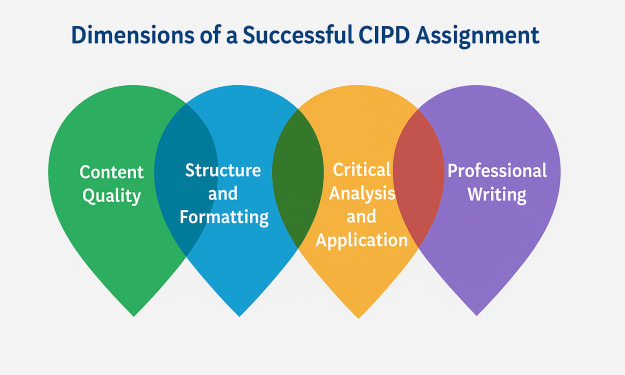
What are the Dimensions That Makes a Successful CIPD Assignment
Do you know what it takes to craft a flawless CIPD project? To make a successful CIPD task, you need to make a proper plan to achieve excellence. Furthermore, if you face issues in understanding the concepts of CIPD, you can seek support from CIPD assignment help. Here, experts are well-experienced to solve issues related to CIPD. This post will discuss ten dimensions that make a successful CIPD project. So, what are you waiting for? Dive into this post for indepth knowledge.
By Mary Taylor5 months ago in Education
Redefining the Deal: How Modern Private Equity Is Building Sustainable Success
Private equity has long relied on proven playbooks, disciplined capital deployment, and patient timelines. For decades, these fundamentals delivered consistent returns and shaped a powerful asset class. However, markets no longer behave the way they once did. Economic cycles move faster, competition intensifies, and information flows instantly. As a result, private equity firms now face pressure to evolve while preserving the strengths that built their reputations. Modern success depends on adaptation, agility, and a sharper understanding of value creation.
By Michael Christopher Venturino5 days ago in Education



Comments
There are no comments for this story
Be the first to respond and start the conversation.