
Seeing the World Through Different Eyes: Animal Vision Unveiled
Exploring the Remarkable Diversity of Visual Perception in the Animal Kingdom

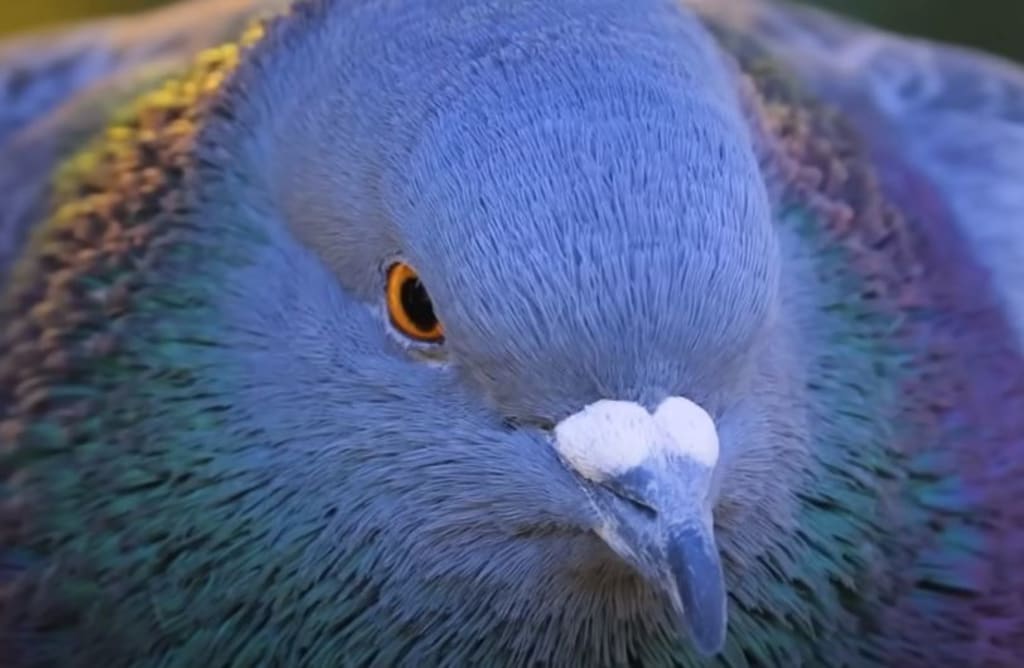
Did you know that the world looks vastly different through the eyes of animals? Let's embark on a journey to explore how various creatures perceive their surroundings. Take pigeons, for instance—they possess a remarkable visual acuity that surpasses even our own. It's quite astonishing! So, let's delve into the unique perspectives of animals and see the world through their eyes.
Consider the fascinating example of snakes. Their mode of vision is a far cry from our own. With specialized infrared-sensitive receptors in their snouts, they have the extraordinary ability to detect the radiated heat emitted by warm-blooded mammals. This equips them with an entirely distinct way of seeing the world.
Now, shifting our gaze to cows, we find that these gentle giants don't experience colors in the same way humans do. Their retinas lack receptors to perceive red, rendering them colorblind to this hue. Instead, their visual world is primarily composed of shades of blue and green. Interestingly, cows boast a near panoramic field of view, except for a blind spot directly behind them. To avoid startling them, it's best to announce your presence!
Horses, on the other hand, possess a blind spot directly in front of their faces due to the placement of their eyes. They lack the ability to see objects positioned right in front of them, making their interaction with the world quite unique. Furthermore, horses, like cows, have a limited color palette and mostly perceive greens, blues, and yellows.
Let's dive into aquatic realms—fish have evolved incredible adaptations for their underwater habitats. Their eyes feature ultraviolet receptors, granting them nearly 360-degree vision. While they share the same range of colors with humans, the way light behaves underwater affects their perception. Remarkably, deep-sea fish thrive in darkness, showcasing their exceptional ability to navigate their dimly lit environment.
Sharks, despite their fierce reputation, possess a rather monochromatic view of the world. They lack color vision altogether, yet they excel at detecting movement and shapes underwater. Their adaptation for underwater visibility highlights the diverse ways creatures have adapted to their niches.
Birds offer another intriguing perspective. Unlike humans, many birds can perceive ultraviolet light, which aids in distinguishing genders and navigating complex environments. Falcons and eagles demonstrate exceptional focus, honing in on prey from great distances. Pigeons, meanwhile, possess an astonishing 340-degree field of vision, making them unparalleled observers of their surroundings.
Insects contribute their own unique visual narratives. Flies boast thousands of tiny eye receptors working together, enabling them to perceive their surroundings in slow motion. Bees, while critical pollinators, grapple with their own quirks—unable to see the color red, they perceive it as dark blue.
Shifting our attention to mammals, consider the curious case of rats. Not only are they red-blind, but each of their eyes operates independently, granting them a perpetual double vision. Despite this, they navigate their world surprisingly adeptly.
Cats, our enigmatic companions, perceive colors differently as well. While red and green remain elusive to their senses, they excel at distinguishing shades of brown, yellow, and blue. Their wide-angle view offers a unique way to experience the world, especially in low light when their vision excels.
Dogs, our loyal friends, have their own perceptual nuances. They lack the ability to see red and orange, but their visual spectrum extends into the blue and violet range. Their remarkable differentiation of 40 shades of gray showcases their unique perception of the world.
Amphibians like frogs bring their idiosyncrasies to the table—preferring moving prey over stationary food items. Their vision centers on detecting motion, a crucial skill in their ecosystem. Meanwhile, chameleons astound with their independently moving eyes, allowing them to observe their surroundings without turning their heads.
As we explore these myriad visual adaptations, it's clear that animals experience the world in ways we can scarcely imagine. Each species has evolved to thrive within its specific ecological niche, resulting in an astonishing diversity of perceptions. So, next time you gaze at the world, consider the myriad ways in which other creatures might be perceiving the same scene.
About the Creator
How AI Is Impacting the Jobs of Website Designers and Developers
Artificial Intelligence (AI) is transforming industries across the globe, and the world of website design and development is no exception. From streamlining workflows and enhancing creativity to automating repetitive tasks and reshaping professional roles, AI’s influence is broad and deep. In this article, we explore how AI is impacting website designers and developers — the opportunities it presents, the challenges it introduces, and how professionals can adapt to thrive in an AI-augmented landscape.
By Rajiv Menon4 days ago in Education
Kiranmala: the legend of the princess who considered magic mountain
Long ago, in a land far away, the queen was panicked, her grasp on reality seemingly slipping. She had given birth to two boys and one girl. But to her horror, before even meeting their father, each child vanished, something else taking their place. She faced accusations of witchcraft and demon sorcery. And though the king loved her, he was easily swayed. He soon grew doubtful and banished his wife, who left the kingdom in anguish. Little did they know, the queen’s jealous sisters were the ones to replace the newborns
By Munesh Yadav3 days ago in Education
Center Stage with Paul Stewart
*** I'm keen to republish the interviews I did for my series with Vocal creators. It's been a few years and I thought it might be nice to revisit these wonderful conversations. I'll be releasing them one at a time for a few weeks/months.
By Heather Hubler3 days ago in Interview




Comments
There are no comments for this story
Be the first to respond and start the conversation.