
Secrets and mysteries of ancient Egypt.
Egyptians left a legacy of art, architecture, and a number of questions that even the most knowledgeable researchers have not been able to resolve.
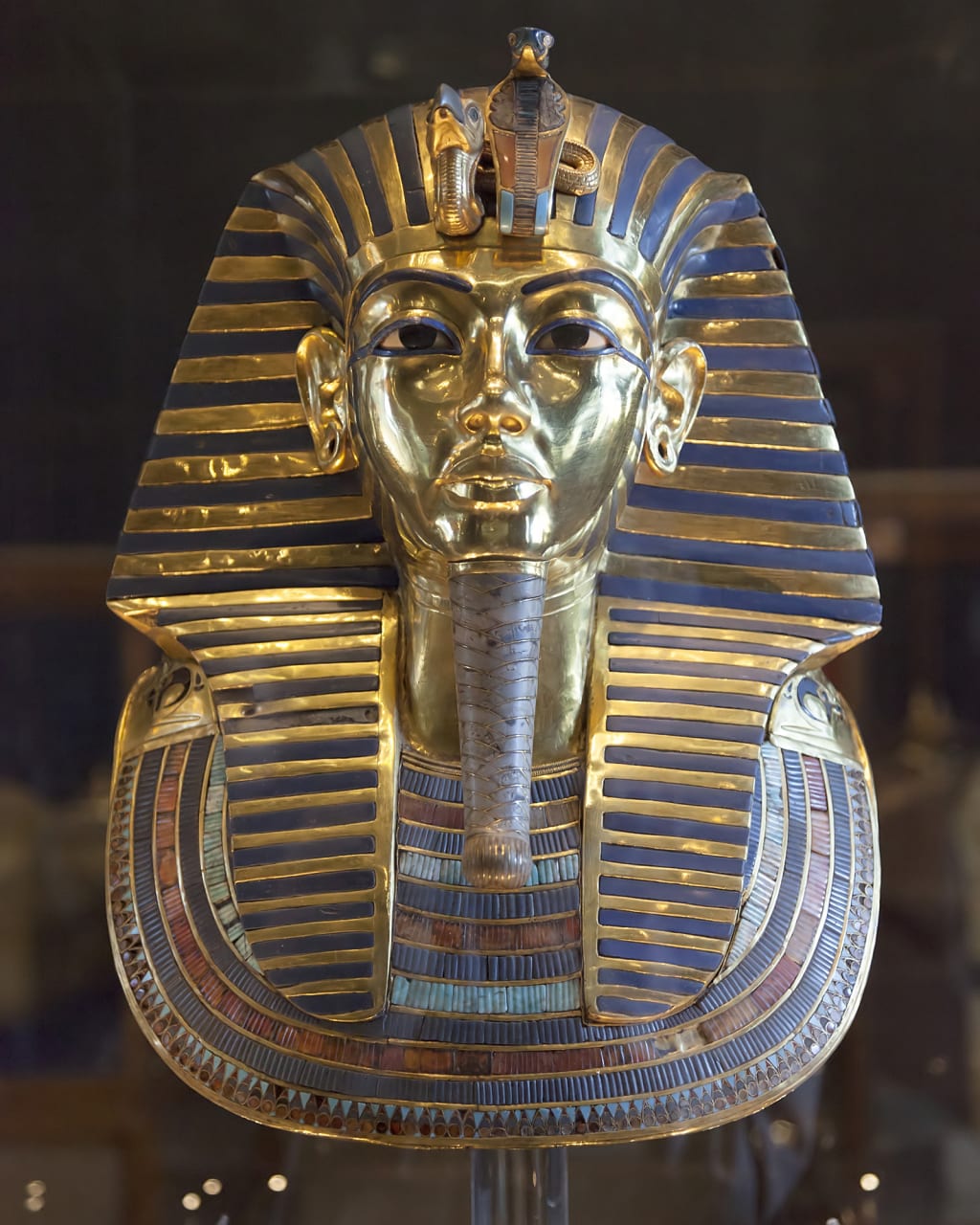
The ancient Egyptians reigned over a sizable portion of the planet more than 4,000 years ago. Even so, along with a rich legacy of arts and architecture, they also left behind a number of questions that even the most knowledgeable researchers have not been able to resolve. The biggest puzzle of all is how they managed to construct not only the pyramids but also so many other amazing buildings without the use of equipment or sophisticated technology, not to mention their nearly flawless alignment with particular astronomical and cardinal points.
Many people today think that intelligent terrestrial creatures visited Earth at that time and brought with them superior technology, knowledge, and compasses because of these seemingly inconceivable accomplishments.
However, these five interesting ancient Egyptian mysteries have been thoroughly examined, and, to date, they remain unsolved. Of course, academics do not take the theory that ancient aliens existed seriously, and it has received very little legitimate attention.
1. The sea people.
No one could equal the force of a gang of enigmatic marine warriors that, for over a century, invaded Egypt, Turkey, Syria, Palestine, and other regions.
They were known as the Sea Peoples, a mysterious culture that terrorized ancient Egypt and was extensively depicted in sculptures and inscriptions left by the Egyptians, who recorded their reign of terror. Despite these thorough accounts of their assaults, it appears that very little to nothing is known about who these enigmatic individuals are, where they came from, or where they disappeared. One of the earliest allusions is from the 13th century BC, under the rule of Merantau, who asserts to have murdered 6,000 of them, serious sailors, when they teamed themselves with the Libyans.However, the most thorough reports are those of Ramses, a third who battled a number of devastating conflicts against the sea peoples in the vicinity of 1170 BC. It says they destroyed its people, and its land was like something that had never existed.
It is unknown why the sea peoples attacked in the first place, despite the fact that he claims the sea peoples were made up of a variety of tribes, including the Sheridan Kara Set, Denyen Shekel Ash, and others. Although this is just conjecture, it has been suggested that they may have been driven from their own country due to starvation or a natural calamity. Regardless of where they came from, the Sea Peoples returned to Egypt in the middle of the 12th century BC with the intention of conquering it. Ramses the Third led his forces to defend his kingdom, and as a result of crushing the Sea People's Army on land, he decimated their feet at the 1175 BC battle at the Delta, where Egyptian argents lined the banks of the Nile and rained arrows down on the enemy's ships.Mysteriously, as they appeared,
They disappeared, having been decisively defeated. They vanished from history, leaving behind questions that still linger.
2 The Temple of Dendera
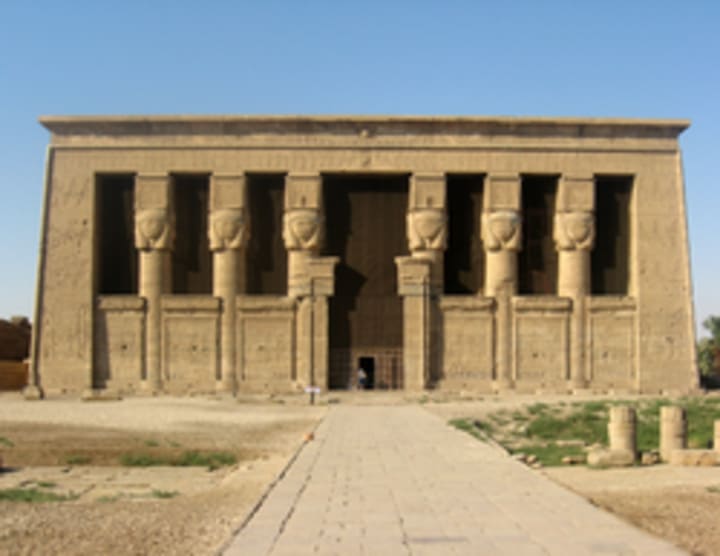
One of the oldest and most enigmatic temples ever constructed by the Egyptians is the Dendera Temple, which is devoted to the goddess Hathor. It is one of the best preserved Egyptian complexes and is situated 2.5 kilometers southeast of Dendera. notably at the central temple, which was burned and covered by sand until the middle of the nineteenth century, when it was discovered and its primary characteristics, relief, were discovered. It is known as the Dendera light and is distinctive from all other ancient Egyptian weapons. Its photos have led some people to wonder precisely how evolved the Egyptians truly were.
It features an object resembling a light bulb and convinces conspiracy theorists and alternate history fanatics that the ancient Egyptians were given the power of electricity 4000 years ago by time travellers or ancient aliens, and the light source enabled them to construct the pyramids and other tombs and monuments they created. People believe the bulb-like object is reminiscent of an early light bulb known as a "crooks tube .
Inside the lightbulb is a snake-like filament that connects to a lotus flower-like socket and a cable that goes to a little compartment where the air guard is kneeling. The pillar next to the ball, which they mistakenly believe to be an insulator, and the baboon as a warning that the technology can be harmful if not utilized properly.
The absence of candles in the Egyptian tombs, which eliminates the likelihood that they were lighted by fire and proves that electricity was utilized instead, supports this assertion.
3. The life and death of King Tutankhamun
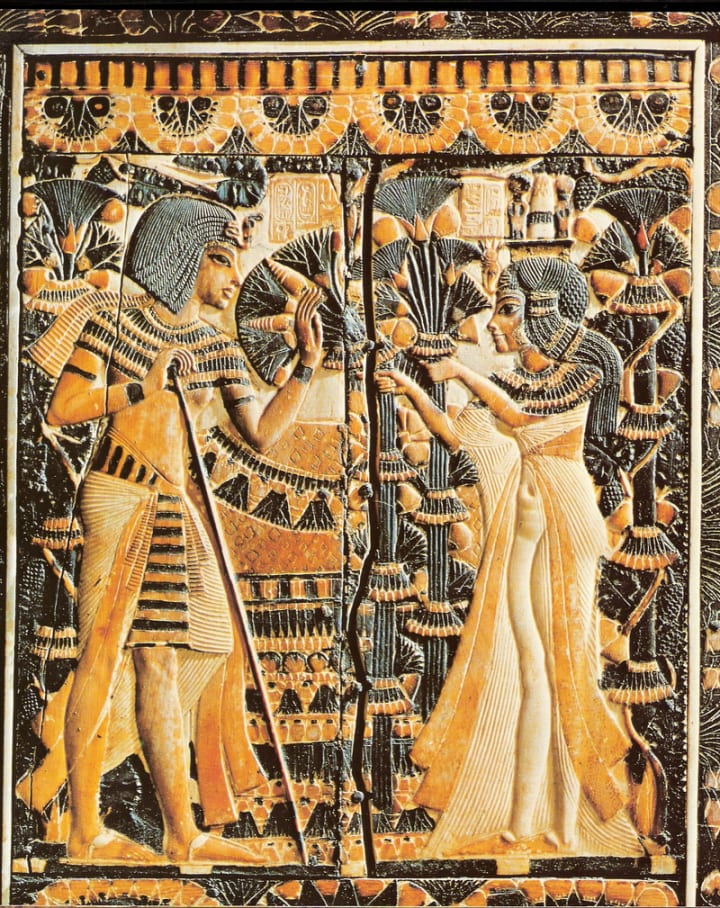
The Valley of the Kings in Egypt was thought to have revealed all of its secrets after extensive excavations in the late 1800s, but British archaeologist and Egyptologist Howard Carter had a hunch that there was still more to discover. For six fruitless years, he searched the valley in search of the tomb of an obscure king who reigned from 1332 to 1323 BC.
Carter persuaded Lord Carnarvon, who provided him with financial support, to continue the dig for one more season.Carter found Tutankhamun's nearly undamaged tomb in November 1922. Three golden coffins that nestled one inside the other like a set of Russian dolls contained the mummified body of the King. Two of the coffins were built of wood that had gold sheets covering them, but the innermost coffin was constructed of thick, solid sheets of hammered gold. weighing 243 pounds or 110.4 kilograms.
The tomb was filled with rare jewels, such as a gold throne crown and Cobra as well as the golden burial mask, and these coffins were enclosed in a rectangular stone sarcophagus.
The discovery—the most important of the 20th century—showed that Tutankhamun was roughly 17 years old when he passed away.
likely only eight or nine years old when she ascended the throne.
He is believed to have been the son of Akhenaten, also known as "The Heretic King," and he governed for around ten years, perhaps with the help of strong advisors.
Nevertheless, despite the fact that his coffin was the most costly in the world and that his burial was surrounded by priceless artifacts.
Tutankhamun's tomb was diminutive in size compared to previous Egyptian Kings; in fact, it was the smallest royal tomb in the Valley of the Kings. It was a hastily constructed room carved into the main valley's floor rather than a tomb suited for a king. This led to belief that Tutankhamun passed away unexpectedly and that his intended tomb, a much bigger, expansive structure, was still under construction at the time of his passing and was afterwards used by his successor.
Tutankhamun's death is still one of ancient egypt's biggest mysteries and
the source of considerable debate, and with no records found of his final days, it's likely to remain that way for the foreseeable future .
4.The lost land of Punt.
The enigmatic Land of Punt is a Lost Kingdom, and the only reason it existed is because ancient Egyptian documents describe it.
Although its precise location is still unknown, texts indicate that it was a prosperous and wealthy region that traded with Egypt between 2450 and 1155 BC. They produced wild animals, fragrant resins, ivory, and gold. Researchers have been attempting to identify the site of the enigmatic place for many years. A relief found in Upper Egypt depicts a variety of trees growing in abundance, indicating it was a rich tropical land. According to the most recent research, it was in Africa.
Another relief, this one near present-day Luxor, shows the outcome of a secret foreign trip to the Land of Punt that the Queen had ordered in approximately 1477 BC.
It provides greater insight into the enigmatic lament.
Five ships carrying 210 soldiers are shown in the painting known as the Portico of Punt, along with exotic creatures including giraffes, baboons, and leopards. A variety of fish, some of which zoologists recognized as species that inhabit the coast of Africa, surround the ships, supporting the assertions.
Punt was, in fact, there. How did the Egyptians navigate the perilous trek to Punt if it was in Africa? The brilliance of the ancient Egyptians seemed limitless, and they were masters of both land and sea. Archaeologists digging in a dried-up lagoon called Musa Colossus along a portion of the Red Sea coast uncovered a number of findings that served as evidence for this. They found evidence of an old harbor that had assisted in launching early expeditions onto the open ocean from man-made caverns.
The earliest seagoing ship remnants ever discovered were recovered in the region, which also contained diverse supplies for shipbuilding.
This evidence demonstrates that the Egyptians were talented not only at building amazing structures, but also at building ships.These unexpected findings have sparked a fresh notion about the location of the Lost Land of Punt and how the Egyptians got there.
It appears that the ever-ingenious Egyptians could sail down the Nile, disassemble their boats, bring them overland to the Red Sea, put them back together to do commerce with punt, and then repeat the procedure on the way back.
Researchers unearthed hair samples from 3,000-year-old mummified baboons in tombs in the Valley of the Kings in 2010, providing more evidence of this.These would have been high class pets that were buried with their owners. The hair samples from ancient animals were compared to the hair samples from animals living today in places like Eritrea, Ethiopia, Somalia, Yemen, and Uganda. determined that the animals were most likely from eastern Ethiopia and Eritrea.
After researchers determined that a bird image on the portico of Punt was a secretary bird, another finding supports the africa idea. a huge predatory bird that can only be found in Africa, especially near the coast and in Sudan. So it seems science is getting increasingly closer to locating the Lost Land of Punt, and a region that was previously thought to be a fable now seems to be a genuine location that is still to be identified.
About the Creator
Keep reading
More stories from morry page and writers in Education and other communities.
Five unsolved mysteries in the world.
1. MAN MADE PYRAMID UNDER THE ICE IN ANTARCTICA. On the bottom of our planet lies the frigid land of Antarctica, the coldest and most inhospitable continent in the world. stretching over 5 million square miles. Antarctica is covered in ice sheets that are more than a mile deep. The average daily temperature is 49 degrees Fahrenheit, and wind speeds can reach over 100 miles per hour.
By morry page3 years ago in Education
How to Start a Home Remodeling Business
Starting a home remodeling business can be a good opportunity for people who enjoy construction, repairs, and improving homes. Many homeowners want to update their kitchens, bathrooms, roofs, and living spaces, but they often need skilled professionals to handle the work.
By supun fernando2 days ago in Education
International Footballer Joins Forces With StoryZoo
An international footballer has joined forces with one of the UK’s main education platforms to launch a brand-new nationwide initiative. Levi Colwill who has played for both Chelsea and England aims to reverse the decline in children’s reading engagement by teaming up with StoryZoo to launch a brand-new scheme which will look at increasing the rate at which children gain the valuable skills they need to read.
By Ashish Prabhuabout 19 hours ago in Education


Comments
There are no comments for this story
Be the first to respond and start the conversation.