
Scientists Found a Way to Turn Cancer Cells Back Into Normal Cells
Breakthrough Discovery Offers New Hope for Cancer Treatment

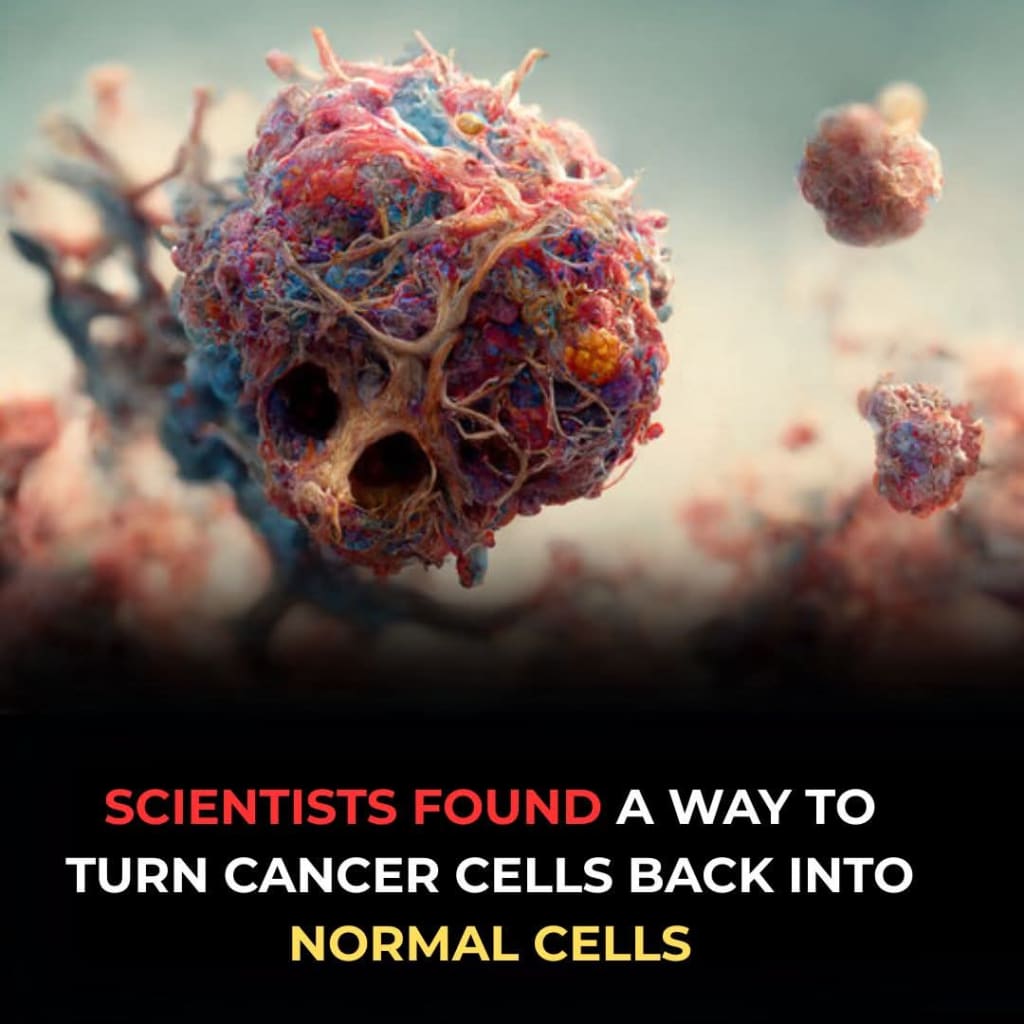
In a groundbreaking development that could revolutionize cancer therapy, scientists have discovered a method to reprogram cancer cells and restore them to their original, healthy state. This novel approach challenges the traditional notion of merely destroying cancer cells and instead seeks to “heal” them — potentially changing the course of how cancer is treated in the future.
Understanding the Discovery
Cancer occurs when normal cells undergo genetic mutations that disrupt their natural cycle of growth, division, and death. These mutations often cause cells to divide uncontrollably, leading to tumor formation and, eventually, metastasis. Conventional cancer treatments such as chemotherapy, radiation, and surgery focus on removing or killing these malignant cells. While often effective, these treatments come with significant side effects and can also damage healthy tissue.
However, a new approach has emerged from recent research: rather than eliminate the rogue cells, scientists are learning how to reprogram them. By targeting the very mechanisms that led the cell astray in the first place, researchers have found ways to reverse the process of malignancy and coax cancer cells back into behaving like normal, healthy cells.
The Science Behind Reprogramming Cancer Cells
The concept of cellular reprogramming isn't entirely new. It draws from earlier work involving induced pluripotent stem cells (iPSCs), where adult cells are reverted to an embryonic-like state. Building on this principle, scientists are now applying similar techniques to cancer cells.
Recent studies have identified key genetic and epigenetic pathways that determine a cell's behavior. By altering specific genes or molecular signals—particularly those involved in cell differentiation and division—researchers can “remind” cancer cells of their original identity. This essentially reverts them to a non-cancerous state, without the need to destroy them.
In one notable study, published in Nature Cell Biology, researchers used small molecules to target transcription factors within cancer cells. These molecules effectively altered the cell’s programming and stopped their uncontrolled growth. What’s more impressive is that the reprogrammed cells began functioning like normal tissue cells and no longer exhibited cancerous properties.
Why This Matters
The implications of this discovery are profound. First and foremost, it offers a potentially less toxic alternative to traditional cancer treatments. By avoiding the destruction of healthy tissue, patients may experience fewer side effects and better quality of life during treatment.
Additionally, this approach could drastically reduce the risk of cancer recurrence. Current therapies may leave behind dormant cancer cells that later become active again. Reprogramming cancer cells eliminates this risk by permanently altering their behavior at the genetic level.
Moreover, this technique may open the door to personalized cancer therapy. Since cancers vary greatly from one patient to another, having the ability to reprogram cells based on their specific genetic profile allows for more targeted, individualized treatments.
Current Challenges
While the research is promising, it is still in its early stages. Most of the successful reprogramming experiments have been conducted in laboratory settings or on animals. Translating these findings to human patients will require rigorous clinical trials and further studies.
One of the major hurdles is ensuring that reprogrammed cells remain stable over time. There is a risk that some reprogrammed cells could revert back to a cancerous state if not fully reset. Researchers are also exploring how this technique would interact with the immune system, which might recognize reprogrammed cells as foreign and attack them.
Additionally, there are ethical and regulatory challenges to consider, especially when it comes to manipulating genes. Scientists and bioethicists must work together to establish guidelines that ensure safe and responsible use of this technology.
The Road Ahead
Despite these challenges, optimism is high in the scientific community. Research teams across the globe are now racing to refine the technology, understand its limitations, and explore its potential applications across various types of cancer — including some of the most aggressive and treatment-resistant forms.
The next step involves conducting more preclinical trials and eventually testing the technique in human patients. If successful, we may be on the cusp of a transformative era in cancer treatment, where the focus shifts from destruction to restoration.
A Hopeful Future
Cancer has long been one of humanity’s most formidable adversaries, affecting millions of lives each year. This discovery doesn't just represent a new treatment—it signifies a shift in how we think about disease and healing. By tapping into the body's own cellular programming, scientists may have found a gentler, more natural way to combat cancer.
While much work remains, the idea that we might one day "teach" cancer cells to stop being cancerous—and become healthy again—is nothing short of revolutionary. As research progresses, this breakthrough may offer renewed hope for patients and families battling cancer around the world.
About the Creator
Keep reading
More stories from DigitalAddi and writers in Education and other communities.
5 timeless habits for better health
Quick fixes and fads may do little for our health, and some even prove harmful. Try to work healthy habits into your daily routines. If you’re a parent, sharing and modeling them can help children and teens embrace wellness, too.
By DigitalAddi25 days ago in Education
When Healing Leads the Way: How Outcome-Driven Healthcare Reshapes Systems, Costs, and Trust
Healthcare is at a crossroads. Rising costs, overwhelmed providers, and frustrated patients have exposed deep flaws in systems that prioritize financial performance over human well-being. For decades, success in healthcare was often measured by revenue, service volume, and utilization rates. While economic sustainability is essential, problems arise when profit becomes the primary goal rather than a byproduct of adequate care. Shifting the focus from profits to outcomes fundamentally changes how healthcare operates, who it serves, and how success is defined.
By Evan Weiss St Louisa day ago in Education
Lean Management Principles in Healthcare: A Practical Guide to Better Patient Care
Lean management principles in healthcare focus on improving patient outcomes by reducing waste, streamlining workflows, and strengthening team collaboration. Originally developed in manufacturing, Lean has become a powerful approach for hospitals, clinics, and medical practices that want to deliver higher-quality care with fewer delays and less frustration.
By Brady Beitlich2 days ago in Education



Comments
There are no comments for this story
Be the first to respond and start the conversation.