
Sci-Fi with Moral Dilemmas
When the Future Makes Us Question What’s Right
Start writing...
Sci-Fi with Moral Dilemmas
When the Future Makes Us Question What’s Right
Imagine a future where machines can think, space travel is common, and people live for hundreds of years. Sounds exciting, right? But what happens when those amazing things come with difficult choices? That’s where sci-fi with moral dilemmas becomes more than just entertainment—it becomes a way to ask deep questions about right and wrong.
The Power of Sci-Fi
Science fiction isn’t just about flying cars or aliens. It’s about ideas. Sci-fi writers often take real-world issues—like racism, war, poverty, or freedom—and place them in a future setting. That way, we can see the problems more clearly and think about them in new ways.
One of the most powerful parts of sci-fi is the moral dilemma. That’s when a character must choose between two difficult options, and neither choice feels completely right. These stories make us think: What would I do in that situation? And sometimes, the answer isn’t easy.
A Story: The Clone Question
Let’s imagine a story.
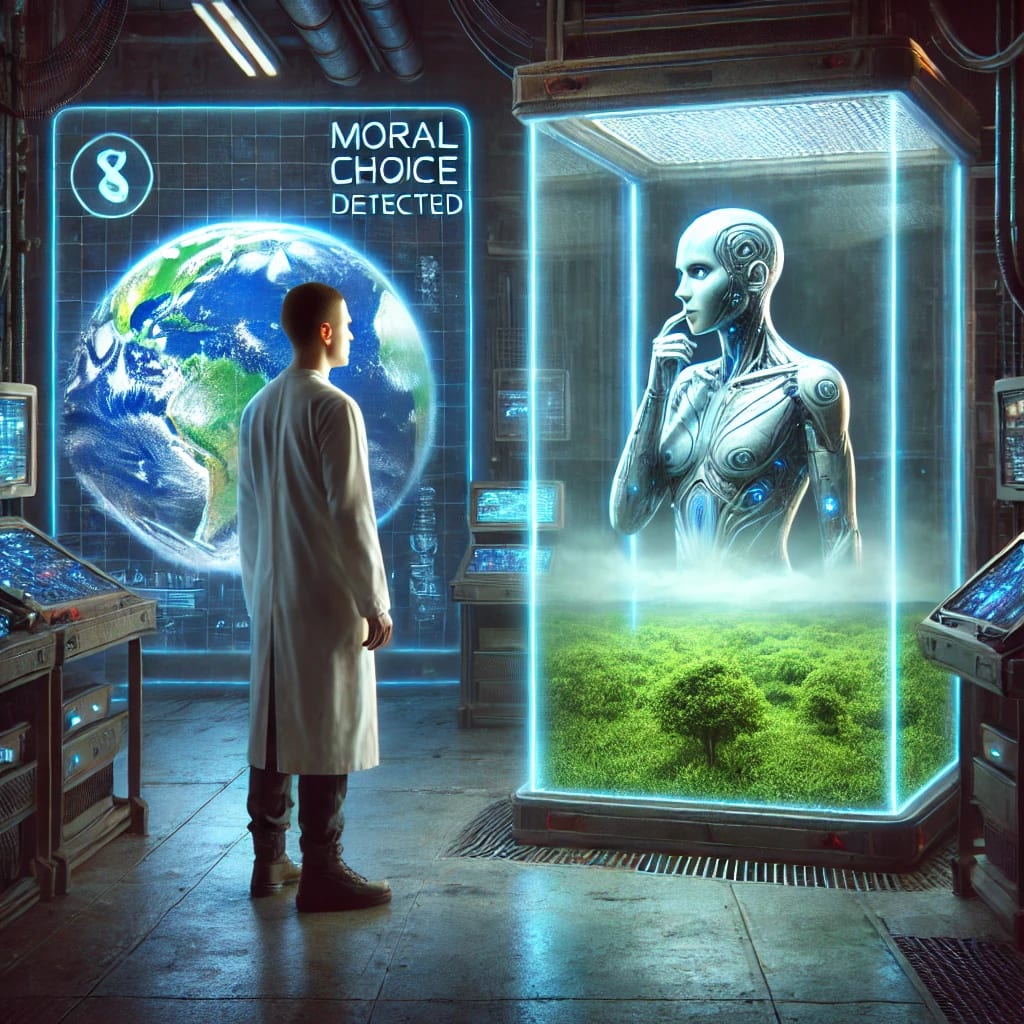
In the year 2140, a brilliant scientist named Dr. Lena creates human clones to help save the planet. These clones clean the oceans, plant trees, and work dangerous jobs. They are smart and strong, but they were designed only to serve.
One day, a clone named Elan asks a question: “Do I have a soul?”
Dr. Lena is shocked. She never thought the clones could wonder about life or death. Suddenly, her project doesn’t feel so simple. She created these beings—gave them life—but did she also create pain? Do they have feelings, dreams, or even rights?
Now, Lena must choose:
Shut down the program and protect the clones’ freedom
Or continue the work to save the Earth, knowing the clones will suffer
This is a classic sci-fi moral dilemma. What’s more important—saving the planet or saving individual lives? There’s no easy answer, and that’s what makes it powerful.
Why We Love These Stories
Sci-fi with moral dilemmas stays with us long after we finish reading or watching. It asks big questions like:
Should we live forever if it means giving up love?
Can a robot be punished for doing what it was programmed to do?
Is it okay to erase someone’s memory to protect them?
These stories show us how complicated the future could be. And they remind us that even with better technology, we still face the same basic challenge: doing the right thing.
Famous Examples
Some of the best sci-fi stories explore moral questions:
Blade Runner (film): Are androids with emotions truly alive?
Black Mirror (TV series): Should we use technology that can control our minds or memories?
The Giver (book): Is a peaceful world worth it if no one feels true joy or pain?
Each of these tales brings us face-to-face with difficult choices—and they don’t always give us clear answers.
Writing Your Own Sci-Fi Dilemma
You don’t need to be a scientist to write a great sci-fi story. Start with a question like:
What if we could bring back the dead—but only for 24 hours?
What if people had to pay for every memory they wanted to keep?
What if an AI decided who should fall in love?
Think about how your characters would react. What would they risk? What would they protect? That’s where the heart of your story lies.
The Lesson Behind the Laser Guns
It’s easy to get caught up in the cool stuff—robots, spaceships, lasers. But the best sci-fi is about people—their hopes, fears, and struggles. Moral dilemmas give those stories real meaning.
We may not live on Mars or have robot assistants (yet), but we do face hard choices every day. Sci-fi helps us imagine how those choices might look in the future—and maybe, just maybe, it helps us make better ones now.
---
In the end, science fiction with moral dilemmas isn’t just about the future. It’s about who we are, and who we want to become.
About the Creator
Keep reading
More stories from Qaseem Ahmadzai and writers in Education and other communities.
Why the Sun Will Never Go Supernova: The Science Explained
What Is a Supernova? A supernova is a massive stellar explosion that occurs at the end of a star’s life cycle. During a supernova, a star can briefly outshine an entire galaxy and release more energy than our Sun will produce in its entire lifetime.
By shahkar jalal7 days ago in Education
Strategy Before Software: Why Content Strategy Matters More Than Platform Technology
A strong content strategy matters more than platform technology because strategy shapes every choice a team makes. It guides tone, purpose, structure, and audience focus. Technology can help with speed and reach, but it cannot replace direction. A tool only works well when someone uses it with a clear plan. Without a strategy, even the best systems fail to connect with real people.
By James Kaminskya day ago in Education


Comments
There are no comments for this story
Be the first to respond and start the conversation.